Mathematics
$ 59.99
Learning Track Courses
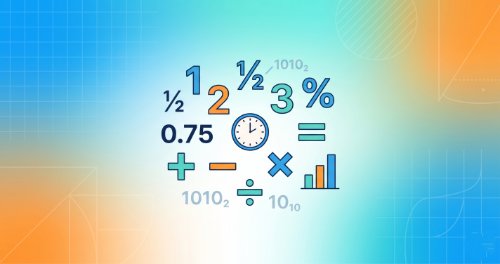
Numbers and Numeration - Mathematics (Senior Secondary)
Master the exact numbers that run the world. This course covers basic arithmetic operations, base conversions including fractional parts, and operations in modulo arithmetic. You will study fractions, decimals, significant figures, and decimal places to build the solid computational baseline required for all subsequent mathematics tracks.
You apply these calculations every time you buy, sell, or trade. We teach the commercial mathematics you need to handle real money and make smart financial decisions. You will use these concepts to compute simple interest, calculate the percentage of profit and loss, and assess value added tax for business transactions. Understanding ratios, proportions, rates, and percentage errors prevents costly mistakes in daily commerce.
By the end of the course, you will solve complex problems of base conversion. You will perform accurate calculations using modulo arithmetic and standard fractions. You will apply the rules of significant figures and decimal places to scientific measurements. Finally, you will calculate shares, rates, and percentage errors to solve standard commercial and scientific problems accurately.
This course targets senior secondary school students preparing for university entrance examinations. It provides the strict syllabus coverage required to pass standard regional tests. University students needing a refresher on basic arithmetic and commercial mathematics will also find direct value here. Anyone managing personal finances or running a small business can use these principles to improve their daily calculations.
Numbers and Numeration - Mathematics (Senior Secondary)
Master the exact numbers that run the world. This course covers basic arithmetic operations, base conversions including fractional parts, and operations in modulo arithmetic. You will study fractions, decimals, significant figures, and decimal places to build the solid computational baseline required for all subsequent mathematics tracks. You apply these calculations every time you buy, sell, or trade. We teach the commercial mathematics you need to handle real money and make smart financial decisions. You will use these concepts to compute simple interest, calculate the percentage of profit and loss, and assess value added tax for business transactions. Understanding ratios, proportions, rates, and percentage errors prevents costly mistakes in daily commerce. By the end of the course, you will solve complex problems of base conversion. You will perform accurate calculations using modulo arithmetic and standard fractions. You will apply the rules of significant figures and decimal places to scientific measurements. Finally, you will calculate shares, rates, and percentage errors to solve standard commercial and scientific problems accurately. This course targets senior secondary school students preparing for university entrance examinations. It provides the strict syllabus coverage required to pass standard regional tests. University students needing a refresher on basic arithmetic and commercial mathematics will also find direct value here. Anyone managing personal finances or running a small business can use these principles to improve their daily calculations.

Set Theory - Mathematics (Senior Secondary)
Set theory forms the foundation of logical reasoning and data grouping in mathematics. This course explains the classification of distinct objects into structured collections. It treats empty, universal, finite, infinite, and disjoint sets, alongside complements and subsets. You will learn to evaluate the cardinality of sets and apply standard notation to represent exact mathematical relationships.
Grouping distinct items extends beyond classroom arithmetic; it provides a structural framework for computer science and data management. You can apply the principles of the subject to filter database records, write logical rules in software development, or organise statistical data. Understanding these groups allows you to classify information efficiently and resolve complex analytical problems in technology or daily administration.
You will acquire the technical skills to interpret the relationships between different collections of data. The course trains you to solve quantitative queries involving the cardinality of sets. You will also learn to construct and interpret Venn diagrams to resolve word problems involving up to three overlapping sets, ensuring you can map information visually and accurately.
This module specifically targets senior secondary school students preparing for university entrance examinations. It also serves early university students needing a rapid review of logical structures and independent learners studying basic data classification. The content requires only elementary arithmetic, ensuring it remains accessible to general learners while maintaining strict academic standards.
Set Theory - Mathematics (Senior Secondary)
Set theory forms the foundation of logical reasoning and data grouping in mathematics. This course explains the classification of distinct objects into structured collections. It treats empty, universal, finite, infinite, and disjoint sets, alongside complements and subsets. You will learn to evaluate the cardinality of sets and apply standard notation to represent exact mathematical relationships. Grouping distinct items extends beyond classroom arithmetic; it provides a structural framework for computer science and data management. You can apply the principles of the subject to filter database records, write logical rules in software development, or organise statistical data. Understanding these groups allows you to classify information efficiently and resolve complex analytical problems in technology or daily administration. You will acquire the technical skills to interpret the relationships between different collections of data. The course trains you to solve quantitative queries involving the cardinality of sets. You will also learn to construct and interpret Venn diagrams to resolve word problems involving up to three overlapping sets, ensuring you can map information visually and accurately. This module specifically targets senior secondary school students preparing for university entrance examinations. It also serves early university students needing a rapid review of logical structures and independent learners studying basic data classification. The content requires only elementary arithmetic, ensuring it remains accessible to general learners while maintaining strict academic standards.
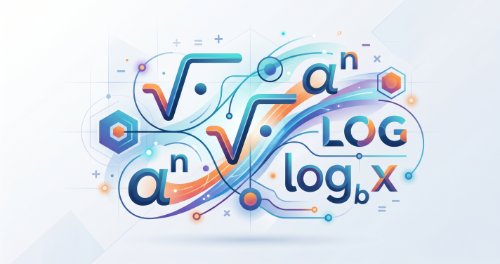
Indices, Logarithms and Surds - Mathematics (Senior Secondary)
Master the mathematical tools for handling complex powers and roots. This course covers the fundamental laws of indices, logarithms and surds. You will manipulate large numbers in standard form and solve equations involving powers. Exponents, roots and logarithms are mathematically inseparable operations required to handle advanced calculations. We teach you how these three concepts connect and work together to simplify difficult problems.
Understanding these operations is essential for practical applications in engineering, computer science and finance. You need indices to model population growth, logarithms to measure sound intensity, and surds to calculate precise geometric distances. Engineers rely on the rules of the logarithm to process large sets of data; software developers use these concepts to optimise algorithms. Mastering these principles provides the technical foundation required to build structural models or analyse financial trends.
You will acquire specific analytical skills to tackle complex algebraic expressions. You will apply the laws of indices to simplify terms and convert numbers into standard form. You will evaluate logarithms to any given base, change bases accurately, and relate indices directly to logarithms. You will also master the simplification of surds, the rationalisation of the denominator, and the execution of basic arithmetic operations on irrational numbers.
This course targets Senior Secondary School students in Nigeria preparing for university entrance examinations. The curriculum directly addresses the requirements of the standard mathematics syllabus. University freshmen in science, technology, engineering and mathematics will also find this material useful to bridge knowledge gaps. Anyone seeking a rigorous review of basic algebra can use this course to rebuild their quantitative skills and prepare for advanced academic work.
Indices, Logarithms and Surds - Mathematics (Senior Secondary)
Master the mathematical tools for handling complex powers and roots. This course covers the fundamental laws of indices, logarithms and surds. You will manipulate large numbers in standard form and solve equations involving powers. Exponents, roots and logarithms are mathematically inseparable operations required to handle advanced calculations. We teach you how these three concepts connect and work together to simplify difficult problems. Understanding these operations is essential for practical applications in engineering, computer science and finance. You need indices to model population growth, logarithms to measure sound intensity, and surds to calculate precise geometric distances. Engineers rely on the rules of the logarithm to process large sets of data; software developers use these concepts to optimise algorithms. Mastering these principles provides the technical foundation required to build structural models or analyse financial trends. You will acquire specific analytical skills to tackle complex algebraic expressions. You will apply the laws of indices to simplify terms and convert numbers into standard form. You will evaluate logarithms to any given base, change bases accurately, and relate indices directly to logarithms. You will also master the simplification of surds, the rationalisation of the denominator, and the execution of basic arithmetic operations on irrational numbers. This course targets Senior Secondary School students in Nigeria preparing for university entrance examinations. The curriculum directly addresses the requirements of the standard mathematics syllabus. University freshmen in science, technology, engineering and mathematics will also find this material useful to bridge knowledge gaps. Anyone seeking a rigorous review of basic algebra can use this course to rebuild their quantitative skills and prepare for advanced academic work.
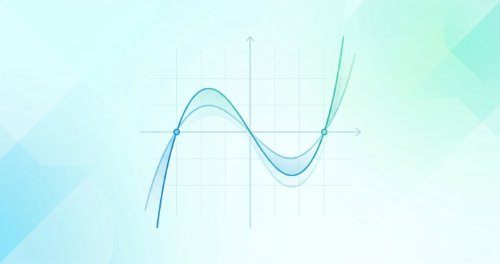
Polynomials - Mathematics (Senior Secondary)
Polynomials form the core of algebraic reasoning. This course covers the addition, subtraction, multiplication, and division of polynomials. You will master the factor theorem and the remainder theorem; you will also learn to find roots and complete the factorisation of equations up to degree three. We isolate polynomial arithmetic to build a strong foundation for solving complex equations.
Understanding polynomials gives you the tools to model real-world situations. Engineers use these expressions to design curves for roads and structures. Computer scientists apply polynomials in data security and graphics rendering. Mastering these concepts provides the mathematical logic required for careers in science, technology, economics, and data analysis.
By the end of this course, you will perform arithmetic operations on polynomials accurately. You will apply the remainder theorem to evaluate expressions without long division and use the factor theorem to simplify complex algebra. You will also determine the roots of the equations and factorise algebraic expressions completely.
This course targets Senior Secondary School students preparing for university entrance examinations and equivalent global tests. It also serves university freshmen who need to revise foundational algebra. Any learner seeking a clear and direct introduction to polynomial arithmetic will find these lessons highly practical for building mathematical confidence.
Polynomials - Mathematics (Senior Secondary)
Polynomials form the core of algebraic reasoning. This course covers the addition, subtraction, multiplication, and division of polynomials. You will master the factor theorem and the remainder theorem; you will also learn to find roots and complete the factorisation of equations up to degree three. We isolate polynomial arithmetic to build a strong foundation for solving complex equations. Understanding polynomials gives you the tools to model real-world situations. Engineers use these expressions to design curves for roads and structures. Computer scientists apply polynomials in data security and graphics rendering. Mastering these concepts provides the mathematical logic required for careers in science, technology, economics, and data analysis. By the end of this course, you will perform arithmetic operations on polynomials accurately. You will apply the remainder theorem to evaluate expressions without long division and use the factor theorem to simplify complex algebra. You will also determine the roots of the equations and factorise algebraic expressions completely. This course targets Senior Secondary School students preparing for university entrance examinations and equivalent global tests. It also serves university freshmen who need to revise foundational algebra. Any learner seeking a clear and direct introduction to polynomial arithmetic will find these lessons highly practical for building mathematical confidence.
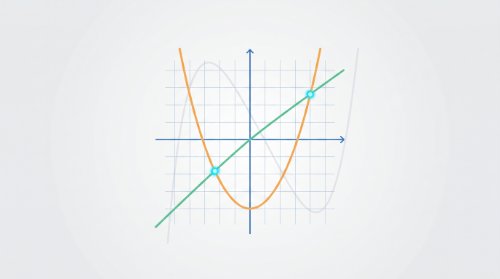
Equations and Graphs - Mathematics (Senior Secondary)
Algebra is not just about solving isolated problems; it is the language of spatial mapping. This course teaches how to link algebraic equations directly to physical intersections on a Cartesian plane. You will learn the exact methods for making any variable the subject of the formula and techniques for solving simultaneous equations involving one linear and one quadratic expression. We connect these numerical solutions straight to their graphical representations.
Understanding the relationship between equations and graphs is a core requirement for engineering, finance, and computer science. When you build software or design physical structures, you often need to calculate the highest or lowest point of a curve. Interpreting the graphs of polynomials helps you find these maximum and minimum values directly. These exact skills allow professionals to optimise resources, predict trends, and solve complex spatial problems in real projects.
By the end of this course, you will possess specific mathematical skills in algebra and coordinate geometry. You will be able to rearrange complex formulas accurately, solve mixed simultaneous equations without guesswork, and sketch polynomial graphs with precision. Furthermore, you will read these graphs to identify roots, intersections, and turning points of the curves. This ensures you can translate any given algebraic problem into a clear visual model and extract the precise numerical values required.
This course is primarily for Senior Secondary students preparing for university entrance examinations. However, the direct approach makes it highly effective for university students who need a rapid refresher on foundational algebra. Even self-taught individuals interested in programming or data analysis will find the visual approach to mathematics immediately useful. The material assumes basic arithmetic knowledge but builds up to advanced algebraic concepts rapidly and efficiently.
Equations and Graphs - Mathematics (Senior Secondary)
Algebra is not just about solving isolated problems; it is the language of spatial mapping. This course teaches how to link algebraic equations directly to physical intersections on a Cartesian plane. You will learn the exact methods for making any variable the subject of the formula and techniques for solving simultaneous equations involving one linear and one quadratic expression. We connect these numerical solutions straight to their graphical representations. Understanding the relationship between equations and graphs is a core requirement for engineering, finance, and computer science. When you build software or design physical structures, you often need to calculate the highest or lowest point of a curve. Interpreting the graphs of polynomials helps you find these maximum and minimum values directly. These exact skills allow professionals to optimise resources, predict trends, and solve complex spatial problems in real projects. By the end of this course, you will possess specific mathematical skills in algebra and coordinate geometry. You will be able to rearrange complex formulas accurately, solve mixed simultaneous equations without guesswork, and sketch polynomial graphs with precision. Furthermore, you will read these graphs to identify roots, intersections, and turning points of the curves. This ensures you can translate any given algebraic problem into a clear visual model and extract the precise numerical values required. This course is primarily for Senior Secondary students preparing for university entrance examinations. However, the direct approach makes it highly effective for university students who need a rapid refresher on foundational algebra. Even self-taught individuals interested in programming or data analysis will find the visual approach to mathematics immediately useful. The material assumes basic arithmetic knowledge but builds up to advanced algebraic concepts rapidly and efficiently.
Inequalities - Mathematics (Senior Secondary)
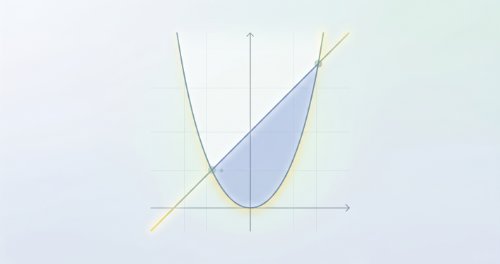
Mathematics rarely ends with a single exact answer. This course teaches you how to solve inequalities, focusing on ranges of valid numbers and bounded regions. You will master analytical and graphical methods for linear inequalities and learn to solve quadratic inequalities using integral roots. We focus heavily on interpreting visual data, specifically identifying and shading the correct regions on a coordinate plane to represent solutions accurately.
Real-world problems require limits and boundaries rather than exact figures. Businesses use this logic to maximise profit and minimise cost within strict budget constraints. Engineers apply these concepts to determine safe operating ranges for materials and structures. Mastering the rules of inequalities gives you the mathematical tools to make optimal decisions when resources are scarce or conditions are restricted.
Upon completion, you will solve linear inequalities analytically, plot them accurately on a graph, and shade the correct bounded regions. You will also calculate integral roots of quadratic inequalities and interpret the intersection of graphs to identify common solution sets. The instruction prioritises clear methods for translating algebraic expressions into visual boundaries without confusion.
This material targets Senior Secondary students preparing for their university entrance examinations. However, the foundational concepts are highly relevant to anyone needing a solid refresher in algebraic logic and spatial reasoning. University students starting introductory economics or engineering courses will find the graphical techniques extremely useful for their core modules. Anyone seeking a clear grasp of mathematical boundaries will benefit directly from this content.
Inequalities - Mathematics (Senior Secondary)
Mathematics rarely ends with a single exact answer. This course teaches you how to solve inequalities, focusing on ranges of valid numbers and bounded regions. You will master analytical and graphical methods for linear inequalities and learn to solve quadratic inequalities using integral roots. We focus heavily on interpreting visual data, specifically identifying and shading the correct regions on a coordinate plane to represent solutions accurately. Real-world problems require limits and boundaries rather than exact figures. Businesses use this logic to maximise profit and minimise cost within strict budget constraints. Engineers apply these concepts to determine safe operating ranges for materials and structures. Mastering the rules of inequalities gives you the mathematical tools to make optimal decisions when resources are scarce or conditions are restricted. Upon completion, you will solve linear inequalities analytically, plot them accurately on a graph, and shade the correct bounded regions. You will also calculate integral roots of quadratic inequalities and interpret the intersection of graphs to identify common solution sets. The instruction prioritises clear methods for translating algebraic expressions into visual boundaries without confusion. This material targets Senior Secondary students preparing for their university entrance examinations. However, the foundational concepts are highly relevant to anyone needing a solid refresher in algebraic logic and spatial reasoning. University students starting introductory economics or engineering courses will find the graphical techniques extremely useful for their core modules. Anyone seeking a clear grasp of mathematical boundaries will benefit directly from this content.
Variations - Mathematics (Senior Secondary)
Understanding how changing one quantity affects another is fundamental to mathematics. This UniDrills course details the mechanics of proportional relationships between changing variables. We cover direct, inverse, joint, and partial variation. You will also calculate percentage increase and decrease within these relationships.
The real world operates on variation. If a driver increases vehicle speed, travel time reduces; if a trader buys more goods, total cost increases. This mathematical knowledge is essential for physics, economics, and basic financial planning. Engineers and economists use these exact principles to model supply and demand, calculate limits of materials, and predict project timelines. Grasping these mathematical dependencies allows you to interpret data and make logical decisions in daily situations.
Upon completing this module, you will possess specific analytical skills. You will identify distinct types of variation from word problems and data tables. You will construct mathematical equations representing these relationships, calculate the constant of the variation, and solve for unknown variables. You will also compute how percentage changes in independent variables alter the outcomes of the dependent variables.
This course primarily targets senior secondary students preparing for university entrance examinations. However, the foundational approach makes it highly beneficial for a broader audience. University freshmen needing a mathematics refresher and independent learners studying basic algebra will find the content entirely accessible. The direct instruction method ensures anyone with basic arithmetic skills can grasp the principles of the mathematical variation.
Variations - Mathematics (Senior Secondary)
Understanding how changing one quantity affects another is fundamental to mathematics. This UniDrills course details the mechanics of proportional relationships between changing variables. We cover direct, inverse, joint, and partial variation. You will also calculate percentage increase and decrease within these relationships. The real world operates on variation. If a driver increases vehicle speed, travel time reduces; if a trader buys more goods, total cost increases. This mathematical knowledge is essential for physics, economics, and basic financial planning. Engineers and economists use these exact principles to model supply and demand, calculate limits of materials, and predict project timelines. Grasping these mathematical dependencies allows you to interpret data and make logical decisions in daily situations. Upon completing this module, you will possess specific analytical skills. You will identify distinct types of variation from word problems and data tables. You will construct mathematical equations representing these relationships, calculate the constant of the variation, and solve for unknown variables. You will also compute how percentage changes in independent variables alter the outcomes of the dependent variables. This course primarily targets senior secondary students preparing for university entrance examinations. However, the foundational approach makes it highly beneficial for a broader audience. University freshmen needing a mathematics refresher and independent learners studying basic algebra will find the content entirely accessible. The direct instruction method ensures anyone with basic arithmetic skills can grasp the principles of the mathematical variation.
Sequences and Series - Mathematics (Senior Secondary)
Ordered numbers form predictable patterns. This course explains the mathematics of these patterns and their accumulated sums. You will learn to generate sequences and find the exact value of the nth term. We cover the computation of sums for both arithmetic and geometric progressions. You will also calculate the sum to infinity of a geometric progression.
These mathematical concepts have direct uses outside the classroom. Banks use geometric progressions to calculate compound interest and plan loan repayments. Computer programmers apply sequences to write efficient code. Engineers rely on series to predict structural loads. Knowing these methods allows you to solve real problems in finance, computing, and construction.
You will gain practical skills to solve mathematical problems quickly. You will learn to find the common difference or common ratio of a sequence. You will use standard formulae to predict any term in a progression. You will calculate the total sum of finite arithmetic and geometric progressions. You will evaluate the sum to infinity of a geometric progression and apply these rules to standard examination questions.
This course targets senior secondary students preparing for their university entrance examinations. It provides the exact mathematical foundation needed for university admission in science and engineering. First-year university students can use this module to review core mathematical principles. Anyone interested in understanding how number patterns work will find the direct explanations useful.
Sequences and Series - Mathematics (Senior Secondary)
Ordered numbers form predictable patterns. This course explains the mathematics of these patterns and their accumulated sums. You will learn to generate sequences and find the exact value of the nth term. We cover the computation of sums for both arithmetic and geometric progressions. You will also calculate the sum to infinity of a geometric progression. These mathematical concepts have direct uses outside the classroom. Banks use geometric progressions to calculate compound interest and plan loan repayments. Computer programmers apply sequences to write efficient code. Engineers rely on series to predict structural loads. Knowing these methods allows you to solve real problems in finance, computing, and construction. You will gain practical skills to solve mathematical problems quickly. You will learn to find the common difference or common ratio of a sequence. You will use standard formulae to predict any term in a progression. You will calculate the total sum of finite arithmetic and geometric progressions. You will evaluate the sum to infinity of a geometric progression and apply these rules to standard examination questions. This course targets senior secondary students preparing for their university entrance examinations. It provides the exact mathematical foundation needed for university admission in science and engineering. First-year university students can use this module to review core mathematical principles. Anyone interested in understanding how number patterns work will find the direct explanations useful.
Binary Operations - Mathematics (Senior Secondary)
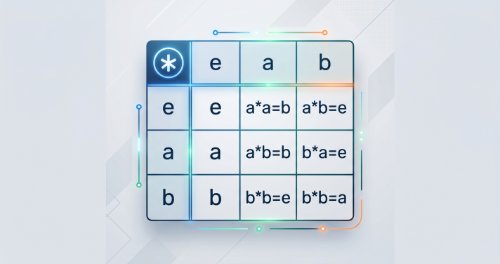
Mathematics relies on rules combining elements to form new outcomes. This course breaks down the mechanics of binary operations to build a foundation for abstract algebra. You will learn how basic operators function under strict conditions and examine the core properties governing mathematical sets. The curriculum covers the essential structures dictating how numbers interact within defined systems.
Understanding the logic of mathematical operations is critical for computer programming and data security. Software developers use these exact mathematical principles to write efficient code and manage databases. Engineers apply these concepts to construct secure communication algorithms. Mastering this logical framework trains you to analyse systems and solve structural problems with precision.
By completing this instruction, you will master the concepts of closure, commutativity, associativity, and distributivity across various sets. You will quickly evaluate the properties of an operation and accurately calculate the identity element and inverse elements. The coursework ensures you can solve standard abstract algebra problems systematically without relying on rote memorisation.
This course targets senior secondary students preparing for university entrance examinations. It also provides a rapid, practical review for university students requiring a clear grounding in abstract algebraic structures. Anyone who wants a direct and logical explanation of mathematical combinations will benefit from the straightforward methods taught in these modules.
Binary Operations - Mathematics (Senior Secondary)
Mathematics relies on rules combining elements to form new outcomes. This course breaks down the mechanics of binary operations to build a foundation for abstract algebra. You will learn how basic operators function under strict conditions and examine the core properties governing mathematical sets. The curriculum covers the essential structures dictating how numbers interact within defined systems. Understanding the logic of mathematical operations is critical for computer programming and data security. Software developers use these exact mathematical principles to write efficient code and manage databases. Engineers apply these concepts to construct secure communication algorithms. Mastering this logical framework trains you to analyse systems and solve structural problems with precision. By completing this instruction, you will master the concepts of closure, commutativity, associativity, and distributivity across various sets. You will quickly evaluate the properties of an operation and accurately calculate the identity element and inverse elements. The coursework ensures you can solve standard abstract algebra problems systematically without relying on rote memorisation. This course targets senior secondary students preparing for university entrance examinations. It also provides a rapid, practical review for university students requiring a clear grounding in abstract algebraic structures. Anyone who wants a direct and logical explanation of mathematical combinations will benefit from the straightforward methods taught in these modules.
Matrices and Determinants - Mathematics (Senior Secondary)
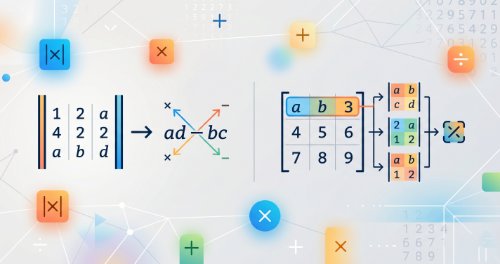
Matrix arithmetic operates on distinct rules separate from standard algebra. This course explains the exact mechanics of these number grids. You will learn basic matrix operations, the algebra of matrices, and the calculation of determinants for matrices not exceeding dimensions of 3x3. We also cover the computation of inverses for 2x2 matrices.
Matrices form the foundation of computer graphics, structural engineering, and modern data processing. Understanding the behaviour of these grids allows you to structure large data sets efficiently. Software developers use matrices to render environments on screens, while engineers rely on them to calculate stress points within the framework of a building. Mastering these rules gives you the exact tools required for technical problem-solving across various engineering and scientific careers.
Upon completion, you will accurately execute standard arithmetic operations across different types of matrices. You will compute the determinant of matrices up to a 3x3 scale, calculate the inverse of 2x2 matrices, and apply these specific algebraic rules to solve complex linear equations. You will understand the exact mathematical structure of matrices and use these properties to solve standard examination questions and technical problems with speed and precision.
This course targets Senior Secondary Mathematics students preparing for university entrance examinations across Nigeria and beyond. It also serves as a direct bridge for fresh university undergraduates entering science and engineering fields who need a strict foundation in basic linear algebra. Any independent learner seeking a clear explanation of matrix arithmetic will find this direct approach highly beneficial for personal academic growth.
Matrices and Determinants - Mathematics (Senior Secondary)
Matrix arithmetic operates on distinct rules separate from standard algebra. This course explains the exact mechanics of these number grids. You will learn basic matrix operations, the algebra of matrices, and the calculation of determinants for matrices not exceeding dimensions of 3x3. We also cover the computation of inverses for 2x2 matrices. Matrices form the foundation of computer graphics, structural engineering, and modern data processing. Understanding the behaviour of these grids allows you to structure large data sets efficiently. Software developers use matrices to render environments on screens, while engineers rely on them to calculate stress points within the framework of a building. Mastering these rules gives you the exact tools required for technical problem-solving across various engineering and scientific careers. Upon completion, you will accurately execute standard arithmetic operations across different types of matrices. You will compute the determinant of matrices up to a 3x3 scale, calculate the inverse of 2x2 matrices, and apply these specific algebraic rules to solve complex linear equations. You will understand the exact mathematical structure of matrices and use these properties to solve standard examination questions and technical problems with speed and precision. This course targets Senior Secondary Mathematics students preparing for university entrance examinations across Nigeria and beyond. It also serves as a direct bridge for fresh university undergraduates entering science and engineering fields who need a strict foundation in basic linear algebra. Any independent learner seeking a clear explanation of matrix arithmetic will find this direct approach highly beneficial for personal academic growth.
Geometry of Lines and Polygons - Mathematics (Senior Secondary)
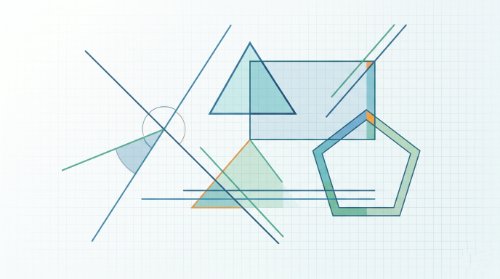
The physical world rests on geometric principles. This course covers the fundamental mechanics of plane geometry; it examines the properties of lines, angles, general polygons, triangles, and quadrilaterals. You will learn the strict rules governing straight-edged shapes in two dimensions. We analyse intersecting lines, parallel lines, and the angles they form. The curriculum presents the precise logic of spatial mathematics.
A strong grasp of geometry is essential for practical professions. Architects use these principles to design stable structures; engineers apply them to calculate forces and material requirements. Surveyors rely on the geometry of polygons to map land areas accurately. Software developers also use plane geometry to build graphics, video games, and user interfaces. Mastering these concepts provides the mathematical foundation necessary for technical careers and everyday spatial problem-solving.
Upon completion, you will calculate unknown angles formed by intersecting and parallel lines. You will prove theorems regarding the interior and exterior angles of the polygon. The course trains you to apply the properties of the triangle to solve complex spatial equations. You will distinguish between various forms of the quadrilateral and compute their distinct dimensions. You will develop the ability to construct geometric proofs and solve examination standard problems rapidly and accurately.
This course targets Senior Secondary School students preparing for university entrance examinations. It provides direct preparation for standard mathematics assessments across Nigeria and beyond. The material also benefits university freshmen needing a rapid review of foundational geometry for science and engineering degrees. Anyone seeking a clear, rigorous understanding of plane geometry will find this content highly practical and immediately useful.
Geometry of Lines and Polygons - Mathematics (Senior Secondary)
The physical world rests on geometric principles. This course covers the fundamental mechanics of plane geometry; it examines the properties of lines, angles, general polygons, triangles, and quadrilaterals. You will learn the strict rules governing straight-edged shapes in two dimensions. We analyse intersecting lines, parallel lines, and the angles they form. The curriculum presents the precise logic of spatial mathematics. A strong grasp of geometry is essential for practical professions. Architects use these principles to design stable structures; engineers apply them to calculate forces and material requirements. Surveyors rely on the geometry of polygons to map land areas accurately. Software developers also use plane geometry to build graphics, video games, and user interfaces. Mastering these concepts provides the mathematical foundation necessary for technical careers and everyday spatial problem-solving. Upon completion, you will calculate unknown angles formed by intersecting and parallel lines. You will prove theorems regarding the interior and exterior angles of the polygon. The course trains you to apply the properties of the triangle to solve complex spatial equations. You will distinguish between various forms of the quadrilateral and compute their distinct dimensions. You will develop the ability to construct geometric proofs and solve examination standard problems rapidly and accurately. This course targets Senior Secondary School students preparing for university entrance examinations. It provides direct preparation for standard mathematics assessments across Nigeria and beyond. The material also benefits university freshmen needing a rapid review of foundational geometry for science and engineering degrees. Anyone seeking a clear, rigorous understanding of plane geometry will find this content highly practical and immediately useful.
Circle Geometry - Mathematics (Senior Secondary)
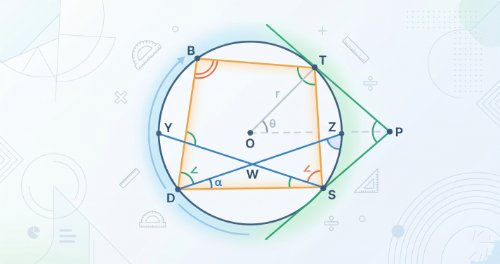
Geometry relies heavily on the constant properties of the circle. This course covers the core principles of circle geometry required at the senior secondary level. You will study circle angle properties, cyclic quadrilaterals, intersecting chords and tangents. The lessons break down complex theorems into straightforward rules for solving geometric problems.
The mathematical framework of the circle applies directly to engineering, architecture and satellite navigation. Professionals use these theorems to calculate loads, design round structures and plot exact locations on maps. Mastering these geometric relationships improves your spatial reasoning and equips you for technical fields where exact measurements are critical.
By completing this course, you will acquire the ability to apply standard circle theorems to find missing angles and lengths. You will learn to identify the relationships between angles subtended at the centre and the circumference. You will also calculate dimensions involving intersecting chords, tangents and secants, and prove the core properties of cyclic quadrilaterals.
This course is primarily for senior secondary students preparing for university entrance examinations. It also serves as a precise refresher for university candidates and adult learners transitioning into technical careers. Anyone struggling with the geometry of the circle will find these direct, focused lessons immediately useful.
Circle Geometry - Mathematics (Senior Secondary)
Geometry relies heavily on the constant properties of the circle. This course covers the core principles of circle geometry required at the senior secondary level. You will study circle angle properties, cyclic quadrilaterals, intersecting chords and tangents. The lessons break down complex theorems into straightforward rules for solving geometric problems. The mathematical framework of the circle applies directly to engineering, architecture and satellite navigation. Professionals use these theorems to calculate loads, design round structures and plot exact locations on maps. Mastering these geometric relationships improves your spatial reasoning and equips you for technical fields where exact measurements are critical. By completing this course, you will acquire the ability to apply standard circle theorems to find missing angles and lengths. You will learn to identify the relationships between angles subtended at the centre and the circumference. You will also calculate dimensions involving intersecting chords, tangents and secants, and prove the core properties of cyclic quadrilaterals. This course is primarily for senior secondary students preparing for university entrance examinations. It also serves as a precise refresher for university candidates and adult learners transitioning into technical careers. Anyone struggling with the geometry of the circle will find these direct, focused lessons immediately useful.
Construction and Loci - Mathematics (Senior Secondary)
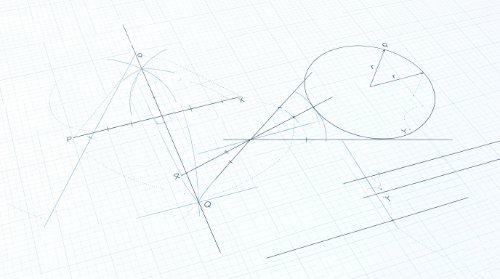
Master the physical creation of geometric concepts. This course teaches the precise procedures for drawing special angles and exact geometric shapes. You will learn to trace two-dimensional loci using strict mathematical principles relating to parallel lines, perpendicular bisectors, angle bisectors, and circles.
Geometry extends beyond paper. The physical construction and point-path tracing taught here are practical applications that demand a solid prior understanding of theoretical two-dimensional shapes. Architects, land surveyors, and civil engineers use these exact techniques daily to draft floor plans, locate boundaries, and design mechanical parts.
Upon completion, you will possess specific technical skills. You will be able to construct standard angles using only a pair of compasses and a ruler; bisect lines and angles accurately; draw complex polygons; and determine the exact path of a moving point subject to specific geometric conditions.
This material targets senior secondary school students preparing for university entrance examinations. However, university students in introductory engineering courses, technical draughtspersons, and anyone needing a practical refresher on geometric drawing will find the direct instruction highly valuable for their immediate technical needs.
Construction and Loci - Mathematics (Senior Secondary)
Master the physical creation of geometric concepts. This course teaches the precise procedures for drawing special angles and exact geometric shapes. You will learn to trace two-dimensional loci using strict mathematical principles relating to parallel lines, perpendicular bisectors, angle bisectors, and circles. Geometry extends beyond paper. The physical construction and point-path tracing taught here are practical applications that demand a solid prior understanding of theoretical two-dimensional shapes. Architects, land surveyors, and civil engineers use these exact techniques daily to draft floor plans, locate boundaries, and design mechanical parts. Upon completion, you will possess specific technical skills. You will be able to construct standard angles using only a pair of compasses and a ruler; bisect lines and angles accurately; draw complex polygons; and determine the exact path of a moving point subject to specific geometric conditions. This material targets senior secondary school students preparing for university entrance examinations. However, university students in introductory engineering courses, technical draughtspersons, and anyone needing a practical refresher on geometric drawing will find the direct instruction highly valuable for their immediate technical needs.
Mensuration - Mathematics (Senior Secondary)
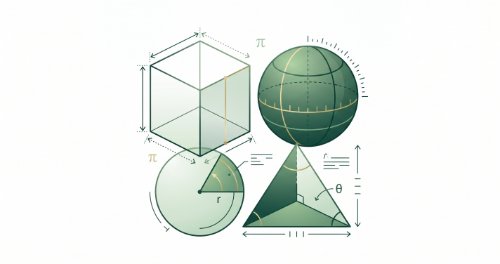
Mensuration is the mathematics of physical space. This course covers the exact calculations required to quantify lengths, perimeters, and areas of plane geometrical figures including triangles, quadrilaterals, circles, sectors, and segments. You will evaluate surface areas and volumes of simple solids and composite figures. Furthermore, the curriculum explains the methods for determining distances between two points on the surface of the earth using longitudes and latitudes.
Understanding these principles is mandatory for physical construction and navigation. Builders, architects, and engineers apply these formulas daily to determine material quantities and spatial requirements for structures. Beyond professional fields, anyone planning a personal project like fencing a compound, painting a house, or fabricating a water tank needs this knowledge to estimate costs accurately. The ability to calculate distances using coordinates also forms the foundation of modern aviation and global positioning.
Upon completion, you will possess specific skills to measure physical properties accurately. You will know how to apply standard formulas to find the area of complex shapes, compute the volume of composite solids, and calculate spherical distances along great circles. You will also develop the spatial reasoning required to break down complex structures into simple geometric components for easy analysis. These skills ensure you can solve standard examination questions and practical measurement problems directly.
This course targets senior secondary school students preparing for university entrance examinations. However, the foundational concepts are highly beneficial for university students entering engineering or environmental design programmes who need a quick refresher. Artisans, technicians, and self-taught builders will also find the practical applications useful for improving the precision of their daily work.
Mensuration - Mathematics (Senior Secondary)
Mensuration is the mathematics of physical space. This course covers the exact calculations required to quantify lengths, perimeters, and areas of plane geometrical figures including triangles, quadrilaterals, circles, sectors, and segments. You will evaluate surface areas and volumes of simple solids and composite figures. Furthermore, the curriculum explains the methods for determining distances between two points on the surface of the earth using longitudes and latitudes. Understanding these principles is mandatory for physical construction and navigation. Builders, architects, and engineers apply these formulas daily to determine material quantities and spatial requirements for structures. Beyond professional fields, anyone planning a personal project like fencing a compound, painting a house, or fabricating a water tank needs this knowledge to estimate costs accurately. The ability to calculate distances using coordinates also forms the foundation of modern aviation and global positioning. Upon completion, you will possess specific skills to measure physical properties accurately. You will know how to apply standard formulas to find the area of complex shapes, compute the volume of composite solids, and calculate spherical distances along great circles. You will also develop the spatial reasoning required to break down complex structures into simple geometric components for easy analysis. These skills ensure you can solve standard examination questions and practical measurement problems directly. This course targets senior secondary school students preparing for university entrance examinations. However, the foundational concepts are highly beneficial for university students entering engineering or environmental design programmes who need a quick refresher. Artisans, technicians, and self-taught builders will also find the practical applications useful for improving the precision of their daily work.
Trigonometry - Mathematics (Senior Secondary)
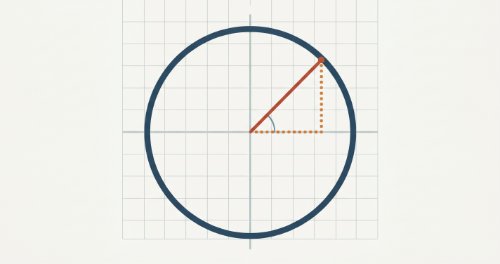
Trigonometry defines the exact relationship between angles, distances, and periodic motion. This course covers the core rules of triangle measurements and spatial direction. You will calculate the trigonometrical ratios of angles between -360 and 360 degrees. The content also strictly covers the plots of sine and cosine functions.
This knowledge is strictly practical. Surveyors use these methods to map land and establish boundaries. Engineers calculate structural loads using these exact formulae. Pilots rely on bearings to determine travel routes. You will apply these mathematical rules to solve physical problems in construction, architecture, and basic physics.
You will learn to calculate angles of elevation and depression accurately. You will solve spatial problems involving bearings and physical distances. You will apply the sine and cosine formulae to determine the lengths of unknown sides and calculate the areas of triangles. Finally, you will extract data from and solve problems involving the graphs of sine and cosine functions.
This course targets senior secondary students preparing for their university entrance examinations. It also serves first-year university students who require a solid foundation in spatial mathematics. Artisans and technical apprentices in the building trades will find the measurement rules immediately useful. Anyone needing to calculate precise physical dimensions will benefit from these direct instructions.
Trigonometry - Mathematics (Senior Secondary)
Trigonometry defines the exact relationship between angles, distances, and periodic motion. This course covers the core rules of triangle measurements and spatial direction. You will calculate the trigonometrical ratios of angles between -360 and 360 degrees. The content also strictly covers the plots of sine and cosine functions. This knowledge is strictly practical. Surveyors use these methods to map land and establish boundaries. Engineers calculate structural loads using these exact formulae. Pilots rely on bearings to determine travel routes. You will apply these mathematical rules to solve physical problems in construction, architecture, and basic physics. You will learn to calculate angles of elevation and depression accurately. You will solve spatial problems involving bearings and physical distances. You will apply the sine and cosine formulae to determine the lengths of unknown sides and calculate the areas of triangles. Finally, you will extract data from and solve problems involving the graphs of sine and cosine functions. This course targets senior secondary students preparing for their university entrance examinations. It also serves first-year university students who require a solid foundation in spatial mathematics. Artisans and technical apprentices in the building trades will find the measurement rules immediately useful. Anyone needing to calculate precise physical dimensions will benefit from these direct instructions.
Coordinate Geometry - Mathematics (Senior Secondary)
Mathematics becomes practical when you connect numbers with physical space. This course bridges basic algebra and visual geometry on a two-dimensional plane. You will learn to translate geometric concepts into algebraic equations and vice versa. We focus strictly on straight lines to establish a strong foundation in coordinate geometry.
Understanding the position of points on a grid is fundamental to modern technology. This mathematical framework powers satellite navigation, computer graphics, and architectural design. By mastering these concepts, you acquire the exact mathematical tools that engineers and software developers use to model physical spaces on a computer screen.
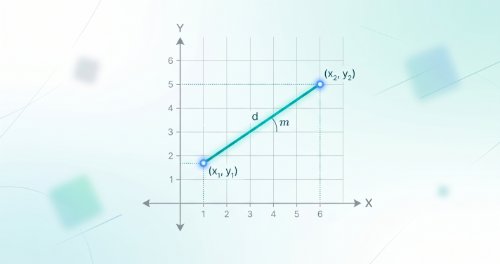
Upon completing this course, you will possess specific and measurable mathematical skills. You will easily calculate the distance, midpoint, and gradient between any two points on a line segment. You will also identify the exact mathematical conditions for parallel and perpendicular lines, and you will formulate equations of straight lines using various standard forms.
This course primarily targets senior secondary school students preparing for major final examinations like WAEC, NECO, and JAMB. However, the foundational nature of the subject matter makes it highly valuable for other learners. University freshmen requiring a quick refresher or independent learners transitioning into technical fields will find the material directly applicable and exceptionally clear.
Coordinate Geometry - Mathematics (Senior Secondary)
Mathematics becomes practical when you connect numbers with physical space. This course bridges basic algebra and visual geometry on a two-dimensional plane. You will learn to translate geometric concepts into algebraic equations and vice versa. We focus strictly on straight lines to establish a strong foundation in coordinate geometry. Understanding the position of points on a grid is fundamental to modern technology. This mathematical framework powers satellite navigation, computer graphics, and architectural design. By mastering these concepts, you acquire the exact mathematical tools that engineers and software developers use to model physical spaces on a computer screen. Upon completing this course, you will possess specific and measurable mathematical skills. You will easily calculate the distance, midpoint, and gradient between any two points on a line segment. You will also identify the exact mathematical conditions for parallel and perpendicular lines, and you will formulate equations of straight lines using various standard forms. This course primarily targets senior secondary school students preparing for major final examinations like WAEC, NECO, and JAMB. However, the foundational nature of the subject matter makes it highly valuable for other learners. University freshmen requiring a quick refresher or independent learners transitioning into technical fields will find the material directly applicable and exceptionally clear.
Differentiation - Mathematics (Senior Secondary)
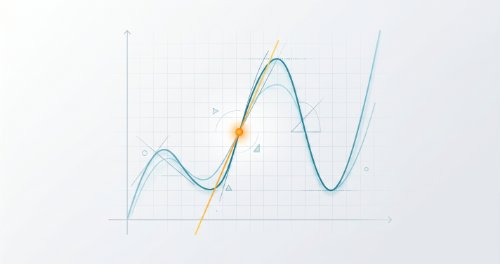
Change is constant, and differentiation measures it exactly. This course isolates differentiation to clarify the concept of instantaneous change before introducing reverse operations. You will calculate the limit of a function, differentiate explicit algebraic expressions, and handle simple trigonometrical functions. The content separates these rules to build a strong foundation in calculus without confusion.
Knowing how fast things change applies directly to real problems. You use differentiation to optimise materials in engineering, predict market trends in economics, or calculate velocity in physics. Mastering the rate of change allows you to find peak efficiency or minimum waste in practical scenarios. These tools apply to any field where variables shift over time or space.
You will learn to evaluate the limit of a continuous function. You will compute derivatives of standard algebraic and trigonometric equations; you will also solve applied problems involving the rate of change of a physical quantity. Furthermore, you will determine points of maxima and minima to solve optimisation problems accurately. The focus remains strictly on applying rules of differentiation to extract exact values from dynamic systems.
This material targets senior secondary students preparing for university entrance examinations. It also serves university freshmen who need a clear review of fundamental calculus concepts. Anyone requiring a direct approach to the mathematics of change will gain exact methods to solve complex equations. The course provides the necessary mathematical tools to pass exams and succeed in technical disciplines.
Differentiation - Mathematics (Senior Secondary)
Change is constant, and differentiation measures it exactly. This course isolates differentiation to clarify the concept of instantaneous change before introducing reverse operations. You will calculate the limit of a function, differentiate explicit algebraic expressions, and handle simple trigonometrical functions. The content separates these rules to build a strong foundation in calculus without confusion. Knowing how fast things change applies directly to real problems. You use differentiation to optimise materials in engineering, predict market trends in economics, or calculate velocity in physics. Mastering the rate of change allows you to find peak efficiency or minimum waste in practical scenarios. These tools apply to any field where variables shift over time or space. You will learn to evaluate the limit of a continuous function. You will compute derivatives of standard algebraic and trigonometric equations; you will also solve applied problems involving the rate of change of a physical quantity. Furthermore, you will determine points of maxima and minima to solve optimisation problems accurately. The focus remains strictly on applying rules of differentiation to extract exact values from dynamic systems. This material targets senior secondary students preparing for university entrance examinations. It also serves university freshmen who need a clear review of fundamental calculus concepts. Anyone requiring a direct approach to the mathematics of change will gain exact methods to solve complex equations. The course provides the necessary mathematical tools to pass exams and succeed in technical disciplines.
Integration - Mathematics (Senior Secondary)
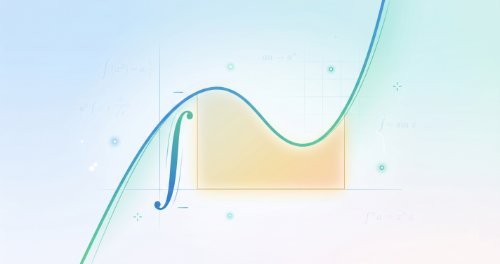
Integration is the mathematics of accumulation and exact areas. This course teaches the anti-derivatives of explicit algebraic and simple trigonometrical functions. You will learn how to reverse the process of differentiation and compute the exact area under a curve.
Professionals use integration to solve practical problems involving continuous change. Civil engineers apply it to calculate the structural load of buildings; surveyors use it to measure the area of irregular plots of land. You will apply these principles to calculate total distance from velocity data, determine volumes of solid objects, and model continuous growth across physics, engineering, and economics.
You will compute definite and indefinite integrals for polynomial and basic trigonometric functions. You will apply the fundamental theorem of calculus to find the exact area bound by a curve and the horizontal axis. You will also determine the constant of integration and use given boundary conditions to solve specific equations.
This material is for senior secondary students preparing for school-leaving and university entrance examinations. First-year university students in science and engineering will use it to build a strict foundation in basic calculus. Any learner needing a direct, practical grasp of area accumulation and anti-derivatives will benefit from the content.
Integration - Mathematics (Senior Secondary)
Integration is the mathematics of accumulation and exact areas. This course teaches the anti-derivatives of explicit algebraic and simple trigonometrical functions. You will learn how to reverse the process of differentiation and compute the exact area under a curve. Professionals use integration to solve practical problems involving continuous change. Civil engineers apply it to calculate the structural load of buildings; surveyors use it to measure the area of irregular plots of land. You will apply these principles to calculate total distance from velocity data, determine volumes of solid objects, and model continuous growth across physics, engineering, and economics. You will compute definite and indefinite integrals for polynomial and basic trigonometric functions. You will apply the fundamental theorem of calculus to find the exact area bound by a curve and the horizontal axis. You will also determine the constant of integration and use given boundary conditions to solve specific equations. This material is for senior secondary students preparing for school-leaving and university entrance examinations. First-year university students in science and engineering will use it to build a strict foundation in basic calculus. Any learner needing a direct, practical grasp of area accumulation and anti-derivatives will benefit from the content.

Descriptive Statistics - Mathematics (Senior Secondary)
Raw numbers are useless until you organise them. This course covers the exact methods for collecting, representing, and summarising numerical data. You will learn to interpret frequency distribution tables, histograms, bar charts, and pie charts. The focus is strictly on the mathematical workflow of taking raw information and making it understandable.
Data analysis is a highly practical skill. You can apply these methods to track business sales, evaluate sports statistics, or manage personal budgets. Professionals use these same tools to spot trends and compare different groups. You will learn to make decisions based on clear facts rather than guesses.
By the end of the lessons, you will have specific mathematical skills. You will calculate the mean, mode, and median of both ungrouped and grouped data. You will also construct and use an Ogive to determine the median, quartiles, and percentiles. Furthermore, you will compute the range, mean deviation, variance, and standard deviation to measure the spread of the numbers.
The primary audience for this course is Senior Secondary students preparing for university entrance examinations. It covers the required syllabus directly. The content also benefits university students who need a quick review of basic statistics or small business owners tracking sales. Anyone who wants to understand how to process numerical data will find this material practical and immediately applicable.
Descriptive Statistics - Mathematics (Senior Secondary)
Raw numbers are useless until you organise them. This course covers the exact methods for collecting, representing, and summarising numerical data. You will learn to interpret frequency distribution tables, histograms, bar charts, and pie charts. The focus is strictly on the mathematical workflow of taking raw information and making it understandable. Data analysis is a highly practical skill. You can apply these methods to track business sales, evaluate sports statistics, or manage personal budgets. Professionals use these same tools to spot trends and compare different groups. You will learn to make decisions based on clear facts rather than guesses. By the end of the lessons, you will have specific mathematical skills. You will calculate the mean, mode, and median of both ungrouped and grouped data. You will also construct and use an Ogive to determine the median, quartiles, and percentiles. Furthermore, you will compute the range, mean deviation, variance, and standard deviation to measure the spread of the numbers. The primary audience for this course is Senior Secondary students preparing for university entrance examinations. It covers the required syllabus directly. The content also benefits university students who need a quick review of basic statistics or small business owners tracking sales. Anyone who wants to understand how to process numerical data will find this material practical and immediately applicable.
Permutation and Combination - Mathematics (Senior Secondary)
Master the pure logic of counting and arrangement. This course isolates the exact mathematics of permutation and combination before introducing probability. You will study linear and circular arrangements; you will also solve complex problems involving repeated objects. We focus entirely on the core mechanics of counting to ensure you understand how to evaluate groups and sequences mathematically.
Arrangement theory forms the foundation of computer science, data analysis, and cryptography. You can apply this knowledge directly to create secure password systems, optimise daily schedules, or build logical algorithms for personal coding projects. Software developers use these exact principles to sort large data sets and manage network routing. Understanding the logic of counting gives you a sharp advantage in technical careers and modern engineering fields.
By the end of this course, you will calculate distinct linear sequences rapidly and accurately. You will evaluate circular permutations; you will also identify and solve arrangements containing identical items. You will apply the fundamental principle of counting to select and group objects without drawing manual lists. This training gives you the direct mathematical skill to evaluate the exact size of any sample space.
This course primarily targets senior secondary mathematics students preparing for university entrance examinations in Nigeria and across the world. It also serves early university students taking introductory statistics who require a strict foundation in basic counting rules. Anyone curious about logic puzzles, game design, or basic programming will build essential problem-solving skills from mastering these concepts.
Permutation and Combination - Mathematics (Senior Secondary)
Master the pure logic of counting and arrangement. This course isolates the exact mathematics of permutation and combination before introducing probability. You will study linear and circular arrangements; you will also solve complex problems involving repeated objects. We focus entirely on the core mechanics of counting to ensure you understand how to evaluate groups and sequences mathematically. Arrangement theory forms the foundation of computer science, data analysis, and cryptography. You can apply this knowledge directly to create secure password systems, optimise daily schedules, or build logical algorithms for personal coding projects. Software developers use these exact principles to sort large data sets and manage network routing. Understanding the logic of counting gives you a sharp advantage in technical careers and modern engineering fields. By the end of this course, you will calculate distinct linear sequences rapidly and accurately. You will evaluate circular permutations; you will also identify and solve arrangements containing identical items. You will apply the fundamental principle of counting to select and group objects without drawing manual lists. This training gives you the direct mathematical skill to evaluate the exact size of any sample space. This course primarily targets senior secondary mathematics students preparing for university entrance examinations in Nigeria and across the world. It also serves early university students taking introductory statistics who require a strict foundation in basic counting rules. Anyone curious about logic puzzles, game design, or basic programming will build essential problem-solving skills from mastering these concepts.

Probability - Mathematics (Senior Secondary)
Chance dictates daily outcomes, and probability measures this mathematically. This course delivers the core principles of probability required for Senior Secondary mathematics. You will study experimental probability using familiar actions like tossing coins and rolling dice. The module progresses to theoretical calculations, focusing on the rules of addition for mutually exclusive outcomes and the rules of multiplication for independent events. This content functions as the final application of your prior work on the mathematics of fractions and combinations.
Understanding the mathematics of chance has direct practical value. It serves as the foundation for risk assessment in business, finance, and software engineering. Calculating the likelihood of specific outcomes enables you to base decisions on hard data rather than guesswork. Tech developers rely on these exact principles to build predictive algorithms, while financial analysts use them to forecast market behaviour. Mastering these calculations gives you the logical framework required to handle uncertainty in professional careers.
Upon completing this module, you will possess specific analytical capabilities. You will accurately construct sample spaces for both single and combined events. You will calculate the probability of experimental outcomes using observed frequencies. You will correctly apply the laws of addition and multiplication to resolve complex problems involving mutual exclusivity and independence. Finally, you will integrate the rules of probability with the principles of combinatorics to answer advanced examination questions confidently.
This course targets Senior Secondary School students preparing for certificate examinations like WAEC, NECO, and JAMB. University freshmen who require a rigorous refresher before starting advanced statistics courses will also find it highly effective. Adult learners or aspiring data analysts outside the formal school system can use this module to build mathematical competence. Anyone who wants to develop strong analytical reasoning will acquire the precise mathematical tools needed to solve real problems.
Probability - Mathematics (Senior Secondary)
Chance dictates daily outcomes, and probability measures this mathematically. This course delivers the core principles of probability required for Senior Secondary mathematics. You will study experimental probability using familiar actions like tossing coins and rolling dice. The module progresses to theoretical calculations, focusing on the rules of addition for mutually exclusive outcomes and the rules of multiplication for independent events. This content functions as the final application of your prior work on the mathematics of fractions and combinations. Understanding the mathematics of chance has direct practical value. It serves as the foundation for risk assessment in business, finance, and software engineering. Calculating the likelihood of specific outcomes enables you to base decisions on hard data rather than guesswork. Tech developers rely on these exact principles to build predictive algorithms, while financial analysts use them to forecast market behaviour. Mastering these calculations gives you the logical framework required to handle uncertainty in professional careers. Upon completing this module, you will possess specific analytical capabilities. You will accurately construct sample spaces for both single and combined events. You will calculate the probability of experimental outcomes using observed frequencies. You will correctly apply the laws of addition and multiplication to resolve complex problems involving mutual exclusivity and independence. Finally, you will integrate the rules of probability with the principles of combinatorics to answer advanced examination questions confidently. This course targets Senior Secondary School students preparing for certificate examinations like WAEC, NECO, and JAMB. University freshmen who require a rigorous refresher before starting advanced statistics courses will also find it highly effective. Adult learners or aspiring data analysts outside the formal school system can use this module to build mathematical competence. Anyone who wants to develop strong analytical reasoning will acquire the precise mathematical tools needed to solve real problems.