MTH 201: Mathematical Methods I
$ 29.99
Learning Track Courses
Real-Valued Functions - Advanced Calculus (Undergraduate Advanced)
Real-valued functions form the base of all advanced calculation in engineering and physics. This course maps the complete structure of these functions from first principles. You will cover number systems, the split between rational and irrational values, and exact interval notation. You will examine function behaviour at infinity. The work moves straight to domain and range analysis, supported by worked examples that lock the theory in place. You will classify polynomial, rational and algebraic forms. You will handle piecewise definitions, odd and even symmetry, and transcendental forms covering exponential, logarithmic, trigonometric and hyperbolic families.
Engineers and analysts use these functions daily to build accurate models and predict system results. You will apply domain rules to stop calculation errors in structural design. You will deploy exponential and logarithmic rules for signal processing and financial modelling. Trigonometric and hyperbolic functions govern wave analysis, circuit simulation and mechanical vibration studies. Correct use of piecewise and odd-even rules simplifies computer algorithms and cuts processing time. Mastery of this material removes guesswork and supplies reliable mathematical tools for real technical tasks.
You will leave able to find the exact domain and range of any function without external aid. You will group functions into algebraic, transcendental or piecewise types by quick inspection. You will adjust exponential, logarithmic and trigonometric expressions using standard identities. You will recognise odd and even symmetry to reduce integration workload. You will switch between direct and inverse forms of trigonometric and hyperbolic functions. You will solve combined problems that merge multiple function types into a single analytical framework.
This course targets undergraduates and graduate students who need advanced calculus for examination success. It suits engineering, physics and computer science students who require strict mathematical training. Learners who finished secondary school mathematics can still use the structured examples to build a solid base. Professionals returning to technical work will refresh core concepts rapidly. The clear progression and focused practice allow any serious student to command real-valued functions for academic or industrial use.
Real-Valued Functions - Advanced Calculus (Undergraduate Advanced)
Real-valued functions form the base of all advanced calculation in engineering and physics. This course maps the complete structure of these functions from first principles. You will cover number systems, the split between rational and irrational values, and exact interval notation. You will examine function behaviour at infinity. The work moves straight to domain and range analysis, supported by worked examples that lock the theory in place. You will classify polynomial, rational and algebraic forms. You will handle piecewise definitions, odd and even symmetry, and transcendental forms covering exponential, logarithmic, trigonometric and hyperbolic families. Engineers and analysts use these functions daily to build accurate models and predict system results. You will apply domain rules to stop calculation errors in structural design. You will deploy exponential and logarithmic rules for signal processing and financial modelling. Trigonometric and hyperbolic functions govern wave analysis, circuit simulation and mechanical vibration studies. Correct use of piecewise and odd-even rules simplifies computer algorithms and cuts processing time. Mastery of this material removes guesswork and supplies reliable mathematical tools for real technical tasks. You will leave able to find the exact domain and range of any function without external aid. You will group functions into algebraic, transcendental or piecewise types by quick inspection. You will adjust exponential, logarithmic and trigonometric expressions using standard identities. You will recognise odd and even symmetry to reduce integration workload. You will switch between direct and inverse forms of trigonometric and hyperbolic functions. You will solve combined problems that merge multiple function types into a single analytical framework. This course targets undergraduates and graduate students who need advanced calculus for examination success. It suits engineering, physics and computer science students who require strict mathematical training. Learners who finished secondary school mathematics can still use the structured examples to build a solid base. Professionals returning to technical work will refresh core concepts rapidly. The clear progression and focused practice allow any serious student to command real-valued functions for academic or industrial use.
Limits of Real-Valued Functions - Advanced Calculus (Undergraduate Advanced)
Limits dictate how mathematical models predict exact behaviour at critical points. This course covers formal and informal definitions of finite and infinite limits. You will study direct substitution, algebraic factorisation, conjugate multiplication, the squeeze theorem, and piecewise function analysis. The material handles indeterminate forms through derivative ratio techniques and rationalisation. Each method includes repeated worked examples to fix the procedure in your mind.
Engineers and analysts use limit evaluation to calculate instantaneous speed, stress thresholds in structures, and signal decay rates. Financial planners apply these rules to compound interest and market trend forecasting. Computer simulation software relies on accurate limit logic to prevent calculation crashes and rounding errors. Mastery of this material gives you reliable tools for real technical modelling and removes guesswork from system analysis.
You will construct formal proofs for finite and infinite limits using strict logical bounds. You will select the correct evaluation method from substitution, algebra, or derivative rules without hesitation. You will resolve indeterminate forms and apply boundary checks to complex piecewise cases. You will verify every answer through graphical inspection and numerical approximation. You will gain complete control over the transition points of any real function.
This course targets university students and postgraduate researchers in engineering, physics, or mathematics. Advanced secondary school students with strong algebra skills will secure a clear advantage before university entry. Professionals preparing for technical exams will rebuild their analytical foundation. The structured progression and repeated practice ensure that any disciplined learner can apply limit theory to academic or industrial problems.
Limits of Real-Valued Functions - Advanced Calculus (Undergraduate Advanced)
Limits dictate how mathematical models predict exact behaviour at critical points. This course covers formal and informal definitions of finite and infinite limits. You will study direct substitution, algebraic factorisation, conjugate multiplication, the squeeze theorem, and piecewise function analysis. The material handles indeterminate forms through derivative ratio techniques and rationalisation. Each method includes repeated worked examples to fix the procedure in your mind. Engineers and analysts use limit evaluation to calculate instantaneous speed, stress thresholds in structures, and signal decay rates. Financial planners apply these rules to compound interest and market trend forecasting. Computer simulation software relies on accurate limit logic to prevent calculation crashes and rounding errors. Mastery of this material gives you reliable tools for real technical modelling and removes guesswork from system analysis. You will construct formal proofs for finite and infinite limits using strict logical bounds. You will select the correct evaluation method from substitution, algebra, or derivative rules without hesitation. You will resolve indeterminate forms and apply boundary checks to complex piecewise cases. You will verify every answer through graphical inspection and numerical approximation. You will gain complete control over the transition points of any real function. This course targets university students and postgraduate researchers in engineering, physics, or mathematics. Advanced secondary school students with strong algebra skills will secure a clear advantage before university entry. Professionals preparing for technical exams will rebuild their analytical foundation. The structured progression and repeated practice ensure that any disciplined learner can apply limit theory to academic or industrial problems.
Continuity of Real-Valued Functions - Advanced Calculus (Undergraduate Advanced)
Continuity ensures that a function behaves predictably without sudden jumps or breaks. This course defines continuity at interior points, endpoints, and across entire intervals. You will identify standard continuous functions and test them through repeated worked examples. The material classifies discontinuities, with specific focus on removable gaps that can be repaired. You will study the max-min theorem and the intermediate-value theorem to understand how continuous functions guarantee specific outputs within a range.
Engineers rely on continuity to model physical systems where sudden changes cause failure. Structural analysis requires smooth stress distributions to prevent material fracture. Electrical circuit design depends on continuous current flow for stable operation. Computer graphics algorithms use continuity to render smooth curves and surfaces without visual artifacts. Financial models assume continuous price movements to calculate risk and option values accurately. Mastery of these concepts prevents calculation errors in simulation software and real-world design tasks.
You will determine if a function is continuous at any given point or interval. You will distinguish between removable and non-removable discontinuities using limit analysis. You will apply the max-min theorem to find absolute extrema on closed intervals. You will use the intermediate-value theorem to prove the existence of roots and solutions. You will verify continuity for composite functions and piecewise definitions. You will gain the ability to spot and fix breaks in mathematical models.
This course targets undergraduates and graduate students in mathematics, engineering, and physics. It suits students preparing for advanced calculus examinations or research projects. Secondary school leavers with strong algebra skills can use this material to bridge the gap to university-level analysis. Professionals returning to technical work will refresh their understanding of function behaviour. The clear structure and practical examples allow any disciplined learner to master continuity for academic or industrial application.
Continuity of Real-Valued Functions - Advanced Calculus (Undergraduate Advanced)
Continuity ensures that a function behaves predictably without sudden jumps or breaks. This course defines continuity at interior points, endpoints, and across entire intervals. You will identify standard continuous functions and test them through repeated worked examples. The material classifies discontinuities, with specific focus on removable gaps that can be repaired. You will study the max-min theorem and the intermediate-value theorem to understand how continuous functions guarantee specific outputs within a range. Engineers rely on continuity to model physical systems where sudden changes cause failure. Structural analysis requires smooth stress distributions to prevent material fracture. Electrical circuit design depends on continuous current flow for stable operation. Computer graphics algorithms use continuity to render smooth curves and surfaces without visual artifacts. Financial models assume continuous price movements to calculate risk and option values accurately. Mastery of these concepts prevents calculation errors in simulation software and real-world design tasks. You will determine if a function is continuous at any given point or interval. You will distinguish between removable and non-removable discontinuities using limit analysis. You will apply the max-min theorem to find absolute extrema on closed intervals. You will use the intermediate-value theorem to prove the existence of roots and solutions. You will verify continuity for composite functions and piecewise definitions. You will gain the ability to spot and fix breaks in mathematical models. This course targets undergraduates and graduate students in mathematics, engineering, and physics. It suits students preparing for advanced calculus examinations or research projects. Secondary school leavers with strong algebra skills can use this material to bridge the gap to university-level analysis. Professionals returning to technical work will refresh their understanding of function behaviour. The clear structure and practical examples allow any disciplined learner to master continuity for academic or industrial application.
Differentiability of Real-Valued Functions - Advanced Calculus (Undergraduate Advanced)
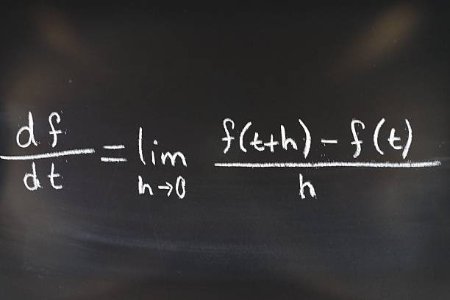
Differentiation measures how a function changes at any given point. This course moves from the basic slope of a line to advanced derivative theory. You will define differentiability at a point and on an interval. You will link differentiability to continuity to spot where functions break. The material covers standard rules for sums, products, quotients, and composites. You will study Rolle's theorem and the mean-value theorem to understand function behaviour between points. The course extends to higher-order derivatives using Leibniz's formula. You will finish with Taylor and Maclaurin series to approximate complex functions with polynomials.
Engineers use derivatives to calculate velocity, acceleration, and force in moving systems. Electrical engineers apply these rules to analyse current change in circuits. Economists use differentiation to find marginal cost and maximise profit. Computer scientists deploy Taylor series for fast approximation in graphics and machine learning algorithms. Mastery of these tools allows you to model real-world dynamics with precision. You will gain the ability to predict system responses and optimise designs without relying on trial and error.
You will determine if a function is differentiable at any point or interval. You will apply product, quotient, and chain rules to differentiate complex expressions. You will use Rolle's theorem and the mean-value theorem to prove existence of critical points. You will compute higher-order derivatives and apply Leibniz's formula for product terms. You will construct Taylor and Maclaurin polynomials to approximate functions near a centre. You will estimate error bounds for these approximations. You will solve applied problems that merge multiple differentiation techniques.
This course targets undergraduates and graduate students in mathematics, engineering, and physics. It suits students preparing for advanced calculus examinations or research projects. Secondary school leavers with strong algebra skills can use this material to bridge the gap to university-level analysis. Professionals returning to technical work will refresh their understanding of rate of change. The clear structure and repeated practice ensure that any disciplined learner can master differentiation for academic or industrial application.
Differentiability of Real-Valued Functions - Advanced Calculus (Undergraduate Advanced)
Differentiation measures how a function changes at any given point. This course moves from the basic slope of a line to advanced derivative theory. You will define differentiability at a point and on an interval. You will link differentiability to continuity to spot where functions break. The material covers standard rules for sums, products, quotients, and composites. You will study Rolle's theorem and the mean-value theorem to understand function behaviour between points. The course extends to higher-order derivatives using Leibniz's formula. You will finish with Taylor and Maclaurin series to approximate complex functions with polynomials. Engineers use derivatives to calculate velocity, acceleration, and force in moving systems. Electrical engineers apply these rules to analyse current change in circuits. Economists use differentiation to find marginal cost and maximise profit. Computer scientists deploy Taylor series for fast approximation in graphics and machine learning algorithms. Mastery of these tools allows you to model real-world dynamics with precision. You will gain the ability to predict system responses and optimise designs without relying on trial and error. You will determine if a function is differentiable at any point or interval. You will apply product, quotient, and chain rules to differentiate complex expressions. You will use Rolle's theorem and the mean-value theorem to prove existence of critical points. You will compute higher-order derivatives and apply Leibniz's formula for product terms. You will construct Taylor and Maclaurin polynomials to approximate functions near a centre. You will estimate error bounds for these approximations. You will solve applied problems that merge multiple differentiation techniques. This course targets undergraduates and graduate students in mathematics, engineering, and physics. It suits students preparing for advanced calculus examinations or research projects. Secondary school leavers with strong algebra skills can use this material to bridge the gap to university-level analysis. Professionals returning to technical work will refresh their understanding of rate of change. The clear structure and repeated practice ensure that any disciplined learner can master differentiation for academic or industrial application.
Partial Differentiation and Its Applications - Multivariable Calculus (Undergraduate Advanced)
This course provides a complete guide to the calculus of several variables. It builds from the foundational concepts of multivariable functions, limits, and continuity to the core techniques of differentiation, including partial derivatives, the chain rule, and implicit differentiation. The material culminates in advanced topics such as Taylor's theorem for several variables and the use of Jacobians.
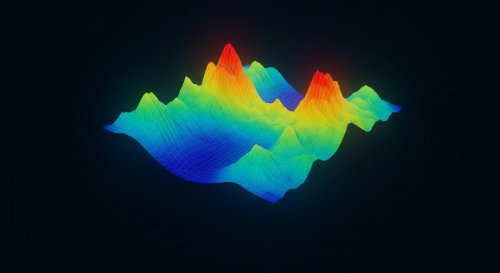
Multivariable calculus is the language of modern science, engineering, and economics. Its principles are used to model complex surfaces, analyse thermodynamic systems, create 3D computer graphics, and solve critical optimisation problems in business and finance. This is the mathematical toolkit for working with systems that have multiple interacting variables.
By the end of this course, you will be able to calculate partial derivatives, apply the multivariable chain rule, and find directional derivatives using the gradient vector. You will also be able to solve both unconstrained and constrained optimisation problems by finding extreme values and using the method of Lagrange multipliers, and apply these derivatives to find tangent planes to surfaces.
This course is for students who have completed a full single-variable calculus sequence. It is the standard curriculum for a multivariable calculus (Calculus III) module and is a direct prerequisite for the study of vector calculus, differential equations, and advanced courses in physics, engineering, and economics.
Partial Differentiation and Its Applications - Multivariable Calculus (Undergraduate Advanced)
This course provides a complete guide to the calculus of several variables. It builds from the foundational concepts of multivariable functions, limits, and continuity to the core techniques of differentiation, including partial derivatives, the chain rule, and implicit differentiation. The material culminates in advanced topics such as Taylor's theorem for several variables and the use of Jacobians. Multivariable calculus is the language of modern science, engineering, and economics. Its principles are used to model complex surfaces, analyse thermodynamic systems, create 3D computer graphics, and solve critical optimisation problems in business and finance. This is the mathematical toolkit for working with systems that have multiple interacting variables. By the end of this course, you will be able to calculate partial derivatives, apply the multivariable chain rule, and find directional derivatives using the gradient vector. You will also be able to solve both unconstrained and constrained optimisation problems by finding extreme values and using the method of Lagrange multipliers, and apply these derivatives to find tangent planes to surfaces. This course is for students who have completed a full single-variable calculus sequence. It is the standard curriculum for a multivariable calculus (Calculus III) module and is a direct prerequisite for the study of vector calculus, differential equations, and advanced courses in physics, engineering, and economics.