Worked examples (8) - Equilibrium in Space | Statics of Particles - Engineering Mechanics (Undergraduate Advanced)
Statics of Particles - Engineering Mechanics (Undergraduate Advanced)
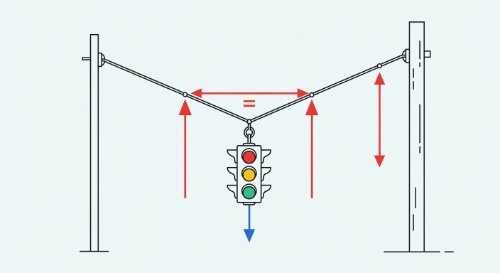
This course provides a complete guide to the statics of particles, a foundational topic in engineering mechanics. It covers the principles of force vectors, resultants, and components, first in two dimensions and then extending to three-dimensional space. The core of the course is the analysis of particles in equilibrium, establishing the conditions required for a particle to remain at rest under the influence of multiple concurrent forces.
Statics is the essential science behind structural and mechanical design. The principles covered are the basis for designing every stable structure, from bridges and skyscrapers to aircraft frames and engine components. A command of statics is non-negotiable for any engineer, as it provides the fundamental tools required to analyse forces and ensure the safety and integrity of physical systems.
By the end of this course, you will be able to resolve any force into its components and calculate the resultant of any system of concurrent forces in both 2D and 3D. You will also be able to draw a complete free-body diagram for any particle and apply the equations of equilibrium to solve for unknown forces, tensions, and reactions in a variety of engineering problems.
This course is for undergraduate students in any engineering discipline, including civil, mechanical, and aerospace. It is a core component of any engineering mechanics curriculum and assumes a prerequisite knowledge of introductory physics and vector mathematics. It is the essential foundation for subsequent courses in dynamics and the mechanics of materials.
Statics of Particles - Engineering Mechanics (Undergraduate Advanced)
This course provides a complete guide to the statics of particles, a foundational topic in engineering mechanics. It covers the principles of force vectors, resultants, and components, first in two dimensions and then extending to three-dimensional space. The core of the course is the analysis of particles in equilibrium, establishing the conditions required for a particle to remain at rest under the influence of multiple concurrent forces. Statics is the essential science behind structural and mechanical design. The principles covered are the basis for designing every stable structure, from bridges and skyscrapers to aircraft frames and engine components. A command of statics is non-negotiable for any engineer, as it provides the fundamental tools required to analyse forces and ensure the safety and integrity of physical systems. By the end of this course, you will be able to resolve any force into its components and calculate the resultant of any system of concurrent forces in both 2D and 3D. You will also be able to draw a complete free-body diagram for any particle and apply the equations of equilibrium to solve for unknown forces, tensions, and reactions in a variety of engineering problems. This course is for undergraduate students in any engineering discipline, including civil, mechanical, and aerospace. It is a core component of any engineering mechanics curriculum and assumes a prerequisite knowledge of introductory physics and vector mathematics. It is the essential foundation for subsequent courses in dynamics and the mechanics of materials.
Engineering Mechanics I - Statics
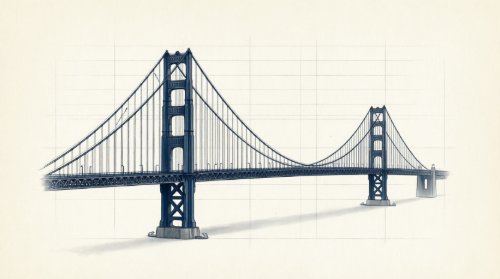
Statics decides if a structure stands or fails. This track teaches force calculation, support reactions, and equilibrium analysis for stable engineering systems. You will move from particle resolution to full structural modelling. The curriculum delivers the exact mathematical foundation required for real design work.
This programme is for first and second-year engineering undergraduates. It suits mechanical, civil, aerospace, and structural students, plus polytechnic learners. You only need basic physics and vector algebra. The sequence provides the precise calculation methods your degree demands.
You will finish able to resolve two and three dimensional forces, compute moments and couples, and solve rigid body equilibrium problems. You will calculate truss loads, evaluate friction in screws and belts, locate centres of gravity, and verify systems using virtual work. These results secure high grades in advanced mechanics modules and prepare you for structural design, machine engineering, and civil site roles.
Engineering Mechanics I - Statics
Statics decides if a structure stands or fails. This track teaches force calculation, support reactions, and equilibrium analysis for stable engineering systems. You will move from particle resolution to full structural modelling. The curriculum delivers the exact mathematical foundation required for real design work. This programme is for first and second-year engineering undergraduates. It suits mechanical, civil, aerospace, and structural students, plus polytechnic learners. You only need basic physics and vector algebra. The sequence provides the precise calculation methods your degree demands. You will finish able to resolve two and three dimensional forces, compute moments and couples, and solve rigid body equilibrium problems. You will calculate truss loads, evaluate friction in screws and belts, locate centres of gravity, and verify systems using virtual work. These results secure high grades in advanced mechanics modules and prepare you for structural design, machine engineering, and civil site roles.
GET 207: Applied Mechanics
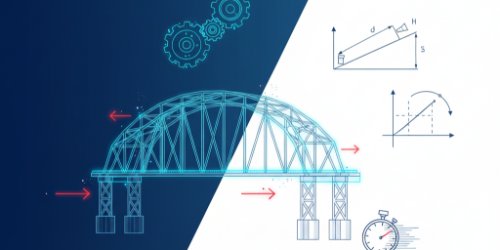
Master the non-negotiable principles of Engineering Mechanics. This track delivers a rigorous, complete programme in statics and dynamics, built to the NUC GET 207 core curriculum. It moves methodically from force systems and equilibrium to the kinematics of rigid bodies and the kinetics of particles. This is the foundation of all structural and mechanical analysis.
This programme is for first and second-year undergraduate engineering students. It is an essential requirement for students in Mechanical, Civil, Structural, Aerospace, and Mechatronics engineering. A working knowledge of introductory physics and calculus is assumed.
On completion, you will be able to analyse and solve complex problems in statics and particle dynamics. You will draw free-body diagrams, apply equilibrium equations, analyse trusses and frames, and solve motion problems using Newton's laws, work-energy, and momentum methods. This programme prepares you for advanced courses, particularly Mechanics of Materials, and future professional engineering practice.
GET 207: Applied Mechanics
Master the non-negotiable principles of Engineering Mechanics. This track delivers a rigorous, complete programme in statics and dynamics, built to the NUC GET 207 core curriculum. It moves methodically from force systems and equilibrium to the kinematics of rigid bodies and the kinetics of particles. This is the foundation of all structural and mechanical analysis. This programme is for first and second-year undergraduate engineering students. It is an essential requirement for students in Mechanical, Civil, Structural, Aerospace, and Mechatronics engineering. A working knowledge of introductory physics and calculus is assumed. On completion, you will be able to analyse and solve complex problems in statics and particle dynamics. You will draw free-body diagrams, apply equilibrium equations, analyse trusses and frames, and solve motion problems using Newton's laws, work-energy, and momentum methods. This programme prepares you for advanced courses, particularly Mechanics of Materials, and future professional engineering practice.