Chemistry of Functional Groups (Undergraduate Foundation)

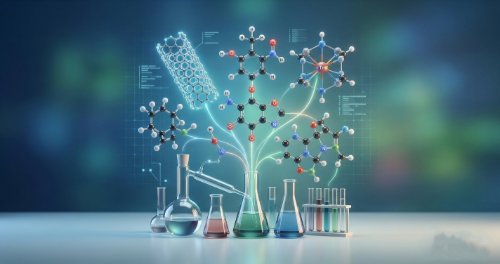
Organic chemistry is the study of carbon compounds, and functional groups are the specific clusters of atoms that decide how these molecules behave. This course focuses on the properties and reactions of alkanes, alkenes, and alkynes, alongside the chemistry of alcohols, ethers, amines, and alkyl halides. You will also study the structure and reactivity of nitriles, aldehydes, ketones, and carboxylic acids to understand how millions of different molecules are organised into manageable families. Understanding these groups is essential for producing everyday items like medicines, plastics, fuels, and soaps. This knowledge allows you to predict how chemicals will react in a lab, a factory, or inside the human body, making it vital for anyone pursuing a career in pharmacy, chemical engineering, or medicine. You will learn to identify these reactive parts and use them to solve practical problems in manufacturing and research. By the end of this course, you will be able to name organic compounds using standard rules and predict the products of their chemical reactions. You will gain the skill to distinguish between different families of compounds based on their chemical tests and physical properties. You will also understand the mechanisms behind how these molecules transform into new substances, providing a solid foundation for advanced laboratory work and industrial applications. This course is built for undergraduate students starting their journey in chemistry or related sciences like biochemistry and engineering. It is also useful for secondary school leavers preparing for university entrance exams who want a head start on complex topics. Even professionals in the health and manufacturing sectors will find this a useful refresher to better understand the chemical basis of the products they handle daily.

Enrolment valid for 12 months
This course is also part of the following learning track. You may join the track to gain comprehensive knowledge across related courses.
CHM 102: General Chemistry II
Excel in your CHM 102 exams and build a professional career in the global science and engineering sectors. This track follows the NUC CCMAS syllabus, covering carbon bonding, molecular structures, and metal chemistry. You will learn how atoms form fuels and medicines, how to identify pure substances, and why molecular shapes affect biological systems. This programme provides the scientific foundation needed for roles in the oil, gas, and pharmaceutical industries. This track is for first-year university students in chemistry, engineering, medicine, or pharmacy. It also serves secondary school leavers preparing for university entrance or technical workers needing a refresher on laboratory methods. Anyone starting a science-based degree will find these lessons essential for their academic progress. You will gain the ability to name organic compounds using IUPAC rules, predict reaction outcomes, and use lab techniques like chromatography and distillation. You will understand how to calculate chemical formulas and explain the behaviour of transition metals. Finishing this programme prepares you for advanced research, quality control roles, and industrial manufacturing.

Excel in your CHM 102 exams and build a professional career in the global science and engineering sectors. This track follows the NUC CCMAS syllabus, covering carbon bonding, molecular structures, and metal chemistry. You will learn how atoms form fuels and medicines, how to identify pure substances, and why molecular shapes affect biological systems. This programme provides the scientific foundation needed for roles in the oil, gas, and pharmaceutical industries. This track is for first-year university students in chemistry, engineering, medicine, or pharmacy. It also serves secondary school leavers preparing for university entrance or technical workers needing a refresher on laboratory methods. Anyone starting a science-based degree will find these lessons essential for their academic progress. You will gain the ability to name organic compounds using IUPAC rules, predict reaction outcomes, and use lab techniques like chromatography and distillation. You will understand how to calculate chemical formulas and explain the behaviour of transition metals. Finishing this programme prepares you for advanced research, quality control roles, and industrial manufacturing.

See more

Course Chapters

1. Introduction
3
This chapter introduces functional groups as the reactive centres that determine molecular behaviour. Understanding these clusters allows you to categorise millions of organic compounds into manageable families based on their predictable properties. You will learn to identify common functional groups, understand the importance of reactive sites, and master different methods of representing molecular structures in two and three dimensions.
Concept Overviews
3 Lessons
2. Alkanes
3
2
This chapter covers alkanes, the simplest hydrocarbons characterised by single carbon-carbon bonds. These saturated compounds are the primary components of natural gas and petroleum fuels used in transportation and power generation. You will learn to describe the physical properties of alkanes, understand their limited chemical reactivity, and master the laboratory and industrial methods used for their synthesis.
Concept Overviews
3 Lessons
Problem Walkthroughs
2 Lessons
3. Alkenes and Alkynes
3
3
This chapter explores alkenes and alkynes, hydrocarbons containing double or triple carbon bonds that make them highly reactive. These unsaturated compounds are vital raw materials for producing plastics, synthetic rubbers, and other industrial polymers. You will learn to describe unsaturated bond properties, master addition reaction mechanisms, and understand the specific laboratory methods used to synthesise these versatile molecules.
Concept Overviews
3 Lessons
Problem Walkthroughs
3 Lessons
4. Alkyl Halides
3
2
This chapter examines alkyl halides, organic compounds where halogen atoms are bonded to saturated carbons. These molecules are essential intermediates in the synthesis of pharmaceuticals, agrochemicals, and industrial solvents. You will learn to describe halogenoalkane physical properties, master nucleophilic substitution reactions, and understand the pathways that lead to elimination products.
Concept Overviews
3 Lessons
Problem Walkthroughs
2 Lessons
5. Alcohols and Ethers
3
2
This chapter focuses on alcohols and ethers, organic compounds containing oxygen atoms bonded to carbon chains. These substances are widely used as solvents, fuels, and chemical precursors in the manufacturing of medicines and cosmetics. You will learn to explain hydroxyl group properties, master alcohol oxidation reactions, and understand the fundamental routes for synthesising ethers.
Concept Overviews
3 Lessons
Problem Walkthroughs
2 Lessons
6. Amines and Nitriles
3
2
This chapter explores organic compounds containing nitrogen atoms. Amines and nitriles are critical building blocks for synthetic fibres, dyes, and complex pharmaceutical drugs used to treat various medical conditions. You will learn to apply amine basicity principles, master nitrile hydrolysis reactions, and understand the primary methods used to prepare these nitrogenous substances.
Concept Overviews
3 Lessons
Problem Walkthroughs
2 Lessons
7. Carbonyl Compounds
3
3
This chapter covers aldehydes and ketones, which contain the carbon-oxygen double bond. These carbonyl compounds are central to organic synthesis and are found in many natural flavourings, hormones, and industrial solvents. You will learn to describe carbonyl structures, master nucleophilic addition reactions, and interpret chemical identification tests used to distinguish aldehydes from ketones.
Concept Overviews
3 Lessons
Problem Walkthroughs
3 Lessons
8. Carboxylic Acids
3
3
This chapter examines carboxylic acids and their various derivatives, such as esters and amides. These compounds are fundamental in biology and are used to manufacture plastics, soaps, and synthetic fragrances. You will learn to explain the origins of acidic properties, master esterification mechanisms, and understand the chemical nature of carboxylic acid derivatives.
Concept Overviews
3 Lessons
Problem Walkthroughs
3 Lessons
9. Conclusion
1
This final chapter reviews the diverse chemical behaviours and transformations of organic functional groups. It reinforces how these atomic clusters allow for the systematic study of millions of compounds. You will learn to synthesise the properties of different compound families and understand how these foundational concepts bridge the gap to advanced chemical synthesis and research.
Concept Overviews
1 Lesson