Simple Machines - Physics (Senior Secondary)
$ 9.99
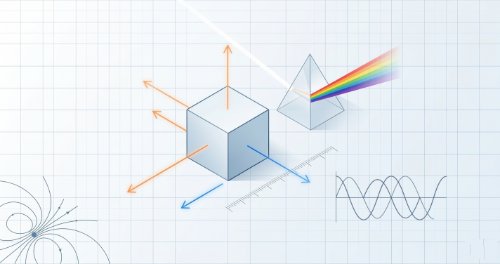
Physics
Physics controls every machine, building, and system you will design or maintain. This complete programme covers every topic required for the JAMB UTME physics paper. You will move past basic definitions and learn to solve exact problems using standard laws and formulas. We focus strictly on measurements, mechanics, thermal properties, waves, electricity, and modern physics. You will gain a working knowledge of the physical world without unnecessary theory.
This track suits senior secondary students preparing for WAEC, NECO, or JAMB examinations. It serves first-year university undergraduates in engineering or physical sciences who require a firm foundation. Technical beginners and independent learners who plan to enter engineering, medicine, telecommunications, or skilled trades will find these lessons essential for their next steps.
You will finish able to calculate forces, analyse electrical circuits, predict wave behaviour, and explain atomic interactions. You will interpret laboratory data, apply mathematical models to physical systems, and answer examination questions with speed and accuracy. This preparation secures high scores in national entrance tests and builds the technical base required for university engineering degrees or direct entry into professional technical work.
Physics
Physics controls every machine, building, and system you will design or maintain. This complete programme covers every topic required for the JAMB UTME physics paper. You will move past basic definitions and learn to solve exact problems using standard laws and formulas. We focus strictly on measurements, mechanics, thermal properties, waves, electricity, and modern physics. You will gain a working knowledge of the physical world without unnecessary theory. This track suits senior secondary students preparing for WAEC, NECO, or JAMB examinations. It serves first-year university undergraduates in engineering or physical sciences who require a firm foundation. Technical beginners and independent learners who plan to enter engineering, medicine, telecommunications, or skilled trades will find these lessons essential for their next steps. You will finish able to calculate forces, analyse electrical circuits, predict wave behaviour, and explain atomic interactions. You will interpret laboratory data, apply mathematical models to physical systems, and answer examination questions with speed and accuracy. This preparation secures high scores in national entrance tests and builds the technical base required for university engineering degrees or direct entry into professional technical work.
No content yet.