Physics
$ 59.99
Learning Track Courses
Measurements, Scalars and Vectors - Physics (Senior Secondary)
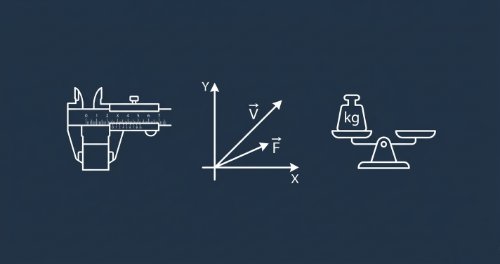
Physics starts with measurement. If you cannot measure it, you cannot understand how the physical world works. This course demystifies the foundation of physics by covering fundamental quantities, unit systems, and the crucial distinction between scalars and vectors. You will master the methods used to quantify reality and learn how to represent physical phenomena through precise mathematical language.
Mastering these concepts is non-negotiable for anyone pursuing engineering, architecture, surveying, or any technical trade. You apply these principles whenever you calculate building structural loads, determine velocity for mechanical systems, or navigate across complex terrains. Understanding vectors allows you to predict the outcome of forces acting in different directions, a skill that transforms theoretical classroom knowledge into actionable problem-solving ability in the field.
By the end of this course, you will demonstrate competence in identifying SI base units, performing accurate dimensional analysis, and applying the correct mathematical operations to scalar and vector quantities. You will accurately resolve vectors into components and compute resultants using graphical and analytical methods. You will gain the ability to choose appropriate measuring instruments for various physical tasks and interpret experimental data with high precision.
This course targets senior secondary school students preparing for terminal examinations. However, it provides an essential bridge for university undergraduates in science or technical fields who need to reinforce their fundamental physics base. Even hobbyists or technical beginners will find this training invaluable for building a rigorous mental framework required for advanced scientific study and professional technical work.
Measurements, Scalars and Vectors - Physics (Senior Secondary)
Physics starts with measurement. If you cannot measure it, you cannot understand how the physical world works. This course demystifies the foundation of physics by covering fundamental quantities, unit systems, and the crucial distinction between scalars and vectors. You will master the methods used to quantify reality and learn how to represent physical phenomena through precise mathematical language. Mastering these concepts is non-negotiable for anyone pursuing engineering, architecture, surveying, or any technical trade. You apply these principles whenever you calculate building structural loads, determine velocity for mechanical systems, or navigate across complex terrains. Understanding vectors allows you to predict the outcome of forces acting in different directions, a skill that transforms theoretical classroom knowledge into actionable problem-solving ability in the field. By the end of this course, you will demonstrate competence in identifying SI base units, performing accurate dimensional analysis, and applying the correct mathematical operations to scalar and vector quantities. You will accurately resolve vectors into components and compute resultants using graphical and analytical methods. You will gain the ability to choose appropriate measuring instruments for various physical tasks and interpret experimental data with high precision. This course targets senior secondary school students preparing for terminal examinations. However, it provides an essential bridge for university undergraduates in science or technical fields who need to reinforce their fundamental physics base. Even hobbyists or technical beginners will find this training invaluable for building a rigorous mental framework required for advanced scientific study and professional technical work.
Motion - Physics (Senior Secondary)
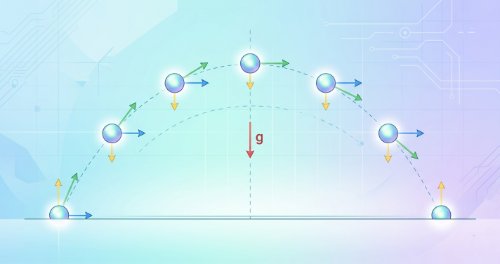
Everything in the universe moves, from the electrons orbiting an atom to the planets circling the sun. This course dissects the mechanics of motion, moving past simple observation to provide a rigorous mathematical and conceptual understanding of how objects change position over time. You will master the relationships between displacement, velocity, acceleration, and time through clear analysis of linear and projectile motion.
Grasping these principles is the foundation for every engineering and technical discipline. Understanding how forces dictate movement allows you to calculate stopping distances for vehicle safety, optimise trajectory paths for robotics, or predict the flight of any launched object. These are not abstract theories but the essential tools used daily by civil engineers, pilots, architects, and programmers to solve physical problems in the real world.
Upon completion, you will accurately define scalar and vector quantities, solve complex kinematic equations, interpret displacement-time and velocity-time graphs, and analyse horizontal and vertical components of projectile motion. You will possess the technical precision to solve examination problems and apply these core physics laws to predict the behaviour of moving systems with absolute certainty.
This course is built for senior secondary students preparing for West African Senior School Certificate Examinations or Unified Tertiary Matriculation Examinations. It also serves as a necessary refresher for university freshmen in engineering or the physical sciences who need to reinforce their foundational grasp of classical mechanics. Anyone requiring a direct, no-nonsense command of how objects behave will find the material indispensable for their academic or professional growth.
Motion - Physics (Senior Secondary)
Everything in the universe moves, from the electrons orbiting an atom to the planets circling the sun. This course dissects the mechanics of motion, moving past simple observation to provide a rigorous mathematical and conceptual understanding of how objects change position over time. You will master the relationships between displacement, velocity, acceleration, and time through clear analysis of linear and projectile motion. Grasping these principles is the foundation for every engineering and technical discipline. Understanding how forces dictate movement allows you to calculate stopping distances for vehicle safety, optimise trajectory paths for robotics, or predict the flight of any launched object. These are not abstract theories but the essential tools used daily by civil engineers, pilots, architects, and programmers to solve physical problems in the real world. Upon completion, you will accurately define scalar and vector quantities, solve complex kinematic equations, interpret displacement-time and velocity-time graphs, and analyse horizontal and vertical components of projectile motion. You will possess the technical precision to solve examination problems and apply these core physics laws to predict the behaviour of moving systems with absolute certainty. This course is built for senior secondary students preparing for West African Senior School Certificate Examinations or Unified Tertiary Matriculation Examinations. It also serves as a necessary refresher for university freshmen in engineering or the physical sciences who need to reinforce their foundational grasp of classical mechanics. Anyone requiring a direct, no-nonsense command of how objects behave will find the material indispensable for their academic or professional growth.

Equilibrium of Forces - Physics (Senior Secondary)
Why do structures stand still while others collapse under their own weight? This course dissects the principle of equilibrium of forces, teaching you how to analyse static systems where the net force and moment are zero. You will master the conditions for translational and rotational stability, moving beyond theory to grasp the essential mechanics that keep everything from simple bridges to complex cranes securely in place.
Understanding these laws is critical for any serious study of civil engineering, architecture, and mechanical design. Mastery here allows you to predict structural integrity, solve complex loading problems, and ensure safety in physical builds. By applying these calculations, you gain the technical foundation required to design systems that do not fail, turning abstract physics into tangible, reliable work.
By the end of this course, you will define and apply Lami's theorem and the triangle of forces with precision. You will solve problems involving coplanar forces, compute the resultant of multiple forces, and determine the exact conditions required to keep an object at rest. You will leave with the capability to model physical interactions and resolve vector problems accurately, meeting the requirements of national examinations and beyond.
This course is built for senior secondary physics students aiming for top marks in their WASSCE and UTME. It remains equally vital for undergraduates in engineering or the physical sciences who need to reinforce their fundamental knowledge, as well as anyone seeking to master the mechanical principles governing the physical world. If you require a solid grasp of how forces interact to produce stability, this material provides the necessary rigour.
Equilibrium of Forces - Physics (Senior Secondary)
Why do structures stand still while others collapse under their own weight? This course dissects the principle of equilibrium of forces, teaching you how to analyse static systems where the net force and moment are zero. You will master the conditions for translational and rotational stability, moving beyond theory to grasp the essential mechanics that keep everything from simple bridges to complex cranes securely in place. Understanding these laws is critical for any serious study of civil engineering, architecture, and mechanical design. Mastery here allows you to predict structural integrity, solve complex loading problems, and ensure safety in physical builds. By applying these calculations, you gain the technical foundation required to design systems that do not fail, turning abstract physics into tangible, reliable work. By the end of this course, you will define and apply Lami's theorem and the triangle of forces with precision. You will solve problems involving coplanar forces, compute the resultant of multiple forces, and determine the exact conditions required to keep an object at rest. You will leave with the capability to model physical interactions and resolve vector problems accurately, meeting the requirements of national examinations and beyond. This course is built for senior secondary physics students aiming for top marks in their WASSCE and UTME. It remains equally vital for undergraduates in engineering or the physical sciences who need to reinforce their fundamental knowledge, as well as anyone seeking to master the mechanical principles governing the physical world. If you require a solid grasp of how forces interact to produce stability, this material provides the necessary rigour.
Work, Energy and Power - Physics (Senior Secondary)
Physics governs every movement in the universe, and mastery begins with understanding work, energy, and power. This course deconstructs these fundamental concepts, moving from the basic definitions of force and displacement to the complex relationships between potential energy, kinetic energy, and mechanical output. By stripping away abstract complexity, we provide a clear, rigorous foundation for understanding how physical systems function and change.
These principles dictate the efficiency of everything from simple hand tools to complex industrial machines. Engineers, architects, and technicians rely on these calculations to design structures, optimise fuel consumption, and improve mechanical systems. Whether you are building a prototype, managing a solar power installation, or simply seeking a technical edge in engineering projects, this course provides the quantitative tools necessary for practical problem-solving in the real world.
By the end of this course, you will define work as the product of force and displacement, distinguish between various forms of energy, calculate potential and kinetic energy accurately, and relate power to the rate of doing work. You will learn to apply the work-energy theorem to solve complex physics problems, analyse energy conservation in closed systems, and perform precise calculations involving mechanical advantage and efficiency. These technical skills will directly improve your performance in examinations and technical applications.
This course is structured for senior secondary students preparing for competitive physics examinations. However, university students in introductory engineering or physics programmes will find this a vital refresher to solidify their core knowledge. Anyone seeking a firm grasp of physical dynamics, from hobbyist engineers to curious learners, will benefit from the systematic approach used here to bridge the gap between classroom theory and mechanical reality.
Work, Energy and Power - Physics (Senior Secondary)
Physics governs every movement in the universe, and mastery begins with understanding work, energy, and power. This course deconstructs these fundamental concepts, moving from the basic definitions of force and displacement to the complex relationships between potential energy, kinetic energy, and mechanical output. By stripping away abstract complexity, we provide a clear, rigorous foundation for understanding how physical systems function and change. These principles dictate the efficiency of everything from simple hand tools to complex industrial machines. Engineers, architects, and technicians rely on these calculations to design structures, optimise fuel consumption, and improve mechanical systems. Whether you are building a prototype, managing a solar power installation, or simply seeking a technical edge in engineering projects, this course provides the quantitative tools necessary for practical problem-solving in the real world. By the end of this course, you will define work as the product of force and displacement, distinguish between various forms of energy, calculate potential and kinetic energy accurately, and relate power to the rate of doing work. You will learn to apply the work-energy theorem to solve complex physics problems, analyse energy conservation in closed systems, and perform precise calculations involving mechanical advantage and efficiency. These technical skills will directly improve your performance in examinations and technical applications. This course is structured for senior secondary students preparing for competitive physics examinations. However, university students in introductory engineering or physics programmes will find this a vital refresher to solidify their core knowledge. Anyone seeking a firm grasp of physical dynamics, from hobbyist engineers to curious learners, will benefit from the systematic approach used here to bridge the gap between classroom theory and mechanical reality.
Simple Machines - Physics (Senior Secondary)
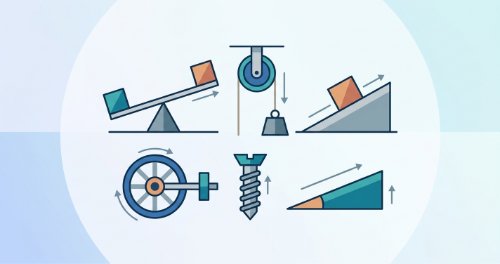
Ever wondered how a small force moves massive objects? Simple machines are the fundamental components of every complex device, from bicycle gears to industrial cranes. This course strips away the complexity to reveal the mechanics behind levers, pulleys, inclined planes, screws, wedges, and wheels. You will master the principles of mechanical advantage, velocity ratio, and efficiency that form the backbone of physical engineering.
Understanding these mechanisms is essential for any practical problem-solving role. Engineers use these concepts to design safer structures, while technicians rely on them to maintain machinery efficiently. By grasping these basics, you gain the ability to troubleshoot mechanical failures, optimise daily tasks, and innovate on small-scale projects. This is not just theory; it is the physics of how work actually gets done.
Upon completion, you will calculate the mechanical advantage and efficiency of various systems, identify the correct machine for specific tasks, and analyse how input forces transform into output work. You will move beyond rote memorisation to confidently apply these laws to real-world physics problems. You will possess the technical foundation required to master more advanced mechanical systems and complex structural mechanics.
This course is built for senior secondary students preparing for exams or building a foundation for engineering studies. Its direct approach also serves undergraduates seeking a refresher on core principles and hobbyists who want to understand the mechanics behind their tools. If you work with hardware, build projects, or intend to pursue a technical career, this course provides the clarity you need to progress.
Simple Machines - Physics (Senior Secondary)
Ever wondered how a small force moves massive objects? Simple machines are the fundamental components of every complex device, from bicycle gears to industrial cranes. This course strips away the complexity to reveal the mechanics behind levers, pulleys, inclined planes, screws, wedges, and wheels. You will master the principles of mechanical advantage, velocity ratio, and efficiency that form the backbone of physical engineering. Understanding these mechanisms is essential for any practical problem-solving role. Engineers use these concepts to design safer structures, while technicians rely on them to maintain machinery efficiently. By grasping these basics, you gain the ability to troubleshoot mechanical failures, optimise daily tasks, and innovate on small-scale projects. This is not just theory; it is the physics of how work actually gets done. Upon completion, you will calculate the mechanical advantage and efficiency of various systems, identify the correct machine for specific tasks, and analyse how input forces transform into output work. You will move beyond rote memorisation to confidently apply these laws to real-world physics problems. You will possess the technical foundation required to master more advanced mechanical systems and complex structural mechanics. This course is built for senior secondary students preparing for exams or building a foundation for engineering studies. Its direct approach also serves undergraduates seeking a refresher on core principles and hobbyists who want to understand the mechanics behind their tools. If you work with hardware, build projects, or intend to pursue a technical career, this course provides the clarity you need to progress.

Elasticity - Physics (Senior Secondary)
Ever wonder why a trampoline bounces you back or why a spring returns to its original shape? Elasticity governs these everyday forces, serving as the bedrock for understanding material deformation and structural integrity. This course provides a rigorous breakdown of how materials respond to applied loads, focusing on the fundamental principles that dictate the behaviour of solids under stress.
Mastering these concepts is essential for engineering, architecture, and manufacturing, as professionals must calculate material limits to prevent structural failures. Understanding stress, strain, and Hooke's Law allows you to predict how bridges, buildings, and mechanical components react to external forces, ensuring safety and precision in any technical project.
By the end of this course, you will define and distinguish between stress and strain, apply Hooke's Law to calculate material extensions, interpret force-extension graphs, and determine Young's Modulus for various materials. You will gain the analytical skills required to solve complex physics problems involving energy storage in deformed objects and elastic limits.
This course is primarily for senior secondary students preparing for physics examinations. However, university undergraduates in engineering or physical sciences will find this a vital refresher, and hobbyists involved in mechanics or design will benefit from the practical application of these physical laws in their own work.
Elasticity - Physics (Senior Secondary)
Ever wonder why a trampoline bounces you back or why a spring returns to its original shape? Elasticity governs these everyday forces, serving as the bedrock for understanding material deformation and structural integrity. This course provides a rigorous breakdown of how materials respond to applied loads, focusing on the fundamental principles that dictate the behaviour of solids under stress. Mastering these concepts is essential for engineering, architecture, and manufacturing, as professionals must calculate material limits to prevent structural failures. Understanding stress, strain, and Hooke's Law allows you to predict how bridges, buildings, and mechanical components react to external forces, ensuring safety and precision in any technical project. By the end of this course, you will define and distinguish between stress and strain, apply Hooke's Law to calculate material extensions, interpret force-extension graphs, and determine Young's Modulus for various materials. You will gain the analytical skills required to solve complex physics problems involving energy storage in deformed objects and elastic limits. This course is primarily for senior secondary students preparing for physics examinations. However, university undergraduates in engineering or physical sciences will find this a vital refresher, and hobbyists involved in mechanics or design will benefit from the practical application of these physical laws in their own work.
Hydrostatics - Physics (Senior Secondary)
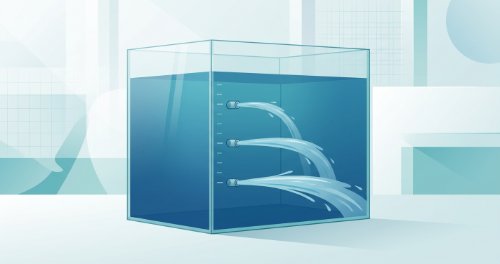
Fluids at rest hold the secret to how dams withhold massive water volumes and how hydraulic systems lift heavy loads. This course dissects the behaviour of stationary fluids, covering the fundamental principles of pressure, density, and buoyancy that govern everything from water storage in homes to the stability of ships. You will move beyond simple theory to master the mechanics behind fluid behaviour, ensuring you understand the physics that keeps our world functioning safely and efficiently.
Understanding hydrostatics is essential for careers in civil, mechanical, and marine engineering. You will gain the ability to calculate pressure at varying depths, determine upthrust, and predict how objects float or sink in different liquids. These concepts are the foundation for designing plumbing systems, irrigation networks, and industrial machinery, allowing you to approach real-world engineering problems with precision and confidence.
By the end of this course, you will define and apply Archimedes’ principle and Pascal’s principle to solve complex physics problems. You will be able to calculate hydraulic press mechanical advantages, measure atmospheric pressure using barometers, and determine the density of various substances using the law of flotation. You will also develop the skills to analyse how pressure changes with depth in a continuous fluid and solve numerical problems regarding the equilibrium of submerged or floating bodies.
This course is built for senior secondary students preparing for physics examinations, but it provides a necessary primer for any undergraduate starting a degree in engineering or the physical sciences. Even if you are not currently enrolled in formal schooling, the logical framework provided here will sharpen your problem-solving skills and technical literacy. By mastering these basics, you gain a competitive edge in any field that requires a rigorous, analytical approach to the physical environment.
Hydrostatics - Physics (Senior Secondary)
Fluids at rest hold the secret to how dams withhold massive water volumes and how hydraulic systems lift heavy loads. This course dissects the behaviour of stationary fluids, covering the fundamental principles of pressure, density, and buoyancy that govern everything from water storage in homes to the stability of ships. You will move beyond simple theory to master the mechanics behind fluid behaviour, ensuring you understand the physics that keeps our world functioning safely and efficiently. Understanding hydrostatics is essential for careers in civil, mechanical, and marine engineering. You will gain the ability to calculate pressure at varying depths, determine upthrust, and predict how objects float or sink in different liquids. These concepts are the foundation for designing plumbing systems, irrigation networks, and industrial machinery, allowing you to approach real-world engineering problems with precision and confidence. By the end of this course, you will define and apply Archimedes’ principle and Pascal’s principle to solve complex physics problems. You will be able to calculate hydraulic press mechanical advantages, measure atmospheric pressure using barometers, and determine the density of various substances using the law of flotation. You will also develop the skills to analyse how pressure changes with depth in a continuous fluid and solve numerical problems regarding the equilibrium of submerged or floating bodies. This course is built for senior secondary students preparing for physics examinations, but it provides a necessary primer for any undergraduate starting a degree in engineering or the physical sciences. Even if you are not currently enrolled in formal schooling, the logical framework provided here will sharpen your problem-solving skills and technical literacy. By mastering these basics, you gain a competitive edge in any field that requires a rigorous, analytical approach to the physical environment.
Temperature and Thermal Expansion - Physics (Senior Secondary)
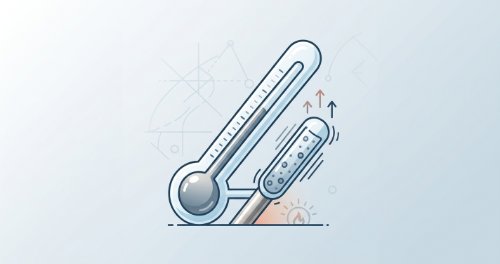
Mastering the behaviour of matter under varying heat conditions is essential for understanding the physical world. This course covers the fundamental principles of temperature measurement, the mechanics of thermal expansion in solids, liquids, and gases, and the governing gas laws that dictate how energy changes affect state. You will gain a clear grasp of heat transfer and the thermodynamic relationships that define our environment.
Engineers, builders, and technicians rely daily on these principles to prevent structural failures in bridges, railways, and pipelines. By understanding how materials expand or contract with temperature fluctuations, you can predict material stress, design efficient cooling systems, and solve complex problems in mechanical and civil engineering projects. This knowledge is the basis for safely handling materials and building durable infrastructure in any climate.
By the end of this course, you will be able to convert between temperature scales, perform precise calculations for linear, areal, and volumetric expansion, and apply the ideal gas equation to solve real-world problems. You will master the use of clinical and laboratory thermometers, interpret thermal graphs accurately, and predict the outcomes of thermal interactions within closed and open systems.
This curriculum is intended for senior secondary students preparing for physics examinations. However, it serves as an excellent refresher for university undergraduates in technical fields or anyone seeking a solid foundation in thermodynamics. Regardless of your background, the skills gained here provide the technical literacy required for advanced studies in science, technology, engineering, and mathematics.
Temperature and Thermal Expansion - Physics (Senior Secondary)
Mastering the behaviour of matter under varying heat conditions is essential for understanding the physical world. This course covers the fundamental principles of temperature measurement, the mechanics of thermal expansion in solids, liquids, and gases, and the governing gas laws that dictate how energy changes affect state. You will gain a clear grasp of heat transfer and the thermodynamic relationships that define our environment. Engineers, builders, and technicians rely daily on these principles to prevent structural failures in bridges, railways, and pipelines. By understanding how materials expand or contract with temperature fluctuations, you can predict material stress, design efficient cooling systems, and solve complex problems in mechanical and civil engineering projects. This knowledge is the basis for safely handling materials and building durable infrastructure in any climate. By the end of this course, you will be able to convert between temperature scales, perform precise calculations for linear, areal, and volumetric expansion, and apply the ideal gas equation to solve real-world problems. You will master the use of clinical and laboratory thermometers, interpret thermal graphs accurately, and predict the outcomes of thermal interactions within closed and open systems. This curriculum is intended for senior secondary students preparing for physics examinations. However, it serves as an excellent refresher for university undergraduates in technical fields or anyone seeking a solid foundation in thermodynamics. Regardless of your background, the skills gained here provide the technical literacy required for advanced studies in science, technology, engineering, and mathematics.

Heat and Vapours - Physics (Senior Secondary)
Heat moves from hot to cold objects and changes how materials behave. This course explains temperature scales, thermal expansion in solids and liquids, and how heat travels through conduction, convection, and radiation. You will learn to calculate specific heat capacity and understand why substances change from solid to liquid or gas without a temperature rise. We cover gas laws, including Boyle's and Charles's laws, to show how pressure and volume interact.
Understanding heat helps you solve everyday problems and build better machines. These principles explain why bridges have gaps to prevent buckling in the sun and how refrigerators keep food cold by removing thermal energy. You will apply these concepts to understand car engines, weather patterns, and even how to insulate a house to save on electricity bills. This knowledge is the foundation for careers in mechanical engineering, climate science, and many technical trades.
By the end of this course, you will define temperature and heat accurately while converting between Celsius and Kelvin scales. You will calculate the amount of energy needed to heat a substance or melt ice using standard formulas. You will also predict how gases react to changes in pressure and temperature using the general gas equation. This course ensures you can identify various methods of heat transfer and explain the physics behind common natural phenomena like sea and land breezes.
This course is for Senior Secondary students preparing for WAEC, NECO, or JAMB exams. It provides the clear explanations needed to pass physics with top grades. University students in their first year will find it a useful refresher for basic thermodynamics. Anyone curious about how the physical world works will gain practical insights into the energy that powers our lives and technology.
Heat and Vapours - Physics (Senior Secondary)
Heat moves from hot to cold objects and changes how materials behave. This course explains temperature scales, thermal expansion in solids and liquids, and how heat travels through conduction, convection, and radiation. You will learn to calculate specific heat capacity and understand why substances change from solid to liquid or gas without a temperature rise. We cover gas laws, including Boyle's and Charles's laws, to show how pressure and volume interact. Understanding heat helps you solve everyday problems and build better machines. These principles explain why bridges have gaps to prevent buckling in the sun and how refrigerators keep food cold by removing thermal energy. You will apply these concepts to understand car engines, weather patterns, and even how to insulate a house to save on electricity bills. This knowledge is the foundation for careers in mechanical engineering, climate science, and many technical trades. By the end of this course, you will define temperature and heat accurately while converting between Celsius and Kelvin scales. You will calculate the amount of energy needed to heat a substance or melt ice using standard formulas. You will also predict how gases react to changes in pressure and temperature using the general gas equation. This course ensures you can identify various methods of heat transfer and explain the physics behind common natural phenomena like sea and land breezes. This course is for Senior Secondary students preparing for WAEC, NECO, or JAMB exams. It provides the clear explanations needed to pass physics with top grades. University students in their first year will find it a useful refresher for basic thermodynamics. Anyone curious about how the physical world works will gain practical insights into the energy that powers our lives and technology.
Molecular Theory and Heat Transfer - Physics (Senior Secondary)
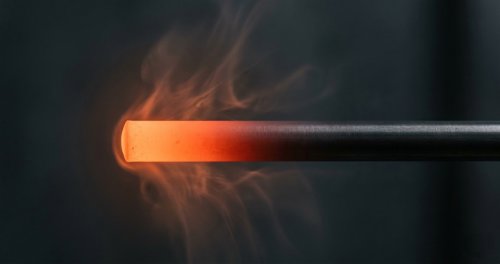
Matter consists of particles in constant motion, and heat is the energy transferred by this movement. This course explores the molecular basis of matter, explaining how atoms and molecules behave in solids, liquids, and gases. You will master the mechanisms of heat transfer—conduction, convection, and radiation — and understand how these physical processes dictate the state and properties of everything around us.
Understanding these principles is essential for engineering, manufacturing, and daily life. You will see how thermal insulation prevents heat loss in buildings, how heat exchangers function in engines and refrigerators, and why certain materials are chosen for cooking or cooling. Applying this knowledge allows you to troubleshoot thermal systems and make informed decisions in technical projects or professional trades.
By the end of this course, you will be able to calculate heat capacity and latent heat, explain phase changes with the kinetic molecular theory, and identify the primary mode of heat transfer in any given scenario. You will possess the analytical tools to solve standard physics problems related to thermal expansion, gas laws, and energy balance.
This curriculum is built for Senior Secondary students preparing for national examinations. However, it provides a vital foundation for university students in engineering or the physical sciences, and anyone needing a rigorous, no-nonsense grasp of how energy moves through our physical world. Whether you are aiming for top marks or building a base for a technical career, this course delivers the core knowledge you need.
Molecular Theory and Heat Transfer - Physics (Senior Secondary)
Matter consists of particles in constant motion, and heat is the energy transferred by this movement. This course explores the molecular basis of matter, explaining how atoms and molecules behave in solids, liquids, and gases. You will master the mechanisms of heat transfer—conduction, convection, and radiation — and understand how these physical processes dictate the state and properties of everything around us. Understanding these principles is essential for engineering, manufacturing, and daily life. You will see how thermal insulation prevents heat loss in buildings, how heat exchangers function in engines and refrigerators, and why certain materials are chosen for cooking or cooling. Applying this knowledge allows you to troubleshoot thermal systems and make informed decisions in technical projects or professional trades. By the end of this course, you will be able to calculate heat capacity and latent heat, explain phase changes with the kinetic molecular theory, and identify the primary mode of heat transfer in any given scenario. You will possess the analytical tools to solve standard physics problems related to thermal expansion, gas laws, and energy balance. This curriculum is built for Senior Secondary students preparing for national examinations. However, it provides a vital foundation for university students in engineering or the physical sciences, and anyone needing a rigorous, no-nonsense grasp of how energy moves through our physical world. Whether you are aiming for top marks or building a base for a technical career, this course delivers the core knowledge you need.
Waves and Sound - Physics (Senior Secondary)
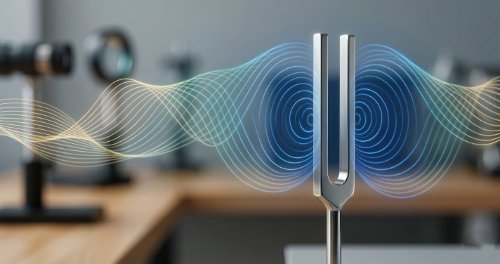
Sound and light travel as waves, carrying energy from one point to another without moving matter. This course explains the fundamental physics of mechanical and electromagnetic waves, covering properties like reflection, refraction, diffraction, and interference. You will study how sound is produced in strings and pipes, the physics of echoes, and how the Doppler effect changes the pitch of a passing siren. The lessons break down complex wave equations into simple calculations for frequency, wavelength, and velocity.
Understanding waves is essential for careers in telecommunications, civil engineering, and medical imaging. Engineers use these principles to design noise-cancelling headphones and stable bridges that resist rhythmic vibrations. Doctors rely on ultrasound waves to see inside the human body without surgery. Even in music production, knowing how harmonics and resonance work helps in creating better sound quality. This knowledge allows you to solve real problems involving signal strength and structural integrity.
By the end of this course, you will accurately calculate wave speed using the universal wave equation. You will distinguish between transverse and longitudinal waves and explain how stationary waves form in musical instruments. You will also learn to determine the speed of sound using resonance tubes and predict how different materials affect wave travel. These skills ensure you can handle both theoretical exam questions and practical laboratory experiments involving sound and light.
This course is built for Senior Secondary students preparing for WAEC, NECO, or JAMB exams. It provides the solid foundation needed for university-level engineering and physics courses. Even if you are a hobbyist interested in how radio signals work or a technician dealing with audio equipment, these basics will clarify the science behind your daily tools. The direct approach makes the content easy to grasp for anyone who wants a clear, no-nonsense grasp of how energy moves through the world.
Waves and Sound - Physics (Senior Secondary)
Sound and light travel as waves, carrying energy from one point to another without moving matter. This course explains the fundamental physics of mechanical and electromagnetic waves, covering properties like reflection, refraction, diffraction, and interference. You will study how sound is produced in strings and pipes, the physics of echoes, and how the Doppler effect changes the pitch of a passing siren. The lessons break down complex wave equations into simple calculations for frequency, wavelength, and velocity. Understanding waves is essential for careers in telecommunications, civil engineering, and medical imaging. Engineers use these principles to design noise-cancelling headphones and stable bridges that resist rhythmic vibrations. Doctors rely on ultrasound waves to see inside the human body without surgery. Even in music production, knowing how harmonics and resonance work helps in creating better sound quality. This knowledge allows you to solve real problems involving signal strength and structural integrity. By the end of this course, you will accurately calculate wave speed using the universal wave equation. You will distinguish between transverse and longitudinal waves and explain how stationary waves form in musical instruments. You will also learn to determine the speed of sound using resonance tubes and predict how different materials affect wave travel. These skills ensure you can handle both theoretical exam questions and practical laboratory experiments involving sound and light. This course is built for Senior Secondary students preparing for WAEC, NECO, or JAMB exams. It provides the solid foundation needed for university-level engineering and physics courses. Even if you are a hobbyist interested in how radio signals work or a technician dealing with audio equipment, these basics will clarify the science behind your daily tools. The direct approach makes the content easy to grasp for anyone who wants a clear, no-nonsense grasp of how energy moves through the world.

Reflection of Light - Physics (Senior Secondary)
Light behaves predictably when it hits a surface, and understanding these rules is the foundation of optics. This course covers the laws of reflection, image formation in plane mirrors, and the geometry of curved mirrors. You will calculate object and image distances using the mirror formula and determine magnification levels. We break down the differences between real and virtual images through clear ray diagrams and mathematical proofs.
Engineers and technicians use these principles to design car headlamps, satellite dishes, and periscopes. If you plan to work in telecommunications, construction, or medicine, you must understand how light reflects to use fibre optics or surgical mirrors correctly. Even simple tasks like positioning security mirrors in a shop or choosing the right shaving mirror depend on these laws of physics.
By the end of this study, you will correctly draw ray diagrams for concave and convex mirrors and solve problems involving focal lengths. You will identify the characteristics of images formed at different positions and explain the practical uses of various mirror types. You will also gain the skill to calculate the number of images formed by two inclined plane mirrors using the standard formula.
This course is for Senior Secondary students preparing for WAEC, NECO, or UTME exams. It serves as a solid refresher for university undergraduates in engineering or pure sciences who need to revisit basic optics. Hobbyists interested in photography or telescope building will also find the technical explanations of light paths highly useful for their projects.
Reflection of Light - Physics (Senior Secondary)
Light behaves predictably when it hits a surface, and understanding these rules is the foundation of optics. This course covers the laws of reflection, image formation in plane mirrors, and the geometry of curved mirrors. You will calculate object and image distances using the mirror formula and determine magnification levels. We break down the differences between real and virtual images through clear ray diagrams and mathematical proofs. Engineers and technicians use these principles to design car headlamps, satellite dishes, and periscopes. If you plan to work in telecommunications, construction, or medicine, you must understand how light reflects to use fibre optics or surgical mirrors correctly. Even simple tasks like positioning security mirrors in a shop or choosing the right shaving mirror depend on these laws of physics. By the end of this study, you will correctly draw ray diagrams for concave and convex mirrors and solve problems involving focal lengths. You will identify the characteristics of images formed at different positions and explain the practical uses of various mirror types. You will also gain the skill to calculate the number of images formed by two inclined plane mirrors using the standard formula. This course is for Senior Secondary students preparing for WAEC, NECO, or UTME exams. It serves as a solid refresher for university undergraduates in engineering or pure sciences who need to revisit basic optics. Hobbyists interested in photography or telescope building will also find the technical explanations of light paths highly useful for their projects.
Refraction of Light - Physics (Senior Secondary)
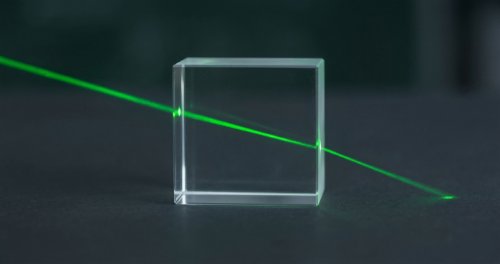
Light bends when it moves from air into water or glass. This course explains why this happens and how to calculate the change in speed and direction using Snell's law and refractive index. You will learn about critical angles, total internal reflection, and how light behaves passing through rectangular blocks and triangular prisms. The lessons cover real and apparent depth, the formation of rainbows, and how lenses converge or diverge light rays to form images.
Understanding refraction is essential for many technical jobs and daily life. It is the reason we can use spectacles to see clearly, cameras to take photos, and microscopes to study small germs. Engineers use these principles to design fibre optic cables for fast internet and medical endoscopes for internal body checks. Knowing how light bends helps you understand why a pool looks shallower than it is and how mirages form on hot Nigerian roads.
By the end of this course, you will be able to state the laws of refraction and calculate the refractive index of different materials. You will gain the skill to draw accurate ray diagrams for both convex and concave lenses and determine image position, size, and nature. You will also learn to solve problems involving the power of a lens and explain the working principles of the human eye and optical instruments like the telescope or projector.
This course is for Senior Secondary students in SS1 to SS3 preparing for WAEC, NECO, or JAMB exams. It is also useful for university students in preliminary years who need a solid foundation in optics. Even if you are not a student, this knowledge helps you understand how the world works, from how your car side mirrors function to why diamonds sparkle so brightly. This training turns abstract physics into clear, usable facts for anyone interested in science and technology.
Refraction of Light - Physics (Senior Secondary)
Light bends when it moves from air into water or glass. This course explains why this happens and how to calculate the change in speed and direction using Snell's law and refractive index. You will learn about critical angles, total internal reflection, and how light behaves passing through rectangular blocks and triangular prisms. The lessons cover real and apparent depth, the formation of rainbows, and how lenses converge or diverge light rays to form images. Understanding refraction is essential for many technical jobs and daily life. It is the reason we can use spectacles to see clearly, cameras to take photos, and microscopes to study small germs. Engineers use these principles to design fibre optic cables for fast internet and medical endoscopes for internal body checks. Knowing how light bends helps you understand why a pool looks shallower than it is and how mirages form on hot Nigerian roads. By the end of this course, you will be able to state the laws of refraction and calculate the refractive index of different materials. You will gain the skill to draw accurate ray diagrams for both convex and concave lenses and determine image position, size, and nature. You will also learn to solve problems involving the power of a lens and explain the working principles of the human eye and optical instruments like the telescope or projector. This course is for Senior Secondary students in SS1 to SS3 preparing for WAEC, NECO, or JAMB exams. It is also useful for university students in preliminary years who need a solid foundation in optics. Even if you are not a student, this knowledge helps you understand how the world works, from how your car side mirrors function to why diamonds sparkle so brightly. This training turns abstract physics into clear, usable facts for anyone interested in science and technology.
Dispersion of Light and Electromagnetic Spectrum - Physics (Senior Secondary)
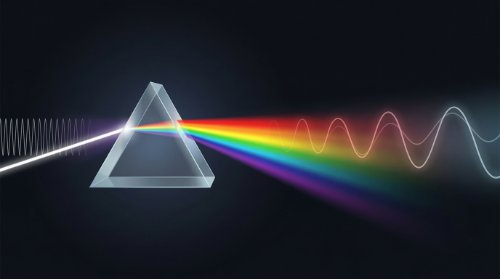
White light is not simple; it is a mixture of seven colours that separate when passing through a glass prism. This course explains dispersion, the refractive index, and how rainbows form in the sky. You will also learn about the electromagnetic spectrum, covering everything from high-energy gamma rays to long-distance radio waves. Understanding these waves explains how energy moves through space without needing a physical medium.
Knowledge of the spectrum is the foundation for modern technology like X-ray machines, microwave ovens, and fibre optic cables used for high-speed internet. Engineers use these principles to design communication systems, while doctors rely on specific light frequencies for surgery and medical imaging. Learning these concepts helps you understand how your mobile phone sends signals and how remote controls operate your television at home.
By the end of this study, you will be able to calculate the angle of deviation in prisms and explain the conditions for total internal reflection. You will identify each band of the electromagnetic spectrum, stating their specific frequencies, wavelengths, and unique properties. You will also gain the skill to distinguish between different types of radiation and describe their safety risks or benefits in everyday life.
This course is written for Senior Secondary students preparing for WAEC, NECO, or JAMB exams. It is also useful for university freshmen in science or engineering who need a solid reminder of optics and wave theory. Even if you are just curious about how light works, these lessons provide clear answers about the physical world without using confusing language or unnecessary talk.
Dispersion of Light and Electromagnetic Spectrum - Physics (Senior Secondary)
White light is not simple; it is a mixture of seven colours that separate when passing through a glass prism. This course explains dispersion, the refractive index, and how rainbows form in the sky. You will also learn about the electromagnetic spectrum, covering everything from high-energy gamma rays to long-distance radio waves. Understanding these waves explains how energy moves through space without needing a physical medium. Knowledge of the spectrum is the foundation for modern technology like X-ray machines, microwave ovens, and fibre optic cables used for high-speed internet. Engineers use these principles to design communication systems, while doctors rely on specific light frequencies for surgery and medical imaging. Learning these concepts helps you understand how your mobile phone sends signals and how remote controls operate your television at home. By the end of this study, you will be able to calculate the angle of deviation in prisms and explain the conditions for total internal reflection. You will identify each band of the electromagnetic spectrum, stating their specific frequencies, wavelengths, and unique properties. You will also gain the skill to distinguish between different types of radiation and describe their safety risks or benefits in everyday life. This course is written for Senior Secondary students preparing for WAEC, NECO, or JAMB exams. It is also useful for university freshmen in science or engineering who need a solid reminder of optics and wave theory. Even if you are just curious about how light works, these lessons provide clear answers about the physical world without using confusing language or unnecessary talk.
Electrostatics - Physics (Senior Secondary)
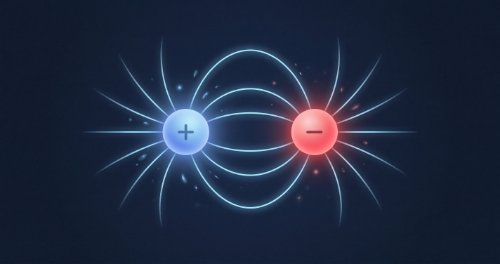
Electricity stays still before it flows, and this course explains exactly how that happens. You will learn about electric charges, how they attract or repel each other, and the invisible fields they create in the space around them. The lessons cover Coulomb's law, electric field intensity, and the way potential energy builds up between charges. You will also study capacitors, learning how they store electrical energy and why their arrangement in circuits matters for electronic devices.
This knowledge is why your phone screen reacts to your finger and why lightning strikes during a rainstorm. Understanding electrostatics is a requirement for anyone wanting to work in electrical engineering, telecommunications, or renewable energy. You can apply these principles to fix simple electronic gadgets, understand how industrial spray painting works, or ensure safety when handling flammable materials where static sparks could cause explosions. It provides the foundation for grasping how modern touchscreens and memory chips function.
By the end of this course, you will calculate the force between multiple charges and determine the strength of electric fields at specific points. You will define electric potential and solve problems involving work done in moving charges. You will also master the formulas for capacitance, including how to find the total capacity when capacitors are connected in series or parallel. This course ensures you can explain how dielectric materials affect energy storage and describe the distribution of charges on various conductor shapes.
This course is for Senior Secondary students preparing for WAEC, NECO, or JAMB exams. It simplifies difficult physics concepts into clear, manageable parts for those aiming for top grades. University undergraduates in their first year will find it a useful refresher for engineering physics. Even if you are not a science student, the course helps you understand natural phenomena like static shocks from clothes or the basic physics behind the battery-operated tools you use daily.
Electrostatics - Physics (Senior Secondary)
Electricity stays still before it flows, and this course explains exactly how that happens. You will learn about electric charges, how they attract or repel each other, and the invisible fields they create in the space around them. The lessons cover Coulomb's law, electric field intensity, and the way potential energy builds up between charges. You will also study capacitors, learning how they store electrical energy and why their arrangement in circuits matters for electronic devices. This knowledge is why your phone screen reacts to your finger and why lightning strikes during a rainstorm. Understanding electrostatics is a requirement for anyone wanting to work in electrical engineering, telecommunications, or renewable energy. You can apply these principles to fix simple electronic gadgets, understand how industrial spray painting works, or ensure safety when handling flammable materials where static sparks could cause explosions. It provides the foundation for grasping how modern touchscreens and memory chips function. By the end of this course, you will calculate the force between multiple charges and determine the strength of electric fields at specific points. You will define electric potential and solve problems involving work done in moving charges. You will also master the formulas for capacitance, including how to find the total capacity when capacitors are connected in series or parallel. This course ensures you can explain how dielectric materials affect energy storage and describe the distribution of charges on various conductor shapes. This course is for Senior Secondary students preparing for WAEC, NECO, or JAMB exams. It simplifies difficult physics concepts into clear, manageable parts for those aiming for top grades. University undergraduates in their first year will find it a useful refresher for engineering physics. Even if you are not a science student, the course helps you understand natural phenomena like static shocks from clothes or the basic physics behind the battery-operated tools you use daily.
Current Electricity - Physics (Senior Secondary)
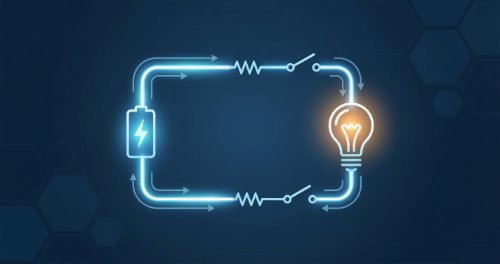
Electricity powers your phone, lights your home, and runs every modern machine you see. This course explains how charges move through wires to create the energy we use daily. You will learn about voltage, current, and resistance, including how to use Ohm’s law to solve circuit problems. We cover how resistors work in series and parallel, the heating effect of electric currents, and how to measure power using standard formulas. By the end, you will understand the physics behind the electrical grid and domestic wiring systems.
Understanding current electricity is a basic requirement for anyone wanting to work in engineering, telecommunications, or renewable energy. These principles are what electricians use to wire buildings and what engineers use to build computers or solar power systems. Knowing how to calculate load and power helps you prevent electrical fires and manage energy costs in your own home. This knowledge is the foundation for building any electronic gadget or repairing common electrical appliances.
You will master the ability to calculate current, potential difference, and resistance in any basic DC circuit. You will gain the skills to determine the total resistance of complex networks and calculate the electrical energy consumed by various devices. The course teaches you to use instruments like the ammeter and voltmeter correctly while understanding the relationship between electromotive force and terminal voltage. You will also learn to apply Kirchhoff’s laws to find unknown values in electrical circuits.
This course is specifically for senior secondary school students preparing for WAEC, NECO, or JAMB exams. It is also a vital refresher for university freshmen studying science or engineering who need to solidify their grasp of circuit theory. Even if you are just a hobbyist interested in how solar panels and batteries work, these lessons provide the essential rules you need. Anyone looking to understand the technical side of the power sector in Nigeria will find this information indispensable.
Current Electricity - Physics (Senior Secondary)
Electricity powers your phone, lights your home, and runs every modern machine you see. This course explains how charges move through wires to create the energy we use daily. You will learn about voltage, current, and resistance, including how to use Ohm’s law to solve circuit problems. We cover how resistors work in series and parallel, the heating effect of electric currents, and how to measure power using standard formulas. By the end, you will understand the physics behind the electrical grid and domestic wiring systems. Understanding current electricity is a basic requirement for anyone wanting to work in engineering, telecommunications, or renewable energy. These principles are what electricians use to wire buildings and what engineers use to build computers or solar power systems. Knowing how to calculate load and power helps you prevent electrical fires and manage energy costs in your own home. This knowledge is the foundation for building any electronic gadget or repairing common electrical appliances. You will master the ability to calculate current, potential difference, and resistance in any basic DC circuit. You will gain the skills to determine the total resistance of complex networks and calculate the electrical energy consumed by various devices. The course teaches you to use instruments like the ammeter and voltmeter correctly while understanding the relationship between electromotive force and terminal voltage. You will also learn to apply Kirchhoff’s laws to find unknown values in electrical circuits. This course is specifically for senior secondary school students preparing for WAEC, NECO, or JAMB exams. It is also a vital refresher for university freshmen studying science or engineering who need to solidify their grasp of circuit theory. Even if you are just a hobbyist interested in how solar panels and batteries work, these lessons provide the essential rules you need. Anyone looking to understand the technical side of the power sector in Nigeria will find this information indispensable.
Magnetism and Electromagnetic Induction - Physics (Senior Secondary)
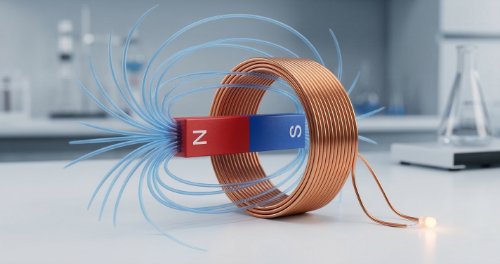
This course covers how magnets work and how they create electricity. You will learn about magnetic fields, the forces on moving charges, and how changing magnetic flux generates electromotive force. We explain the laws of Faraday and Lenz, the workings of transformers, and the principles behind electric motors and generators. This is the foundation of how we control and use power today.
Understanding these principles is essential for careers in electrical engineering, telecommunications, and power distribution. You will see how the same rules apply to the massive turbines in a dam and the small vibrating motor in your mobile phone. This knowledge helps you understand how household appliances work and how to fix or design basic electrical systems.
By the end of this study, you will be able to calculate magnetic force, determine the direction of induced current, and solve problems involving transformer efficiency and step-up or step-down voltages. You will master the relationship between electricity and magnetism, including how to use Fleming's rules to predict motion or current in a conductor.
This course is for Senior Secondary students preparing for WAEC, NECO, or UTME exams. It also serves as a solid refresher for 100-level university engineering students or any technician who wants to understand the science behind their daily work with electrical machines. Even if you are just curious about how the national grid delivers power to your home, these lessons provide the clear answers you need.
Magnetism and Electromagnetic Induction - Physics (Senior Secondary)
This course covers how magnets work and how they create electricity. You will learn about magnetic fields, the forces on moving charges, and how changing magnetic flux generates electromotive force. We explain the laws of Faraday and Lenz, the workings of transformers, and the principles behind electric motors and generators. This is the foundation of how we control and use power today. Understanding these principles is essential for careers in electrical engineering, telecommunications, and power distribution. You will see how the same rules apply to the massive turbines in a dam and the small vibrating motor in your mobile phone. This knowledge helps you understand how household appliances work and how to fix or design basic electrical systems. By the end of this study, you will be able to calculate magnetic force, determine the direction of induced current, and solve problems involving transformer efficiency and step-up or step-down voltages. You will master the relationship between electricity and magnetism, including how to use Fleming's rules to predict motion or current in a conductor. This course is for Senior Secondary students preparing for WAEC, NECO, or UTME exams. It also serves as a solid refresher for 100-level university engineering students or any technician who wants to understand the science behind their daily work with electrical machines. Even if you are just curious about how the national grid delivers power to your home, these lessons provide the clear answers you need.
Alternating Currents - Physics (Senior Secondary)
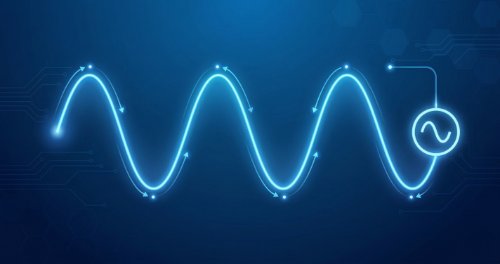
Alternating current powers your home, school, and every gadget you use. This course explains how electricity flows in cycles rather than a constant stream. You will study peak values, root mean square (rms) voltage, and how resistors, inductors, and capacitors behave in a circuit. We cover power factor, resonance, and the mathematical relationship between current and time. This knowledge is the foundation for understanding how the national grid delivers electricity to your doorstep.
Mastering these concepts is essential for anyone interested in electrical engineering, telecommunications, or renewable energy. You will learn why high-voltage transmission uses AC instead of DC to reduce energy loss. This information is practical for troubleshooting household appliances, understanding inverter systems, and managing solar power installations. If you plan to work with hardware, wiring, or power systems, these principles are your daily tools.
By the end of this course, you will calculate impedance, reactance, and resonant frequency with precision. You will understand how to use vector diagrams to represent phase differences between voltage and current. You will gain the ability to solve complex circuit problems involving R-L-C series connections and determine the efficiency of electrical components. These skills ensure you can handle both classroom exams and real-world technical challenges.
This course is specifically for SS3 students preparing for WAEC, NECO, or JAMB exams. It simplifies difficult physics topics into clear, usable lessons. University undergraduates in their first year will also find this a valuable refresher for basic engineering courses. Even if you are a technician or an enthusiast building your own electronics, this course provides the scientific rules you need to work safely and effectively with alternating currents.
Alternating Currents - Physics (Senior Secondary)
Alternating current powers your home, school, and every gadget you use. This course explains how electricity flows in cycles rather than a constant stream. You will study peak values, root mean square (rms) voltage, and how resistors, inductors, and capacitors behave in a circuit. We cover power factor, resonance, and the mathematical relationship between current and time. This knowledge is the foundation for understanding how the national grid delivers electricity to your doorstep. Mastering these concepts is essential for anyone interested in electrical engineering, telecommunications, or renewable energy. You will learn why high-voltage transmission uses AC instead of DC to reduce energy loss. This information is practical for troubleshooting household appliances, understanding inverter systems, and managing solar power installations. If you plan to work with hardware, wiring, or power systems, these principles are your daily tools. By the end of this course, you will calculate impedance, reactance, and resonant frequency with precision. You will understand how to use vector diagrams to represent phase differences between voltage and current. You will gain the ability to solve complex circuit problems involving R-L-C series connections and determine the efficiency of electrical components. These skills ensure you can handle both classroom exams and real-world technical challenges. This course is specifically for SS3 students preparing for WAEC, NECO, or JAMB exams. It simplifies difficult physics topics into clear, usable lessons. University undergraduates in their first year will also find this a valuable refresher for basic engineering courses. Even if you are a technician or an enthusiast building your own electronics, this course provides the scientific rules you need to work safely and effectively with alternating currents.
Atomic and Nuclear Physics (Senior Secondary)
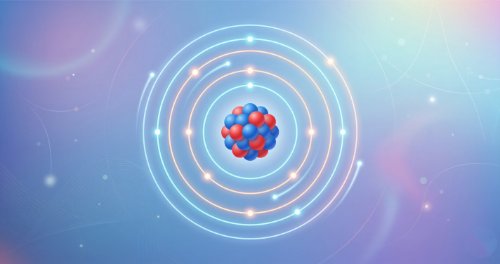
Small atoms hold the massive energy that powers our world. This course covers the structure of the atom, the nature of the nucleus, and how particles behave at the smallest scales. You will study Dalton's theory, Rutherford's alpha scattering experiment, and Bohr's model of the atom. The lessons explain radioactivity, the three types of radiation, half-life calculations, and the difference between nuclear fission and fusion. This is the foundation of modern physics and the key to understanding how matter itself is built.
Knowledge of atomic physics is essential for careers in medicine, energy, and engineering. Doctors use these principles for X-rays and cancer treatments like radiotherapy. Engineers apply nuclear physics to generate electricity in power plants. Understanding radiation also helps in agricultural research to improve crop yields and in carbon dating to determine the age of ancient objects. This course provides the technical background needed to work with modern technology and solve energy problems in Nigeria and beyond.
By the end of this course, you will be able to describe the components of an atom and explain how electrons move in orbits. You will calculate the decay of radioactive substances and predict the results of nuclear reactions. You can identify the properties of alpha, beta, and gamma rays and state their uses in industry. You will also understand Einstein's mass-energy equation and explain how nuclear reactors produce power. These skills prepare you for advanced science exams and technical university degrees.
This course is for Senior Secondary School students preparing for WAEC, NECO, or JAMB exams. It is also a vital refresher for university freshmen studying engineering or physical sciences. Even if you are not a science student, this course helps you understand the safety of household electronics and the facts about nuclear energy. Anyone interested in how the universe works will find these clear explanations useful for building a solid scientific background.
Atomic and Nuclear Physics (Senior Secondary)
Small atoms hold the massive energy that powers our world. This course covers the structure of the atom, the nature of the nucleus, and how particles behave at the smallest scales. You will study Dalton's theory, Rutherford's alpha scattering experiment, and Bohr's model of the atom. The lessons explain radioactivity, the three types of radiation, half-life calculations, and the difference between nuclear fission and fusion. This is the foundation of modern physics and the key to understanding how matter itself is built. Knowledge of atomic physics is essential for careers in medicine, energy, and engineering. Doctors use these principles for X-rays and cancer treatments like radiotherapy. Engineers apply nuclear physics to generate electricity in power plants. Understanding radiation also helps in agricultural research to improve crop yields and in carbon dating to determine the age of ancient objects. This course provides the technical background needed to work with modern technology and solve energy problems in Nigeria and beyond. By the end of this course, you will be able to describe the components of an atom and explain how electrons move in orbits. You will calculate the decay of radioactive substances and predict the results of nuclear reactions. You can identify the properties of alpha, beta, and gamma rays and state their uses in industry. You will also understand Einstein's mass-energy equation and explain how nuclear reactors produce power. These skills prepare you for advanced science exams and technical university degrees. This course is for Senior Secondary School students preparing for WAEC, NECO, or JAMB exams. It is also a vital refresher for university freshmen studying engineering or physical sciences. Even if you are not a science student, this course helps you understand the safety of household electronics and the facts about nuclear energy. Anyone interested in how the universe works will find these clear explanations useful for building a solid scientific background.
Introductory Electronics - Physics (Senior Secondary)
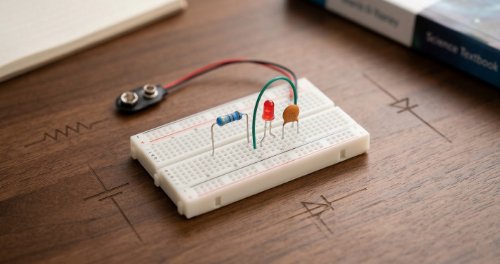
Every electronic gadget you use, from your mobile phone to the television, relies on the movement of electrons through special materials. This course teaches you how these tiny particles flow in vacuums and solids to make technology work. You will learn about thermionic emission, the way X-rays are produced, and how semiconductors like silicon behave. We cover how diodes allow current to flow in one direction and how transistors act as switches or amplifiers in a circuit.
Understanding electronics is the first step toward a career in electrical engineering, telecommunications, or phone repairs. You will gain the knowledge needed to identify components on a circuit board and understand why certain parts are used in power packs and radio receivers. This practical insight helps you troubleshoot basic electronic faults at home and gives you a solid foundation for building your own simple electronic projects or inventions.
By the end of this lessons, you will be able to explain the working principles of cathode ray tubes, describe the differences between p-type and n-type semiconductors, and show how a p-n junction works. You will gain the skill to interpret circuit diagrams, understand the process of rectification which changes AC to DC, and explain how integrated circuits carry out complex tasks in small spaces. This course ensures you can define technical terms like doping, holes, and bias without confusion.
This course is for Senior Secondary School students preparing for WAEC, NECO, or JAMB exams. It is also useful for university freshers who need a quick refresher on physics basics or hobbyists who want to understand the "magic" inside their devices. Even if you are not a science student, knowing how the tools of the modern world function will give you an advantage in any technical field or trade.
Introductory Electronics - Physics (Senior Secondary)
Every electronic gadget you use, from your mobile phone to the television, relies on the movement of electrons through special materials. This course teaches you how these tiny particles flow in vacuums and solids to make technology work. You will learn about thermionic emission, the way X-rays are produced, and how semiconductors like silicon behave. We cover how diodes allow current to flow in one direction and how transistors act as switches or amplifiers in a circuit. Understanding electronics is the first step toward a career in electrical engineering, telecommunications, or phone repairs. You will gain the knowledge needed to identify components on a circuit board and understand why certain parts are used in power packs and radio receivers. This practical insight helps you troubleshoot basic electronic faults at home and gives you a solid foundation for building your own simple electronic projects or inventions. By the end of this lessons, you will be able to explain the working principles of cathode ray tubes, describe the differences between p-type and n-type semiconductors, and show how a p-n junction works. You will gain the skill to interpret circuit diagrams, understand the process of rectification which changes AC to DC, and explain how integrated circuits carry out complex tasks in small spaces. This course ensures you can define technical terms like doping, holes, and bias without confusion. This course is for Senior Secondary School students preparing for WAEC, NECO, or JAMB exams. It is also useful for university freshers who need a quick refresher on physics basics or hobbyists who want to understand the "magic" inside their devices. Even if you are not a science student, knowing how the tools of the modern world function will give you an advantage in any technical field or trade.
Fibre Optics and Lasers - Physics (Senior Secondary)
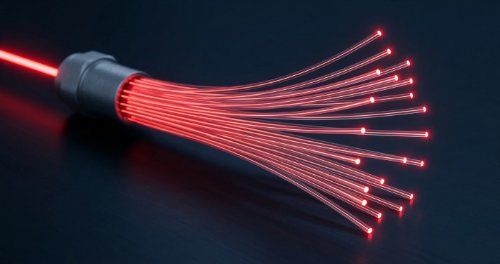
Light carries data through glass threads at extreme speeds. This course explains how total internal reflection keeps light trapped inside optical fibres and how lasers produce narrow, powerful beams. You will learn the physics of refraction, critical angles, and the components of a fibre optic system. We cover how thin glass strands replace copper wires to send internet signals across oceans and how ruby or gas lasers create concentrated light for precise work.
Understanding these tools is essential for modern telecommunications and medicine. You can apply this knowledge to troubleshoot high-speed internet connections or understand how surgeons use light for bloodless operations. This foundation prepares you for technical roles in network engineering, cable installation, and industrial manufacturing. You will see how basic school physics runs the global digital economy and modern hospital equipment.
By the end of this study, you will calculate critical angles and refractive indices for different materials. You will identify the core, cladding, and buffer coating in a cable and explain their specific functions. You will describe the process of population inversion in lasers and distinguish between coherent and incoherent light sources. You will also evaluate why fibre optics are better than traditional cables for long-distance data transfer.
This course is for Senior Secondary students preparing for WAEC, NECO, or JAMB exams. It is also useful for university freshmen needing a solid physics refresher and technicians entering the telecoms industry. Even those outside science fields will benefit by understanding the technology behind their daily internet use and modern gadgets. It simplifies complex hardware into clear, manageable principles for anyone curious about how light works.
Fibre Optics and Lasers - Physics (Senior Secondary)
Light carries data through glass threads at extreme speeds. This course explains how total internal reflection keeps light trapped inside optical fibres and how lasers produce narrow, powerful beams. You will learn the physics of refraction, critical angles, and the components of a fibre optic system. We cover how thin glass strands replace copper wires to send internet signals across oceans and how ruby or gas lasers create concentrated light for precise work. Understanding these tools is essential for modern telecommunications and medicine. You can apply this knowledge to troubleshoot high-speed internet connections or understand how surgeons use light for bloodless operations. This foundation prepares you for technical roles in network engineering, cable installation, and industrial manufacturing. You will see how basic school physics runs the global digital economy and modern hospital equipment. By the end of this study, you will calculate critical angles and refractive indices for different materials. You will identify the core, cladding, and buffer coating in a cable and explain their specific functions. You will describe the process of population inversion in lasers and distinguish between coherent and incoherent light sources. You will also evaluate why fibre optics are better than traditional cables for long-distance data transfer. This course is for Senior Secondary students preparing for WAEC, NECO, or JAMB exams. It is also useful for university freshmen needing a solid physics refresher and technicians entering the telecoms industry. Even those outside science fields will benefit by understanding the technology behind their daily internet use and modern gadgets. It simplifies complex hardware into clear, manageable principles for anyone curious about how light works.