MTH 203: Sets, Logic and Algebra I
$ 29.99
Learning Track Courses
Set Theory - Mathematics (Undergraduate Foundation)
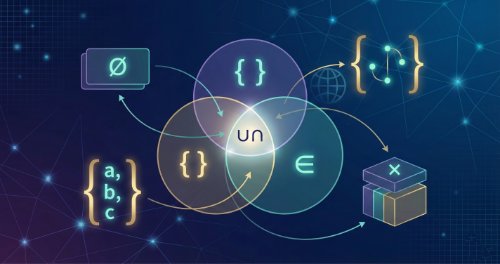
Mathematics begins with sets. This course covers everything from basic definitions and membership notations to complex set algebra and De Morgan's laws. You will master cardinality, power sets, and the classification of number systems including rational, irrational, and complex numbers. The curriculum moves from simple operations like union and intersection into element-wise proofs, Cartesian products, and the mechanics of relations and functions.
Set theory is the language of modern data and logic. These concepts are essential for computer programming, database management, and statistical analysis. Understanding functions and mappings allows you to model real-world dependencies in engineering, economics, and the sciences. Mastering these foundations provides the exact logical framework needed to solve complex problems in technology and research.
Upon completion, you will be able to simplify set expressions and solve grouping problems using Venn diagrams and the inclusion-exclusion principle. You will know how to perform element-wise proofs and calculate set cardinalities. You will also gain the ability to evaluate composite functions and prove whether a mapping is one-to-one, onto, or bijective.
This course is designed for undergraduate students and secondary school leavers entering STEM disciplines. It provides a necessary logical foundation for anyone moving into calculus, data science, or advanced mathematics. The clear, direct instruction ensures that any student can develop the systematic thinking required for professional technical roles.
Set Theory - Mathematics (Undergraduate Foundation)
Mathematics begins with sets. This course covers everything from basic definitions and membership notations to complex set algebra and De Morgan's laws. You will master cardinality, power sets, and the classification of number systems including rational, irrational, and complex numbers. The curriculum moves from simple operations like union and intersection into element-wise proofs, Cartesian products, and the mechanics of relations and functions. Set theory is the language of modern data and logic. These concepts are essential for computer programming, database management, and statistical analysis. Understanding functions and mappings allows you to model real-world dependencies in engineering, economics, and the sciences. Mastering these foundations provides the exact logical framework needed to solve complex problems in technology and research. Upon completion, you will be able to simplify set expressions and solve grouping problems using Venn diagrams and the inclusion-exclusion principle. You will know how to perform element-wise proofs and calculate set cardinalities. You will also gain the ability to evaluate composite functions and prove whether a mapping is one-to-one, onto, or bijective. This course is designed for undergraduate students and secondary school leavers entering STEM disciplines. It provides a necessary logical foundation for anyone moving into calculus, data science, or advanced mathematics. The clear, direct instruction ensures that any student can develop the systematic thinking required for professional technical roles.
Mappings - Introductory Abstract Algebra (Undergraduate Advanced)
This course focuses on mappings???one of the core tools in modern mathematics and abstract algebra.
We cover functions, injectivity, surjectivity, bijections, and composition. You'll see how mappings connect sets, preserve structure, and lay the groundwork for understanding homomorphisms in algebraic systems.
Straightforward, precise, and built for learners taking their first steps into abstract algebra.
Mappings - Introductory Abstract Algebra (Undergraduate Advanced)
This course focuses on mappings???one of the core tools in modern mathematics and abstract algebra. We cover functions, injectivity, surjectivity, bijections, and composition. You'll see how mappings connect sets, preserve structure, and lay the groundwork for understanding homomorphisms in algebraic systems. Straightforward, precise, and built for learners taking their first steps into abstract algebra.
Relations - Introductory Abstract Algebra (Undergraduate Advanced)
This course builds up a key part of the foundation for abstract algebra???relations.
We explore equivalence relations, partitions, orderings, and how they help us organize and understand mathematical structures. These ideas connect directly to how we define and work with algebraic systems like groups and rings.
Clear, focused, and made for first-time learners stepping into abstract algebra.
Relations - Introductory Abstract Algebra (Undergraduate Advanced)
This course builds up a key part of the foundation for abstract algebra???relations. We explore equivalence relations, partitions, orderings, and how they help us organize and understand mathematical structures. These ideas connect directly to how we define and work with algebraic systems like groups and rings. Clear, focused, and made for first-time learners stepping into abstract algebra.

Binary Operations - Introductory Abstract Algebra (Undergraduate Advanced)
This course introduces binary operations???the basic building blocks of algebraic structures.
We explore how operations combine elements of a set, and what it means for them to be associative, commutative, or have an identity or inverse. These ideas form the core of how structures like groups and rings are defined.
Clear, hands-on, and designed for anyone beginning their journey into abstract algebra.
Binary Operations - Introductory Abstract Algebra (Undergraduate Advanced)
This course introduces binary operations???the basic building blocks of algebraic structures. We explore how operations combine elements of a set, and what it means for them to be associative, commutative, or have an identity or inverse. These ideas form the core of how structures like groups and rings are defined. Clear, hands-on, and designed for anyone beginning their journey into abstract algebra.
Groups - Introductory Abstract Algebra (Undergraduate Advanced)
This course introduces groups???one of the fundamental structures in abstract algebra.
We cover the group axioms, explore classic examples like integers under addition and symmetry groups, and show how groups model structure and transformations in math.
Clear, focused, and designed for learners new to abstract algebra.
Groups - Introductory Abstract Algebra (Undergraduate Advanced)
This course introduces groups???one of the fundamental structures in abstract algebra. We cover the group axioms, explore classic examples like integers under addition and symmetry groups, and show how groups model structure and transformations in math. Clear, focused, and designed for learners new to abstract algebra.
Subgroups - Introductory Abstract Algebra (Undergraduate Advanced)
This course dives into subgroups???key pieces within groups that reveal deeper structure.
You???ll learn how to identify subgroups, understand their properties, and see why they matter in the bigger picture of group theory. We???ll also explore examples and criteria that help recognize subgroups quickly.
Clear, practical, and perfect for first-time learners ready to explore group structures more deeply.
Subgroups - Introductory Abstract Algebra (Undergraduate Advanced)
This course dives into subgroups???key pieces within groups that reveal deeper structure. You???ll learn how to identify subgroups, understand their properties, and see why they matter in the bigger picture of group theory. We???ll also explore examples and criteria that help recognize subgroups quickly. Clear, practical, and perfect for first-time learners ready to explore group structures more deeply.
Rings and Fields - Introductory Abstract Algebra (Undergraduate Advanced)
This course introduces rings and fields???two central structures in abstract algebra.
You???ll learn how rings extend the idea of groups with two operations, and how fields bring in the familiar arithmetic of fractions and equations. We explore key examples like integers, polynomials, and modular systems.
Simple, structured, and made for first-time learners building up their algebra toolkit.
Rings and Fields - Introductory Abstract Algebra (Undergraduate Advanced)
This course introduces rings and fields???two central structures in abstract algebra. You???ll learn how rings extend the idea of groups with two operations, and how fields bring in the familiar arithmetic of fractions and equations. We explore key examples like integers, polynomials, and modular systems. Simple, structured, and made for first-time learners building up their algebra toolkit.
Homomorphisms - Introductory Abstract Algebra (Undergraduate Advanced)
This course explores homomorphisms???the maps that connect algebraic structures while preserving their operations.
You???ll learn what makes a function a homomorphism, see examples between groups and rings, and understand how these mappings reveal similarities and relationships between structures.
Clear, focused, and designed for first-time learners ready to deepen their understanding of algebraic connections.
Homomorphisms - Introductory Abstract Algebra (Undergraduate Advanced)
This course explores homomorphisms???the maps that connect algebraic structures while preserving their operations. You???ll learn what makes a function a homomorphism, see examples between groups and rings, and understand how these mappings reveal similarities and relationships between structures. Clear, focused, and designed for first-time learners ready to deepen their understanding of algebraic connections.
Elementary Number Theory - Introductory Abstract Algebra (Undergraduate Advanced)
This course brings in elementary number theory as a foundation for abstract algebra.
We cover divisibility, prime numbers, greatest common divisors, modular arithmetic, and congruences???all with a focus on the ideas that connect naturally to groups, rings, and fields.
Clean, intuitive, and designed for learners building a solid entry point into algebra through number theory.
Elementary Number Theory - Introductory Abstract Algebra (Undergraduate Advanced)
This course brings in elementary number theory as a foundation for abstract algebra. We cover divisibility, prime numbers, greatest common divisors, modular arithmetic, and congruences???all with a focus on the ideas that connect naturally to groups, rings, and fields. Clean, intuitive, and designed for learners building a solid entry point into algebra through number theory.