MTH 207: Real Analysis I
$ 23.99
Learning Track Courses
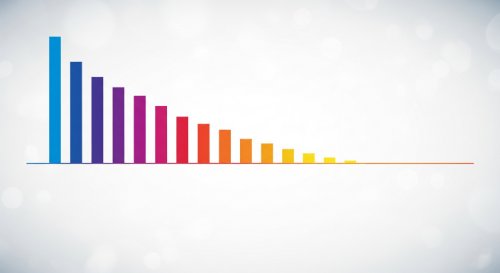
Convergence of Infinite Sequences and Series - Advanced Calculus (Undergraduate Advanced)
This course provides a complete toolkit for the study of infinite sequences and series. It begins with a rigorous treatment of the convergence of sequences and the algebra of limits. The course then covers the foundational theory of infinite series and provides a comprehensive study of all standard tests for convergence, culminating in an introduction to power series.
The concepts of convergence and infinite series are essential in physics, engineering, and computer science. They are used to solve differential equations, analyse signals with Fourier series, calculate probabilities, and determine the accuracy of numerical approximations. This is the mathematical machinery behind precision in scientific modelling.
By the end of this course, you will be able to determine if an infinite sequence converges and find its limit. You will also be able to apply the complete suite of convergence tests???including the Integral, Comparison, Ratio, Root, and Alternating Series tests???to determine if an infinite series converges, and find the radius and interval of convergence for any power series.
This course is for students who have completed a foundational calculus course. It is the standard curriculum for a second-semester calculus (Calculus II) module and is a direct prerequisite for the study of differential equations, complex analysis, and advanced physics.
Convergence of Infinite Sequences and Series - Advanced Calculus (Undergraduate Advanced)
This course provides a complete toolkit for the study of infinite sequences and series. It begins with a rigorous treatment of the convergence of sequences and the algebra of limits. The course then covers the foundational theory of infinite series and provides a comprehensive study of all standard tests for convergence, culminating in an introduction to power series. The concepts of convergence and infinite series are essential in physics, engineering, and computer science. They are used to solve differential equations, analyse signals with Fourier series, calculate probabilities, and determine the accuracy of numerical approximations. This is the mathematical machinery behind precision in scientific modelling. By the end of this course, you will be able to determine if an infinite sequence converges and find its limit. You will also be able to apply the complete suite of convergence tests???including the Integral, Comparison, Ratio, Root, and Alternating Series tests???to determine if an infinite series converges, and find the radius and interval of convergence for any power series. This course is for students who have completed a foundational calculus course. It is the standard curriculum for a second-semester calculus (Calculus II) module and is a direct prerequisite for the study of differential equations, complex analysis, and advanced physics.
Analysis of Infinite Sequences and Series - Real Analysis (Undergraduate Advanced)
This course provides the formal, proof-based foundation for the concepts of convergence covered in calculus. It moves beyond computation to explore the deep theoretical questions of why sequences and series converge. The material covers the topological properties of sequences, key convergence theorems like Bolzano-Weierstrass, Cauchy sequences, and the advanced topic of uniform convergence for series of functions.
This subject is the gateway to higher mathematics. The rigorous proof-writing and analytical skills developed here are non-negotiable for any student pursuing a degree in pure or applied mathematics. These principles are the theoretical bedrock upon which advanced concepts in differential equations, functional analysis, and theoretical physics are built.
By the end of this course, you will be able to construct rigorous proofs for statements about the convergence of sequences. You will also be able to apply the Monotone Convergence and Bolzano-Weierstrass theorems, use the Cauchy Criterion to prove convergence, and analyse the uniform convergence of a series of functions using the Weierstrass M-Test.
This course is for mathematics majors and advanced students who have already completed a full Calculus II course. It is the standard curriculum for a first module in Real Analysis and is an essential prerequisite for graduate-level study in mathematics, physics, and theoretical computer science.
Analysis of Infinite Sequences and Series - Real Analysis (Undergraduate Advanced)
This course provides the formal, proof-based foundation for the concepts of convergence covered in calculus. It moves beyond computation to explore the deep theoretical questions of why sequences and series converge. The material covers the topological properties of sequences, key convergence theorems like Bolzano-Weierstrass, Cauchy sequences, and the advanced topic of uniform convergence for series of functions. This subject is the gateway to higher mathematics. The rigorous proof-writing and analytical skills developed here are non-negotiable for any student pursuing a degree in pure or applied mathematics. These principles are the theoretical bedrock upon which advanced concepts in differential equations, functional analysis, and theoretical physics are built. By the end of this course, you will be able to construct rigorous proofs for statements about the convergence of sequences. You will also be able to apply the Monotone Convergence and Bolzano-Weierstrass theorems, use the Cauchy Criterion to prove convergence, and analyse the uniform convergence of a series of functions using the Weierstrass M-Test. This course is for mathematics majors and advanced students who have already completed a full Calculus II course. It is the standard curriculum for a first module in Real Analysis and is an essential prerequisite for graduate-level study in mathematics, physics, and theoretical computer science.
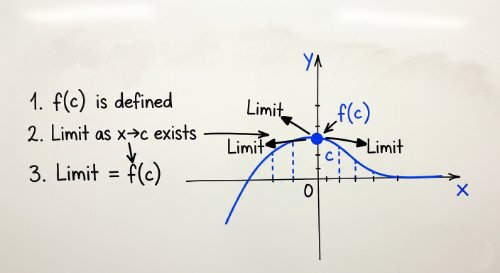
Continuity of Real-Valued Functions - Advanced Calculus (Undergraduate Advanced)
Continuity ensures that a function behaves predictably without sudden jumps or breaks. This course defines continuity at interior points, endpoints, and across entire intervals. You will identify standard continuous functions and test them through repeated worked examples. The material classifies discontinuities, with specific focus on removable gaps that can be repaired. You will study the max-min theorem and the intermediate-value theorem to understand how continuous functions guarantee specific outputs within a range.
Engineers rely on continuity to model physical systems where sudden changes cause failure. Structural analysis requires smooth stress distributions to prevent material fracture. Electrical circuit design depends on continuous current flow for stable operation. Computer graphics algorithms use continuity to render smooth curves and surfaces without visual artifacts. Financial models assume continuous price movements to calculate risk and option values accurately. Mastery of these concepts prevents calculation errors in simulation software and real-world design tasks.
You will determine if a function is continuous at any given point or interval. You will distinguish between removable and non-removable discontinuities using limit analysis. You will apply the max-min theorem to find absolute extrema on closed intervals. You will use the intermediate-value theorem to prove the existence of roots and solutions. You will verify continuity for composite functions and piecewise definitions. You will gain the ability to spot and fix breaks in mathematical models.
This course targets undergraduates and graduate students in mathematics, engineering, and physics. It suits students preparing for advanced calculus examinations or research projects. Secondary school leavers with strong algebra skills can use this material to bridge the gap to university-level analysis. Professionals returning to technical work will refresh their understanding of function behaviour. The clear structure and practical examples allow any disciplined learner to master continuity for academic or industrial application.
Continuity of Real-Valued Functions - Advanced Calculus (Undergraduate Advanced)
Continuity ensures that a function behaves predictably without sudden jumps or breaks. This course defines continuity at interior points, endpoints, and across entire intervals. You will identify standard continuous functions and test them through repeated worked examples. The material classifies discontinuities, with specific focus on removable gaps that can be repaired. You will study the max-min theorem and the intermediate-value theorem to understand how continuous functions guarantee specific outputs within a range. Engineers rely on continuity to model physical systems where sudden changes cause failure. Structural analysis requires smooth stress distributions to prevent material fracture. Electrical circuit design depends on continuous current flow for stable operation. Computer graphics algorithms use continuity to render smooth curves and surfaces without visual artifacts. Financial models assume continuous price movements to calculate risk and option values accurately. Mastery of these concepts prevents calculation errors in simulation software and real-world design tasks. You will determine if a function is continuous at any given point or interval. You will distinguish between removable and non-removable discontinuities using limit analysis. You will apply the max-min theorem to find absolute extrema on closed intervals. You will use the intermediate-value theorem to prove the existence of roots and solutions. You will verify continuity for composite functions and piecewise definitions. You will gain the ability to spot and fix breaks in mathematical models. This course targets undergraduates and graduate students in mathematics, engineering, and physics. It suits students preparing for advanced calculus examinations or research projects. Secondary school leavers with strong algebra skills can use this material to bridge the gap to university-level analysis. Professionals returning to technical work will refresh their understanding of function behaviour. The clear structure and practical examples allow any disciplined learner to master continuity for academic or industrial application.
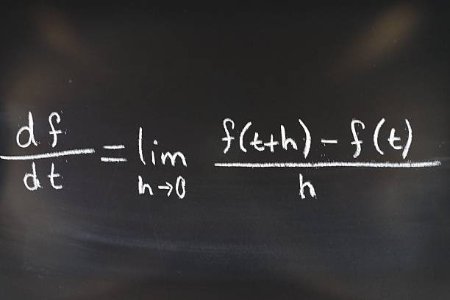
Differentiability of Real-Valued Functions - Advanced Calculus (Undergraduate Advanced)
Differentiation measures how a function changes at any given point. This course moves from the basic slope of a line to advanced derivative theory. You will define differentiability at a point and on an interval. You will link differentiability to continuity to spot where functions break. The material covers standard rules for sums, products, quotients, and composites. You will study Rolle's theorem and the mean-value theorem to understand function behaviour between points. The course extends to higher-order derivatives using Leibniz's formula. You will finish with Taylor and Maclaurin series to approximate complex functions with polynomials.
Engineers use derivatives to calculate velocity, acceleration, and force in moving systems. Electrical engineers apply these rules to analyse current change in circuits. Economists use differentiation to find marginal cost and maximise profit. Computer scientists deploy Taylor series for fast approximation in graphics and machine learning algorithms. Mastery of these tools allows you to model real-world dynamics with precision. You will gain the ability to predict system responses and optimise designs without relying on trial and error.
You will determine if a function is differentiable at any point or interval. You will apply product, quotient, and chain rules to differentiate complex expressions. You will use Rolle's theorem and the mean-value theorem to prove existence of critical points. You will compute higher-order derivatives and apply Leibniz's formula for product terms. You will construct Taylor and Maclaurin polynomials to approximate functions near a centre. You will estimate error bounds for these approximations. You will solve applied problems that merge multiple differentiation techniques.
This course targets undergraduates and graduate students in mathematics, engineering, and physics. It suits students preparing for advanced calculus examinations or research projects. Secondary school leavers with strong algebra skills can use this material to bridge the gap to university-level analysis. Professionals returning to technical work will refresh their understanding of rate of change. The clear structure and repeated practice ensure that any disciplined learner can master differentiation for academic or industrial application.
Differentiability of Real-Valued Functions - Advanced Calculus (Undergraduate Advanced)
Differentiation measures how a function changes at any given point. This course moves from the basic slope of a line to advanced derivative theory. You will define differentiability at a point and on an interval. You will link differentiability to continuity to spot where functions break. The material covers standard rules for sums, products, quotients, and composites. You will study Rolle's theorem and the mean-value theorem to understand function behaviour between points. The course extends to higher-order derivatives using Leibniz's formula. You will finish with Taylor and Maclaurin series to approximate complex functions with polynomials. Engineers use derivatives to calculate velocity, acceleration, and force in moving systems. Electrical engineers apply these rules to analyse current change in circuits. Economists use differentiation to find marginal cost and maximise profit. Computer scientists deploy Taylor series for fast approximation in graphics and machine learning algorithms. Mastery of these tools allows you to model real-world dynamics with precision. You will gain the ability to predict system responses and optimise designs without relying on trial and error. You will determine if a function is differentiable at any point or interval. You will apply product, quotient, and chain rules to differentiate complex expressions. You will use Rolle's theorem and the mean-value theorem to prove existence of critical points. You will compute higher-order derivatives and apply Leibniz's formula for product terms. You will construct Taylor and Maclaurin polynomials to approximate functions near a centre. You will estimate error bounds for these approximations. You will solve applied problems that merge multiple differentiation techniques. This course targets undergraduates and graduate students in mathematics, engineering, and physics. It suits students preparing for advanced calculus examinations or research projects. Secondary school leavers with strong algebra skills can use this material to bridge the gap to university-level analysis. Professionals returning to technical work will refresh their understanding of rate of change. The clear structure and repeated practice ensure that any disciplined learner can master differentiation for academic or industrial application.