PHY 102: General Physics II - Electricity and Magnetism
$ 23.99
Learning Track Courses
Static Charges and Fields - Physics (Undergraduate Foundation)
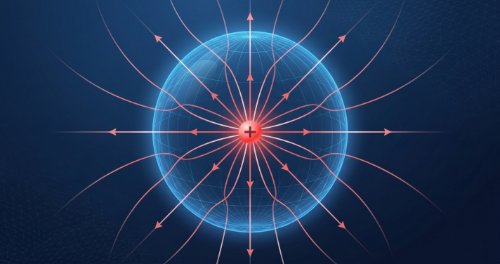
Static charges power every electronic device you use. This course explains how stationary charges create forces and fields without physical contact. You will move from basic atomic structure to advanced field calculations using Coulomb's law and Gauss's law. It covers charge conservation, induction, superposition, and symmetry. You will learn to model invisible forces that act across space. This foundation is critical for understanding all electrical phenomena.
These principles explain lightning, photocopiers, and spray painting. In engineering, this knowledge helps design capacitors and manage electromagnetic interference. You will learn to protect circuits from static discharge and predict high-voltage behaviour. Understanding field distribution around conductors and insulators is vital for real-world applications. This skill set allows you to solve practical problems in power systems and electronics. It connects abstract physics to tangible technology used daily.
By the end, you will calculate force between multiple charges using vector addition. You will determine electric field strength at any point in space for various shapes. You will apply Gauss's law to solve complex problems for spheres, cylinders, and plates. You will explain induction, conduction, and dipole behaviour. These skills enable accurate modelling of electrical interactions in academic and industrial settings. You will master the mathematical tools needed for electromagnetism.
This course is for first-year university students and engineering aspirants. It suits science teachers and technical professionals needing a refresher on core physics laws. Even non-engineers will benefit from the analytical thinking developed here. You will gain a clear understanding of the laws governing modern electronic devices. It builds a strong base for further study in physics or electrical engineering. Anyone interested in how electricity works will find value in this structured approach.
Static Charges and Fields - Physics (Undergraduate Foundation)
Static charges power every electronic device you use. This course explains how stationary charges create forces and fields without physical contact. You will move from basic atomic structure to advanced field calculations using Coulomb's law and Gauss's law. It covers charge conservation, induction, superposition, and symmetry. You will learn to model invisible forces that act across space. This foundation is critical for understanding all electrical phenomena. These principles explain lightning, photocopiers, and spray painting. In engineering, this knowledge helps design capacitors and manage electromagnetic interference. You will learn to protect circuits from static discharge and predict high-voltage behaviour. Understanding field distribution around conductors and insulators is vital for real-world applications. This skill set allows you to solve practical problems in power systems and electronics. It connects abstract physics to tangible technology used daily. By the end, you will calculate force between multiple charges using vector addition. You will determine electric field strength at any point in space for various shapes. You will apply Gauss's law to solve complex problems for spheres, cylinders, and plates. You will explain induction, conduction, and dipole behaviour. These skills enable accurate modelling of electrical interactions in academic and industrial settings. You will master the mathematical tools needed for electromagnetism. This course is for first-year university students and engineering aspirants. It suits science teachers and technical professionals needing a refresher on core physics laws. Even non-engineers will benefit from the analytical thinking developed here. You will gain a clear understanding of the laws governing modern electronic devices. It builds a strong base for further study in physics or electrical engineering. Anyone interested in how electricity works will find value in this structured approach.

Electric Potential and Capacitors - Physics (Undergraduate Foundation)
Electric potential governs how charges move and store energy in circuits. This course builds a rigorous foundation in electrostatics by linking field theory to practical capacitor design. You will master the mathematics of potential, understand how continuous charge distributions create fields, and analyse complex capacitor networks with precision.
Engineers use these principles to design circuit boards, power supplies, and medical devices like defibrillators. Students apply this knowledge to solve advanced physics problems and prepare for university examinations. Hobbyists gain the insight needed to build safe electronic gadgets and understand component limits without guesswork.
You will calculate potential from point charges and continuous distributions using integration techniques. The course covers Gauss law applications for cylindrical and spherical capacitors, series and parallel network analysis, and dielectric polarisation effects. You will learn to predict voltage division, charge sharing, and breakdown risks in real-world configurations.
This programme targets undergraduate science and engineering students, secondary school leavers preparing for university physics, and hobbyists building electronic projects. It provides the mathematical rigour required for higher education while maintaining clarity for self-taught learners. Professionals seeking to refresh their core physics knowledge will also find direct value in the structured approach to electrostatics and capacitance.
Electric Potential and Capacitors - Physics (Undergraduate Foundation)
Electric potential governs how charges move and store energy in circuits. This course builds a rigorous foundation in electrostatics by linking field theory to practical capacitor design. You will master the mathematics of potential, understand how continuous charge distributions create fields, and analyse complex capacitor networks with precision. Engineers use these principles to design circuit boards, power supplies, and medical devices like defibrillators. Students apply this knowledge to solve advanced physics problems and prepare for university examinations. Hobbyists gain the insight needed to build safe electronic gadgets and understand component limits without guesswork. You will calculate potential from point charges and continuous distributions using integration techniques. The course covers Gauss law applications for cylindrical and spherical capacitors, series and parallel network analysis, and dielectric polarisation effects. You will learn to predict voltage division, charge sharing, and breakdown risks in real-world configurations. This programme targets undergraduate science and engineering students, secondary school leavers preparing for university physics, and hobbyists building electronic projects. It provides the mathematical rigour required for higher education while maintaining clarity for self-taught learners. Professionals seeking to refresh their core physics knowledge will also find direct value in the structured approach to electrostatics and capacitance.

Direct Current Circuits - Physics (Undergraduate Foundation)
This course covers the movement of electrical charges through circuits that do not change direction. You will learn the exact definitions of current, voltage, and resistance and how they relate through Ohm’s law. The syllabus explains resistivity in different materials, the electromotive force (EMF) provided by power sources, and the internal resistance of batteries. You will master the use of Kirchhoff’s rules to solve complex networks of resistors and power supplies.
Mastering these principles is necessary for anyone building or fixing electrical devices and power systems. You will understand why certain wires heat up more than others and how to choose the right components for a circuit. These skills are used daily by electrical engineers, solar technicians, and hobbyists repairing household electronics or designing battery-powered gadgets. Practical knowledge of DC circuits ensures you can calculate power needs and prevent electrical failures in real-world projects.
By the end of this course, you will be able to calculate current, voltage, and resistance in any part of a DC circuit using Ohm’s law. You will know how to determine the resistivity of a wire based on its material and physical dimensions. You will gain the ability to distinguish between terminal voltage and EMF while accounting for internal resistance. Most importantly, you will be able to apply Kirchhoff’s current and voltage laws to find unknown values in circuits with multiple loops and junctions.
This course is for undergraduate students in engineering or science who need a solid foundation in electricity. It is also suitable for secondary school leavers preparing for university entrance exams or technical vocational training. Even for those not pursuing a degree, the course provides essential logic for electricians and tech enthusiasts who want to understand the science behind the tools they use. Anyone looking to move from basic guessing to precise electrical calculation will find this material vital.
Direct Current Circuits - Physics (Undergraduate Foundation)
This course covers the movement of electrical charges through circuits that do not change direction. You will learn the exact definitions of current, voltage, and resistance and how they relate through Ohm’s law. The syllabus explains resistivity in different materials, the electromotive force (EMF) provided by power sources, and the internal resistance of batteries. You will master the use of Kirchhoff’s rules to solve complex networks of resistors and power supplies. Mastering these principles is necessary for anyone building or fixing electrical devices and power systems. You will understand why certain wires heat up more than others and how to choose the right components for a circuit. These skills are used daily by electrical engineers, solar technicians, and hobbyists repairing household electronics or designing battery-powered gadgets. Practical knowledge of DC circuits ensures you can calculate power needs and prevent electrical failures in real-world projects. By the end of this course, you will be able to calculate current, voltage, and resistance in any part of a DC circuit using Ohm’s law. You will know how to determine the resistivity of a wire based on its material and physical dimensions. You will gain the ability to distinguish between terminal voltage and EMF while accounting for internal resistance. Most importantly, you will be able to apply Kirchhoff’s current and voltage laws to find unknown values in circuits with multiple loops and junctions. This course is for undergraduate students in engineering or science who need a solid foundation in electricity. It is also suitable for secondary school leavers preparing for university entrance exams or technical vocational training. Even for those not pursuing a degree, the course provides essential logic for electricians and tech enthusiasts who want to understand the science behind the tools they use. Anyone looking to move from basic guessing to precise electrical calculation will find this material vital.
Magnetic Fields and Forces - Physics (Undergraduate Foundation)
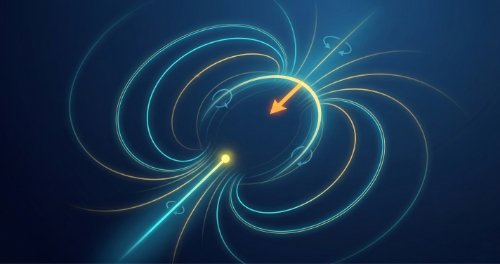
Magnetism moves the world, from the small compass in your hand to the massive motors in factories. This course teaches you how magnetic fields work and how they push or pull moving electric charges. You will learn the Lorentz force formula, the way magnetic dipoles behave, and the specific rules for calculating magnetic strength using the Biot-Savart law and Ampere’s law. We focus on the core physics that connects electricity to magnetic forces.
Knowing these laws is the first step to building or fixing electric motors, generators, and transformers. Engineers and technicians use this math to design medical imaging machines like MRI scanners and to manage power grids. If you want to work in renewable energy, robotics, or telecommunications, you must understand how currents create magnetic fields. This knowledge helps you solve real problems in electrical and mechanical systems.
By the end of this study, you will be able to calculate the force on a wire carrying current and predict the path of a charge moving through a field. You will master the use of Ampere’s law to find the magnetic field around different wire shapes. You will also understand how to find the torque on a magnetic loop. These skills allow you to analyse how magnets and electricity interact in any device.
This course is for first-year university students and polytechnic students studying engineering or science. It also helps secondary school leavers who want a head start before resuming at a higher institution. Even if you are just a hobbyist building simple electronics at home, these lessons provide the clear facts you need to make your projects work. It turns confusing theories into tools you can use immediately.
Magnetic Fields and Forces - Physics (Undergraduate Foundation)
Magnetism moves the world, from the small compass in your hand to the massive motors in factories. This course teaches you how magnetic fields work and how they push or pull moving electric charges. You will learn the Lorentz force formula, the way magnetic dipoles behave, and the specific rules for calculating magnetic strength using the Biot-Savart law and Ampere’s law. We focus on the core physics that connects electricity to magnetic forces. Knowing these laws is the first step to building or fixing electric motors, generators, and transformers. Engineers and technicians use this math to design medical imaging machines like MRI scanners and to manage power grids. If you want to work in renewable energy, robotics, or telecommunications, you must understand how currents create magnetic fields. This knowledge helps you solve real problems in electrical and mechanical systems. By the end of this study, you will be able to calculate the force on a wire carrying current and predict the path of a charge moving through a field. You will master the use of Ampere’s law to find the magnetic field around different wire shapes. You will also understand how to find the torque on a magnetic loop. These skills allow you to analyse how magnets and electricity interact in any device. This course is for first-year university students and polytechnic students studying engineering or science. It also helps secondary school leavers who want a head start before resuming at a higher institution. Even if you are just a hobbyist building simple electronics at home, these lessons provide the clear facts you need to make your projects work. It turns confusing theories into tools you can use immediately.
Electromagnetic Induction and Inductance - Physics (Undergraduate Foundation)
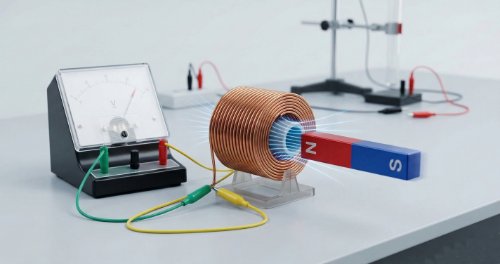
Most electricity comes from moving magnets. This course explains how changing magnetic fields create electric currents. You will learn magnetic flux, Faraday’s law, and Lenz’s law to understand how motion creates power. We also cover self and mutual inductance alongside the core principles of how transformers change voltage levels.
These principles run the modern power grid, motors, and generators. This knowledge is essential for careers in power engineering, electronics, and renewable energy. You will use these concepts to design circuits, maintain industrial machines, or build stable power supply units for various technical projects.
You will learn to calculate magnetic flux and predict induced current directions accurately. You will solve equations for electromotive force and inductance in different conductors. You will also learn how step-up and step-down transformers work to move electricity over long distances while reducing energy loss.
This course suits undergraduate engineering and physics students needing a strong start. It helps secondary school leavers prepare for university-level science. Hobbyists building electrical tools or motors will also benefit from learning exactly how coils and magnets interact.
Electromagnetic Induction and Inductance - Physics (Undergraduate Foundation)
Most electricity comes from moving magnets. This course explains how changing magnetic fields create electric currents. You will learn magnetic flux, Faraday’s law, and Lenz’s law to understand how motion creates power. We also cover self and mutual inductance alongside the core principles of how transformers change voltage levels. These principles run the modern power grid, motors, and generators. This knowledge is essential for careers in power engineering, electronics, and renewable energy. You will use these concepts to design circuits, maintain industrial machines, or build stable power supply units for various technical projects. You will learn to calculate magnetic flux and predict induced current directions accurately. You will solve equations for electromotive force and inductance in different conductors. You will also learn how step-up and step-down transformers work to move electricity over long distances while reducing energy loss. This course suits undergraduate engineering and physics students needing a strong start. It helps secondary school leavers prepare for university-level science. Hobbyists building electrical tools or motors will also benefit from learning exactly how coils and magnets interact.
Maxwell’s Equations and Electromagnetic Waves - Physics (Undergraduate Foundation)
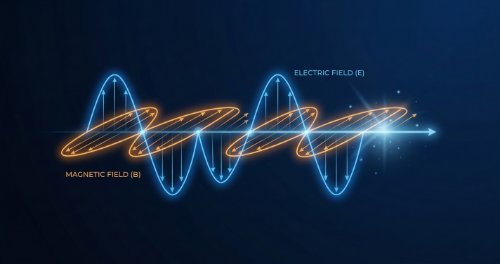
This course covers the four Maxwell's equations in integral form, displacement current, and electromagnetic oscillations. You will learn how Gauss's Law for electricity, Gauss's Law for magnetism, Faraday's Law, and the Ampere-Maxwell Law provide a single framework for all electromagnetic phenomena. The module explains how changing electric fields create magnetic fields and how these interactions produce self-propagating electromagnetic waves that travel at the speed of light.
Understanding these equations is the foundation of modern telecommunications, radio engineering, and electronics. This knowledge allows you to understand how signals travel through space, how antennas work, and how light itself behaves as a wave. Whether you are building a simple radio circuit or designing complex wireless networks, these principles govern every device that uses electricity and magnetism to transmit information.
By the end of this course, you will be able to apply the four fundamental equations to calculate electric and magnetic flux, identify the role of displacement current in capacitors, and describe the mathematical properties of electromagnetic waves. You will gain the skill to determine the speed, frequency, and wavelength of these waves in different media. You will also master the relationship between oscillating charges and the radiation they produce.
This course is for undergraduate engineering and physics students who need a solid grasp of field theory. It is especially useful for those aiming for careers in electrical engineering, telecommunications, or renewable energy. Even if you are just starting your degree or transitioning from secondary school, this module provides the clarity needed to handle advanced technical concepts in electromagnetism and wave optics.
Maxwell’s Equations and Electromagnetic Waves - Physics (Undergraduate Foundation)
This course covers the four Maxwell's equations in integral form, displacement current, and electromagnetic oscillations. You will learn how Gauss's Law for electricity, Gauss's Law for magnetism, Faraday's Law, and the Ampere-Maxwell Law provide a single framework for all electromagnetic phenomena. The module explains how changing electric fields create magnetic fields and how these interactions produce self-propagating electromagnetic waves that travel at the speed of light. Understanding these equations is the foundation of modern telecommunications, radio engineering, and electronics. This knowledge allows you to understand how signals travel through space, how antennas work, and how light itself behaves as a wave. Whether you are building a simple radio circuit or designing complex wireless networks, these principles govern every device that uses electricity and magnetism to transmit information. By the end of this course, you will be able to apply the four fundamental equations to calculate electric and magnetic flux, identify the role of displacement current in capacitors, and describe the mathematical properties of electromagnetic waves. You will gain the skill to determine the speed, frequency, and wavelength of these waves in different media. You will also master the relationship between oscillating charges and the radiation they produce. This course is for undergraduate engineering and physics students who need a solid grasp of field theory. It is especially useful for those aiming for careers in electrical engineering, telecommunications, or renewable energy. Even if you are just starting your degree or transitioning from secondary school, this module provides the clarity needed to handle advanced technical concepts in electromagnetism and wave optics.
Alternating Current Theory - Physics (Undergraduate Foundation)
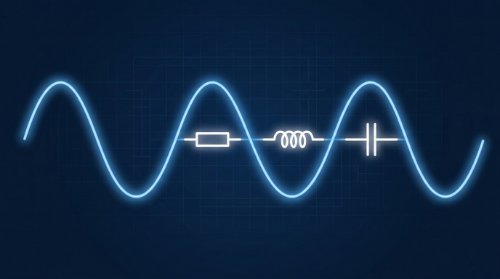
The electricity in your wall socket does not flow in one direction like a battery; it reverses direction many times every second. This course teaches the essential physics of Alternating Current (AC) by examining how voltage and current vary as sine waves. You will learn to calculate peak and Root Mean Square (RMS) values to determine the actual power used by appliances. We analyse how inductors and capacitors oppose current through reactance and how these elements combine with resistors to form total impedance in RLC circuits.
AC Power is the global standard for homes and industries because it moves efficiently over long distances. For anyone in civil, mechanical, or electrical engineering, mastering AC theory is mandatory. This knowledge applies directly to designing power grids, maintaining factory motors, and managing household wiring. You will understand how to handle electrical loads and ensure equipment operates safely within professional infrastructure projects.
You will learn to derive and use formulas for AC voltage and current. The course teaches you to find the relationship between peak and RMS values for accurate power measurements. You will gain the skills to calculate inductive and capacitive reactance and solve for the total impedance of RLC circuit combinations. By the end, you will understand phase differences and how they affect the efficiency of electrical systems.
This module targets undergraduate engineering and physics students requiring a firm grasp of circuit dynamics. It also assists technical college students and secondary school leavers preparing for university-level science. Beyond formal students, anyone interested in how modern power systems function will find this useful. It provides the technical literacy needed to bridge the gap between classroom physics and industrial application.
Alternating Current Theory - Physics (Undergraduate Foundation)
The electricity in your wall socket does not flow in one direction like a battery; it reverses direction many times every second. This course teaches the essential physics of Alternating Current (AC) by examining how voltage and current vary as sine waves. You will learn to calculate peak and Root Mean Square (RMS) values to determine the actual power used by appliances. We analyse how inductors and capacitors oppose current through reactance and how these elements combine with resistors to form total impedance in RLC circuits. AC Power is the global standard for homes and industries because it moves efficiently over long distances. For anyone in civil, mechanical, or electrical engineering, mastering AC theory is mandatory. This knowledge applies directly to designing power grids, maintaining factory motors, and managing household wiring. You will understand how to handle electrical loads and ensure equipment operates safely within professional infrastructure projects. You will learn to derive and use formulas for AC voltage and current. The course teaches you to find the relationship between peak and RMS values for accurate power measurements. You will gain the skills to calculate inductive and capacitive reactance and solve for the total impedance of RLC circuit combinations. By the end, you will understand phase differences and how they affect the efficiency of electrical systems. This module targets undergraduate engineering and physics students requiring a firm grasp of circuit dynamics. It also assists technical college students and secondary school leavers preparing for university-level science. Beyond formal students, anyone interested in how modern power systems function will find this useful. It provides the technical literacy needed to bridge the gap between classroom physics and industrial application.