CHE 305: Engineering Analysis I
$ 35.99
Learning Track Courses
3D Coordinates and Quadric Surfaces - Analytic Geometry (Undergraduate Advanced)
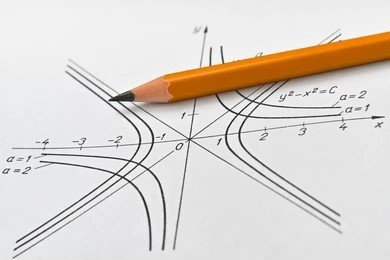
Learn to analyze the three-dimensional Euclidean space using coordinates and equations with pin-point precision.
Designed for students, researchers, and professionals in fields such as engineering, computer graphics, physics, astronomy, medicine, biology, architecture, and building technology, this course provides a thorough understanding of coordinate systems, equations, and quadric surfaces.
On completing this course, you will have mastered:
- One-dimensional coordinate system and locating points
- Two-dimensional coordinate system, lines, and curves
- Conic sections and their equations
- Three-dimensional coordinate system and quadric surfaces
- Computer-aided visualization using Geogebra
- Coordinate transformation and rotation
- Equations in polar, cylindrical, and spherical coordinates
Throughout the course, you'll engage with high-quality video lessons, completely-solved examples, free-hand sketching techniques, and computer-aided visualizations. Multiple-choice quizzes will keep you focused and help reinforce your learning.
Prerequisites:
This course is designed for first-year undergraduate students in engineering and sciences. Prior knowledge of basic trigonometric ratios, determinants, and elementary row operations on matrices is helpful but not required, as the course is designed to be accessible to learners with varying backgrounds.
Once enrolled, you have access to dynamic video lessons, interactive quizzes, and live chat support for an immersive learning experience. You engage with clear video explanations, test your understanding with instant-feedback quizzes and interact with our expert instructor and peers in the chat room. Join a supportive learning community to exchange ideas, ask questions, and collaborate with peers as you master the material, by enrolling right away.
3D Coordinates and Quadric Surfaces - Analytic Geometry (Undergraduate Advanced)
Learn to analyze the three-dimensional Euclidean space using coordinates and equations with pin-point precision. Designed for students, researchers, and professionals in fields such as engineering, computer graphics, physics, astronomy, medicine, biology, architecture, and building technology, this course provides a thorough understanding of coordinate systems, equations, and quadric surfaces. On completing this course, you will have mastered: - One-dimensional coordinate system and locating points - Two-dimensional coordinate system, lines, and curves - Conic sections and their equations - Three-dimensional coordinate system and quadric surfaces - Computer-aided visualization using Geogebra - Coordinate transformation and rotation - Equations in polar, cylindrical, and spherical coordinates Throughout the course, you'll engage with high-quality video lessons, completely-solved examples, free-hand sketching techniques, and computer-aided visualizations. Multiple-choice quizzes will keep you focused and help reinforce your learning. Prerequisites: This course is designed for first-year undergraduate students in engineering and sciences. Prior knowledge of basic trigonometric ratios, determinants, and elementary row operations on matrices is helpful but not required, as the course is designed to be accessible to learners with varying backgrounds. Once enrolled, you have access to dynamic video lessons, interactive quizzes, and live chat support for an immersive learning experience. You engage with clear video explanations, test your understanding with instant-feedback quizzes and interact with our expert instructor and peers in the chat room. Join a supportive learning community to exchange ideas, ask questions, and collaborate with peers as you master the material, by enrolling right away.
Calculus of Scalar and Vector Fields (Undergraduate Advanced)
Do you want to learn how to manipulate and analyze scalar and vector fields using advanced calculus techniques? Do you want to understand the concepts and methods of scalar and vector products, gradient, divergence, curl, and Laplacian operators? Do you want to apply the principles of vector analysis to solve problems in physics, engineering, and other disciplines?
If you answered yes to any of these questions, then this course is for you!
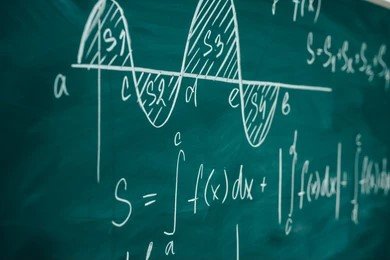
In this course, you will learn the fundamentals of calculus of scalar and vector fields, which is the branch of mathematics that deals with functions and operators that map points in space to scalars or vectors. You will learn how to use different notations and conventions to express scalar and vector fields, such as Einstein's summation, Kronecker delta, and Levi-Civita symbols. You will learn how to perform scalar and vector products of vectors, which are useful for measuring angles, areas, and volumes. You will learn how to compute and interpret the gradient of a scalar field, which measures the rate and direction of change of a scalar function. You will learn how to compute and interpret the divergence and curl of a vector field, which measure the sources and vortices of a vector field. You will also learn how to use the Laplacian operator, which combines the divergence and the gradient, and is useful for studying heat conduction, electrostatics, and fluid dynamics.
This course will equip you with the skills and knowledge to solve various problems involving scalar and vector fields. You will be able to apply the concepts and methods of calculus of scalar and vector fields to fields such as physics, engineering, chemistry, biology, and more. You will also be able to appreciate the power of vector analysis theorems, such as Gauss', Green's, and Stokes' theorems, which relate the integrals of scalar and vector fields over different domains.
By the end of this course, you will be able to:
- Define and explain the meaning of scalars, vectors, and tensors
- Identify and use different notations and conventions for scalar and vector fields
- Perform scalar and vector products of vectors and calculate angles, areas, and volumes
- Compute and interpret the gradient of a scalar field and its properties
- Compute and interpret the divergence and curl of a vector field and their properties
- Compute and interpret the Laplacian of a scalar or a vector field and its applications
- Use different coordinate systems and bases to express scalar and vector fields and operators
- Compute and interpret the gradient, divergence, curl, and Laplacian in orthogonal curvilinear coordinates
- Recognize and use some special curvilinear coordinates, such as cylindrical and spherical coordinates
- Apply the vector analysis theorems, such as Gauss', Green's, and Stokes' theorems, to relate the integrals of scalar and vector fields over different domains
Created for students, engineers, scientists, and anyone passionate about learning the calculus of scalar and vector fields, this course assumes a basic background in calculus, linear algebra, and vector algebra. With engaging video lessons, interactive quizzes, practice problems, and supportive peer interactions, you'll embark on a journey of discovery and mastery like never before.
Seize the opportunity to advance your mathematical skills and unlock new problem-solving possibilities with an enrolment right away!
Calculus of Scalar and Vector Fields (Undergraduate Advanced)
Do you want to learn how to manipulate and analyze scalar and vector fields using advanced calculus techniques? Do you want to understand the concepts and methods of scalar and vector products, gradient, divergence, curl, and Laplacian operators? Do you want to apply the principles of vector analysis to solve problems in physics, engineering, and other disciplines? If you answered yes to any of these questions, then this course is for you! In this course, you will learn the fundamentals of calculus of scalar and vector fields, which is the branch of mathematics that deals with functions and operators that map points in space to scalars or vectors. You will learn how to use different notations and conventions to express scalar and vector fields, such as Einstein's summation, Kronecker delta, and Levi-Civita symbols. You will learn how to perform scalar and vector products of vectors, which are useful for measuring angles, areas, and volumes. You will learn how to compute and interpret the gradient of a scalar field, which measures the rate and direction of change of a scalar function. You will learn how to compute and interpret the divergence and curl of a vector field, which measure the sources and vortices of a vector field. You will also learn how to use the Laplacian operator, which combines the divergence and the gradient, and is useful for studying heat conduction, electrostatics, and fluid dynamics. This course will equip you with the skills and knowledge to solve various problems involving scalar and vector fields. You will be able to apply the concepts and methods of calculus of scalar and vector fields to fields such as physics, engineering, chemistry, biology, and more. You will also be able to appreciate the power of vector analysis theorems, such as Gauss', Green's, and Stokes' theorems, which relate the integrals of scalar and vector fields over different domains. By the end of this course, you will be able to: - Define and explain the meaning of scalars, vectors, and tensors - Identify and use different notations and conventions for scalar and vector fields - Perform scalar and vector products of vectors and calculate angles, areas, and volumes - Compute and interpret the gradient of a scalar field and its properties - Compute and interpret the divergence and curl of a vector field and their properties - Compute and interpret the Laplacian of a scalar or a vector field and its applications - Use different coordinate systems and bases to express scalar and vector fields and operators - Compute and interpret the gradient, divergence, curl, and Laplacian in orthogonal curvilinear coordinates - Recognize and use some special curvilinear coordinates, such as cylindrical and spherical coordinates - Apply the vector analysis theorems, such as Gauss', Green's, and Stokes' theorems, to relate the integrals of scalar and vector fields over different domains Created for students, engineers, scientists, and anyone passionate about learning the calculus of scalar and vector fields, this course assumes a basic background in calculus, linear algebra, and vector algebra. With engaging video lessons, interactive quizzes, practice problems, and supportive peer interactions, you'll embark on a journey of discovery and mastery like never before. Seize the opportunity to advance your mathematical skills and unlock new problem-solving possibilities with an enrolment right away!
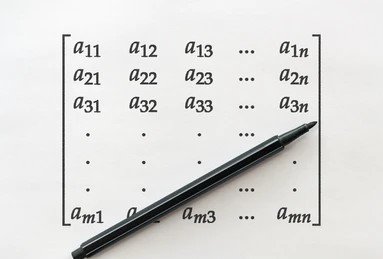
Matrices, Determinants, and Systems of Linear Equations - Linear Algebra (Undergraduate Advanced)
Master advanced matrix algebra and linear systems through rigorous technical training. This course covers matrix definitions; algebraic operations; transpositions; and elementary row transformations. You will investigate determinants; matrix inverses using the adjoint method; and the structural properties of similar matrices. Computational methods using MS-Excel or Google Sheets are included to handle large-scale data sets efficiently.
These mathematical structures are the engines behind modern engineering and data science. Structural engineers use matrices to calculate stress in bridges; computer scientists use them to render 3D graphics; and economists use linear systems to model market equilibrium. Mastering these tools allows you to solve multi-variable problems that are impossible to handle manually.
By the end, you will possess the skills to execute matrix additions; multiplications; and scalar operations with absolute precision. You will demonstrate competence in reducing matrices to row echelon form; calculating rank and nullity; and evaluating determinants of any order. Furthermore, you will command the ability to solve complex systems of linear equations using Cramer's rule or matrix inversion; identify special matrix types like orthogonal or symmetric; and automate these calculations using software.
This curriculum is built for undergraduate students in engineering; mathematics; and physics requiring a high-level command of linear algebra. Professionals in data science or finance will find the content vital for understanding the algorithms governing their software. Even those in general sciences will benefit from the structured logical thinking and numerical methods required to manage complex variables in any technical field.
Matrices, Determinants, and Systems of Linear Equations - Linear Algebra (Undergraduate Advanced)
Master advanced matrix algebra and linear systems through rigorous technical training. This course covers matrix definitions; algebraic operations; transpositions; and elementary row transformations. You will investigate determinants; matrix inverses using the adjoint method; and the structural properties of similar matrices. Computational methods using MS-Excel or Google Sheets are included to handle large-scale data sets efficiently. These mathematical structures are the engines behind modern engineering and data science. Structural engineers use matrices to calculate stress in bridges; computer scientists use them to render 3D graphics; and economists use linear systems to model market equilibrium. Mastering these tools allows you to solve multi-variable problems that are impossible to handle manually. By the end, you will possess the skills to execute matrix additions; multiplications; and scalar operations with absolute precision. You will demonstrate competence in reducing matrices to row echelon form; calculating rank and nullity; and evaluating determinants of any order. Furthermore, you will command the ability to solve complex systems of linear equations using Cramer's rule or matrix inversion; identify special matrix types like orthogonal or symmetric; and automate these calculations using software. This curriculum is built for undergraduate students in engineering; mathematics; and physics requiring a high-level command of linear algebra. Professionals in data science or finance will find the content vital for understanding the algorithms governing their software. Even those in general sciences will benefit from the structured logical thinking and numerical methods required to manage complex variables in any technical field.
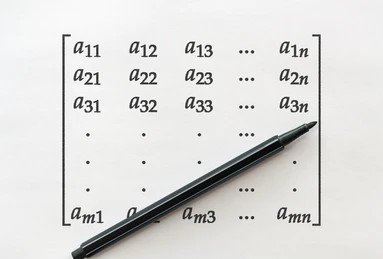
Eigenvalues, Eigenvectors and Diagonalization of Matrices - Linear Algebra (Undergraduate Advanced)
This course provides a clear and structured exploration of eigenvalues, eigenvectors, and diagonalization, focusing on both theory and real-world applications.
You???ll learn how to compute eigenvalues and eigenvectors, understand their geometric significance, and apply diagonalization to simplify complex matrix operations.
Topics include linear transformations, dynamical systems, and applications in physics, engineering, and machine learning.
The course is designed for students, engineers, and data scientists seeking a strong foundation in matrix methods. By the end, you'll confidently apply these concepts in problem-solving and computational modeling.
Eigenvalues, Eigenvectors and Diagonalization of Matrices - Linear Algebra (Undergraduate Advanced)
This course provides a clear and structured exploration of eigenvalues, eigenvectors, and diagonalization, focusing on both theory and real-world applications. You???ll learn how to compute eigenvalues and eigenvectors, understand their geometric significance, and apply diagonalization to simplify complex matrix operations. Topics include linear transformations, dynamical systems, and applications in physics, engineering, and machine learning. The course is designed for students, engineers, and data scientists seeking a strong foundation in matrix methods. By the end, you'll confidently apply these concepts in problem-solving and computational modeling.