Matrices, Determinants, and Systems of Linear Equations - Linear Algebra (Undergraduate Advanced)
26 hrs
$ 13.09
GET 209: Engineering Mathematics I
Master the mathematical language of engineering. This programme delivers the complete analytical toolkit required for a successful engineering career, covering single-variable calculus, multivariable calculus, linear algebra, and vector analysis. It provides the essential foundation for all subsequent engineering courses.
This programme is for second-year undergraduate students across all engineering disciplines. It delivers the official NUC CCMAS curriculum for Engineering Mathematics, providing the core training required for advanced modules in mechanics, thermodynamics, and circuit theory.
Model and analyse complex physical systems using calculus, linear algebra, and vector analysis. You will be equipped to solve problems in dynamics, statics, and field theory, providing the quantitative proficiency required for advanced engineering study and professional practice.
GET 209: Engineering Mathematics I
Master the mathematical language of engineering. This programme delivers the complete analytical toolkit required for a successful engineering career, covering single-variable calculus, multivariable calculus, linear algebra, and vector analysis. It provides the essential foundation for all subsequent engineering courses. This programme is for second-year undergraduate students across all engineering disciplines. It delivers the official NUC CCMAS curriculum for Engineering Mathematics, providing the core training required for advanced modules in mechanics, thermodynamics, and circuit theory. Model and analyse complex physical systems using calculus, linear algebra, and vector analysis. You will be equipped to solve problems in dynamics, statics, and field theory, providing the quantitative proficiency required for advanced engineering study and professional practice.
CHE 305: Engineering Analysis I
Advanced engineering mathematics covering solid analytical geometry, integrals, scalar and vector fields, matrices and determinants and complex variables.
Curated for third-year students of engineering at Obafemi Awolowo University, Ile-Ife, Nigeria. Students and professionals with similar learning goal will also find this learning track useful.
CHE 305: Engineering Analysis I
Advanced engineering mathematics covering solid analytical geometry, integrals, scalar and vector fields, matrices and determinants and complex variables. Curated for third-year students of engineering at Obafemi Awolowo University, Ile-Ife, Nigeria. Students and professionals with similar learning goal will also find this learning track useful.
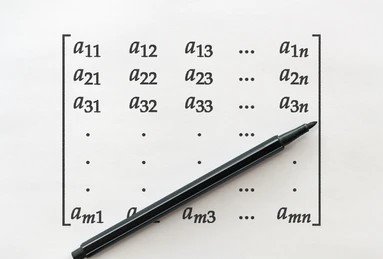
MTH 202: Mathematical Methods II
Comprehensive treatise of advanced mathematics covering vector calculus, complex numbers, linear vector spaces, linear maps, matrices, eigenvalues and eigenvectors.
Curated for second-year students of engineering and physical sciences at Obafemi Awolowo University, Ile-Ife, Nigeria. Students and professionals with similar learning goal will also find this learning track useful.
MTH 202: Mathematical Methods II
Comprehensive treatise of advanced mathematics covering vector calculus, complex numbers, linear vector spaces, linear maps, matrices, eigenvalues and eigenvectors. Curated for second-year students of engineering and physical sciences at Obafemi Awolowo University, Ile-Ife, Nigeria. Students and professionals with similar learning goal will also find this learning track useful.

MTH 204: Linear Algebra I
Master the algebraic structures that underpin modern science and computation. This academic track delivers the complete NUC CCMAS MTH 204 curriculum, moving rigorously from abstract vector spaces to practical matrix theory. It provides the essential mathematical toolkit required for advanced problem-solving in high-demand STEM fields.
This programme is targeted at undergraduates in mathematics, engineering, and computer science requiring a firm grounding in linear structures. It also serves professionals in data science, cryptography, and machine learning needing a rigorous theoretical refresher on foundational concepts.
You will achieve competence in manipulating abstract vector spaces, determining basis and dimension, and analyzing linear transformations through their kernels and images. You will master matrix arithmetic, compute determinants, solve systems of linear equations using advanced methods, and apply techniques of eigenvalues and diagonalization. Completion establishes the critical foundation demanded for advanced studies in multivariate calculus, differential equations, and complex computational algorithms.
MTH 204: Linear Algebra I
Master the algebraic structures that underpin modern science and computation. This academic track delivers the complete NUC CCMAS MTH 204 curriculum, moving rigorously from abstract vector spaces to practical matrix theory. It provides the essential mathematical toolkit required for advanced problem-solving in high-demand STEM fields. This programme is targeted at undergraduates in mathematics, engineering, and computer science requiring a firm grounding in linear structures. It also serves professionals in data science, cryptography, and machine learning needing a rigorous theoretical refresher on foundational concepts. You will achieve competence in manipulating abstract vector spaces, determining basis and dimension, and analyzing linear transformations through their kernels and images. You will master matrix arithmetic, compute determinants, solve systems of linear equations using advanced methods, and apply techniques of eigenvalues and diagonalization. Completion establishes the critical foundation demanded for advanced studies in multivariate calculus, differential equations, and complex computational algorithms.

MTH 205: Linear Algebra II
Advanced linear algebra is the mathematical backbone of modern data science, engineering, and physics. This learning track delivers the rigorous MTH 205 curriculum based on NUC CCMAS standards, focusing on sophisticated matrix analysis and practical computational methods critical for solving complex technical problems.
This programme is targeted at undergraduates in mathematics, engineering, and computer science requiring a deep command of advanced matrix theory. It is equally essential for data scientists and engineers seeking a rigorous theoretical foundation for machine learning algorithms, cryptography, and complex system modelling.
You will master matrix manipulations to solve linear systems and compute determinants and inverses efficiently using various methods including software like Python and MATLAB. You will gain competence in determining eigenvalues and eigenvectors, applying diagonalization to analyze the stability of dynamical systems, and working with quadratic and canonical forms. Completion establishes the critical mathematical expertise required for advanced studies in multivariate statistics, differential equations, and algorithmic development.
MTH 205: Linear Algebra II
Advanced linear algebra is the mathematical backbone of modern data science, engineering, and physics. This learning track delivers the rigorous MTH 205 curriculum based on NUC CCMAS standards, focusing on sophisticated matrix analysis and practical computational methods critical for solving complex technical problems. This programme is targeted at undergraduates in mathematics, engineering, and computer science requiring a deep command of advanced matrix theory. It is equally essential for data scientists and engineers seeking a rigorous theoretical foundation for machine learning algorithms, cryptography, and complex system modelling. You will master matrix manipulations to solve linear systems and compute determinants and inverses efficiently using various methods including software like Python and MATLAB. You will gain competence in determining eigenvalues and eigenvectors, applying diagonalization to analyze the stability of dynamical systems, and working with quadratic and canonical forms. Completion establishes the critical mathematical expertise required for advanced studies in multivariate statistics, differential equations, and algorithmic development.
MTH 101: Elementary Mathematics I - Algebra and Trigonometry
Master the foundational mathematical structures essential for success in quantitative undergraduate degrees and professional technical roles. This comprehensive learning track delivers a rigorous treatment of algebra and trigonometry, moving rapidly from fundamental set theory and real number operations to advanced topics including matrix algebra, complex numbers, and analytical trigonometry. You will establish the critical problem-solving framework required for advanced study in calculus, engineering mechanics, and data science.
This programme is primarily designed for first-year university students in STEM disciplines requiring strong analytical bases, particularly engineering, physics, computer science, and economics. It also serves as an intensive, high-level refresher for professionals returning to academia or shifting into data-driven roles demanding precise numerical literacy and logical structuring. Prior competence in standard secondary school mathematics is assumed; focus is placed strictly on mastery and application of core definitions.
Upon completion, you will possess the skills to construct rigorous logical arguments using set theory and mathematical induction, model complex relationships with functions and matrices, and analyze periodic systems using advanced trigonometry. You will demonstrate competence in solving diverse equation types, from quadratics to linear systems, and manipulating complex numbers in engineering applications. This track prepares you directly for the mathematical demands of second-year university studies and technical professional certification exams.
MTH 101: Elementary Mathematics I - Algebra and Trigonometry
Master the foundational mathematical structures essential for success in quantitative undergraduate degrees and professional technical roles. This comprehensive learning track delivers a rigorous treatment of algebra and trigonometry, moving rapidly from fundamental set theory and real number operations to advanced topics including matrix algebra, complex numbers, and analytical trigonometry. You will establish the critical problem-solving framework required for advanced study in calculus, engineering mechanics, and data science. This programme is primarily designed for first-year university students in STEM disciplines requiring strong analytical bases, particularly engineering, physics, computer science, and economics. It also serves as an intensive, high-level refresher for professionals returning to academia or shifting into data-driven roles demanding precise numerical literacy and logical structuring. Prior competence in standard secondary school mathematics is assumed; focus is placed strictly on mastery and application of core definitions. Upon completion, you will possess the skills to construct rigorous logical arguments using set theory and mathematical induction, model complex relationships with functions and matrices, and analyze periodic systems using advanced trigonometry. You will demonstrate competence in solving diverse equation types, from quadratics to linear systems, and manipulating complex numbers in engineering applications. This track prepares you directly for the mathematical demands of second-year university studies and technical professional certification exams.
Course Chapters